News and Analysis
September 22, 2026


.jpg)
Hello and welcome to the Money News Roundup Newsletter, where we are covering the new conditions set by the World Bank over Kenya’s frozen Ksh96.9 billion loan, international praise for the Affordable Housing project, and Safaricom’s increased stake in Ethiopia.
After months of negotiations, the World Bank now wants Kenya to narrow its budget deficit before receiving the frozen Ksh96.9 billion.
A report by Business Daily estimated that the deficit for the current financial year ending in June next year stands at Ksh901 billion. This gives the Treasury the option to either cut expenditure or raise revenues to bridge the shortfall.
This new condition by the World Bank could see Kenya resort to increasing taxes and adopting other austerity measures.
According to the outlet, Kenya has yet to agree on the additional measures to reduce the budget deficit — a move that has delayed the disbursement since the earlier agreed date of June 2025.
“The key reason why the disbursement is yet to take place is that the World Bank team needed to undertake a macro adequacy assessment to ascertain that Kenya’s debt remains sustainable,” said Treasury CS John Mbadi, adding, “This assessment has been done, and we are in discussions to generate more consensus on potential additional measures to be implemented in the medium term to support further fiscal consolidation.”
Catch Up Quick: This discussion comes months after Kenya initiated fresh talks with the IMF for a new funding arrangement in Nairobi in September, with further discussions expected to continue in Washington. Money254 also reported that pressure from the World Bank and IMF pushed the country to convert its Standard Gauge Railway (SGR) loan from US dollars to Chinese Yuan. According to President William Ruto’s economic adviser, David Ndii, the lenders were concerned that their dollar loans—intended to support Kenya’s budget and development—were instead being used to repay China. Read more here.
Kenya has received international recognition for its social housing programmes for the urban poor and the Nairobi Rivers Regeneration Programme, which have been hailed as the most impactful climate resilience initiatives in the global south. Speaking at the COP 30 Conference in Belem, Brazil, Deputy President Kithure Kindiki said UN agencies commended the projects for using locally generated resources to tackle climate risks in urban areas while improving living conditions, Citizen Digital reported.
Prof. Kindiki also welcomed the Building Climate Resilience with the Urban Poor (BCRUP) Programme, co-led by Kenya and Brazil, saying it aims to protect vulnerable urban communities from floods, drought, and other climate shocks. He urged UN agencies to strengthen support through financing, technology transfer, and capacity building, and called for a UN General Assembly resolution on climate resilience for the urban poor, with Kenya reporting periodically on progress.
A planned visit to Kenya by US Vice President JD Vance has been cancelled after President Donald Trump withdrew American participation from the November 2025 G20 Summit in Johannesburg, citing alleged human rights abuses in South Africa.
As reported by the Nation, Vance was scheduled to visit Nairobi immediately after the summit as part of a regional diplomatic tour signalling strengthened US–Kenya ties.
Prime Cabinet Secretary Musalia Mudavadi confirmed that with the G20 visit scrapped, the Kenyan visit is now “untenable”, stressing the decision is not related to Kenya. The move is a setback for Nairobi, which had hoped to advance cooperation with Washington on trade, security, and technology.
Safaricom has increased its stake in Safaricom Telecommunications Ethiopia to 53.37 percent from 51.67 percent after converting a shareholder loan of Ksh2.3 billion ($18 million) into equity, Business Daily reported. The shareholders also injected an additional Ksh12.6 billion ($98 million) in capital during the period. This shift in shareholding gives Safaricom a higher ownership share compared to its partners—Sumitomo Corporation, British International Investment (BII), IFC, and Vodacom—which have slightly reduced stakes.
The Ethiopian subsidiary recorded strong growth, with active customers rising 83.7 percent to 11.15 million and service revenue surging 136 percent to Ksh16.8 billion in the six months to September 2025. Mobile data revenue reached Ksh14.12 billion, while M-Pesa contributed Ksh8.7 billion. Safaricom Ethiopia’s losses narrowed to Ksh15.2 billion from Ksh19.4 billion a year earlier, supported by increased revenues despite currency depreciation pressures.
The government is considering issuing a 15-year bond worth Ksh390 billion to finance the extension of the Standard Gauge Railway (SGR) from Naivasha to Malaba, as reported by Business Daily. Roads and Transport Cabinet Secretary Davies Chirchir said the plan involves securitising proceeds from the Railway Development Levy (RDL), which raises about Ksh39 billion annually from imports. The bond, expected to be Kenya’s largest, comes amid China’s reluctance to fund the project due to Kenya’s growing debt concerns.
The proposed funding model would allow investors to be repaid through future RDL collections, reducing reliance on foreign borrowing. Kenya is also seeking alternative financing from development banks and partners such as the United Arab Emirates after Exim Bank of China withdrew support for the Naivasha–Malaba section. The extension aims to connect Kenya’s SGR to Uganda, enhancing regional trade and transport efficiency under the Belt and Road Initiative.
Members of Parliament have warned the private sector that they will no longer approve tax incentives or amnesties unless businesses provide verifiable data showing how such measures will benefit ordinary Kenyans and spur economic growth, according to the Daily Nation. Speaking during the 8th Speaker’s Roundtable in Mombasa, Majority Leader Kimani Ichung’wah criticized the private sector for abandoning Parliament whenever it faces public backlash over laws that are designed to support business operations and lower the cost of doing business.
Ichung’wah cited the Finance Bill 2024 and the Cybercrime (Amendment) Act 2025 as examples, saying the private sector remained silent even though the laws were meant to protect them from issues such as cyber fraud and hacking. He urged the Kenya Private Sector Alliance (KEPSA) to actively defend legislation that benefits businesses and warned that future tax incentives will only be granted if backed by evidence demonstrating tangible benefits to the wider public.
Equity Group’s health insurance subsidiary, Equity Health Insurance Kenya, reported a pretax profit of Ksh23 million in its first month of operation, Business Daily reported. The insurer, which began operations in September, posted Ksh31 million in investment income and incurred Ksh6.4 million in claims. Equity Group CEO James Mwangi said the quick turnaround highlights the insurer’s strong brand leverage and the potential of the insurance sector, which has lagged behind banking in terms of penetration.
Kenya’s insurance penetration currently stands at 2.3 percent, with financial inclusion under the banking sector at 84.8 percent. Mwangi noted that insurance presents greater growth opportunities due to low market coverage. The lender has trained over 2,300 staff in insurance sales to expand its footprint and plans to use its Equity Afia clinics and digital channels to grow the business. The new unit joins Equity’s life and general insurance arms, which together reported a 36.4 percent growth in pretax profit to Ksh1.46 billion in the nine months to September.
The Employment and Labour Relations Court has awarded Ksh6 million each to former Kenya Medical Supplies Authority (Kemsa) finance managers Edward Njoroge and Caroline Anunda for unlawful interdiction and constructive dismissal, Business Daily reports. The court found that Kemsa subjected them to indefinite compulsory leave without notice or hearing, deactivated their work access, and forced Mr Njoroge to resign—actions described as "psychological torture" and "public ridicule." The court ruled that the employer's conduct violated their rights, emphasizing that the caretaker team in place during the fiscal year ending June 2023 should have been responsible for any audit-related issues.
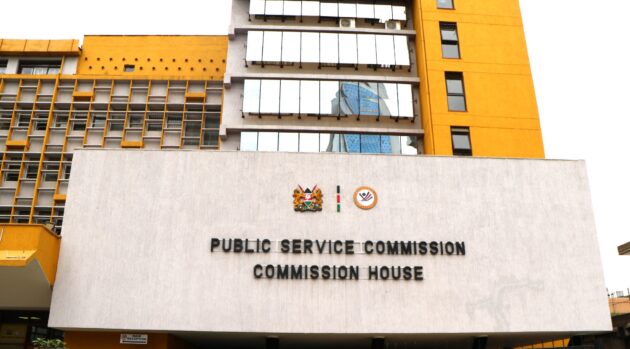
The court also noted that Ms Anunda’s downgrading from a permanent pensionable position to a five-year contract in 2020 could have been discriminatory, though the claim was time-barred. Despite this, Kemsa’s unexplained refusal to renew her contract in 2025 warranted damages. Preliminary objections by the Attorney General and Public Service Commission were dismissed, and the judgment cited the Supreme Court’s view that constitutional damages aim to vindicate violated rights even without proven financial loss
.png)


Join 1.5M Kenyans using Money254 to find better loans, savings accounts, and money tips today.


Money 254 is a new platform focused on helping you make more out of the money you have. We've created a simple, fast and secure way to find and compare financial products that best match your needs. All of the information shown is from products available at established financial institutions that our team of experts has tirelessly collected.





.jpg)



%20(1).jpg)