.jpg)
News and Analysis
September 16, 2026


Hello and welcome to the Money News Roundup Newsletter, where we are covering why the government could compensate Koko Ksh23 billion as it exits the Kenyan market. We also cover plans by the government to introduce a bond targeting investors with as low as Ksh500.
The government faces a Ksh23.1 billion claim from clean energy startup Koko Networks, following its planned exit from Kenya.
Koko, backed by the World Bank’s Multilateral Investment Guarantee Agency (MIGA), is on the verge of bankruptcy after shutting down Kenyan operations due to a dispute with the government over the sale of carbon credits.
As reported by the Business Daily, the company did not receive letters of authorisation to sell credits in compliance markets, denying it crucial revenue.
Under the MIGA agreement, which provides political risk insurance, Kenya is legally bound to compensate investors if the government blocks or interferes with trade. Koko plans to file a claim, which could force the State to pay the insured amount.
Koko invested Ksh38.7 billion to build a network supplying bioethanol fuel to 1.5 million low-income households. Its model involved selling stoves and fuel at subsidised prices, funding operations through carbon credit sales.
Credits are sold to companies, including airlines, under Article 6 of the UN Paris Agreement, with one credit equivalent to one ton of emissions.
The government’s failure to issue authorisation letters leaves it exposed to a costly breach-of-contract claim, raising concerns over Kenya’s green investment reputation and the viability of the cookstove financing model.
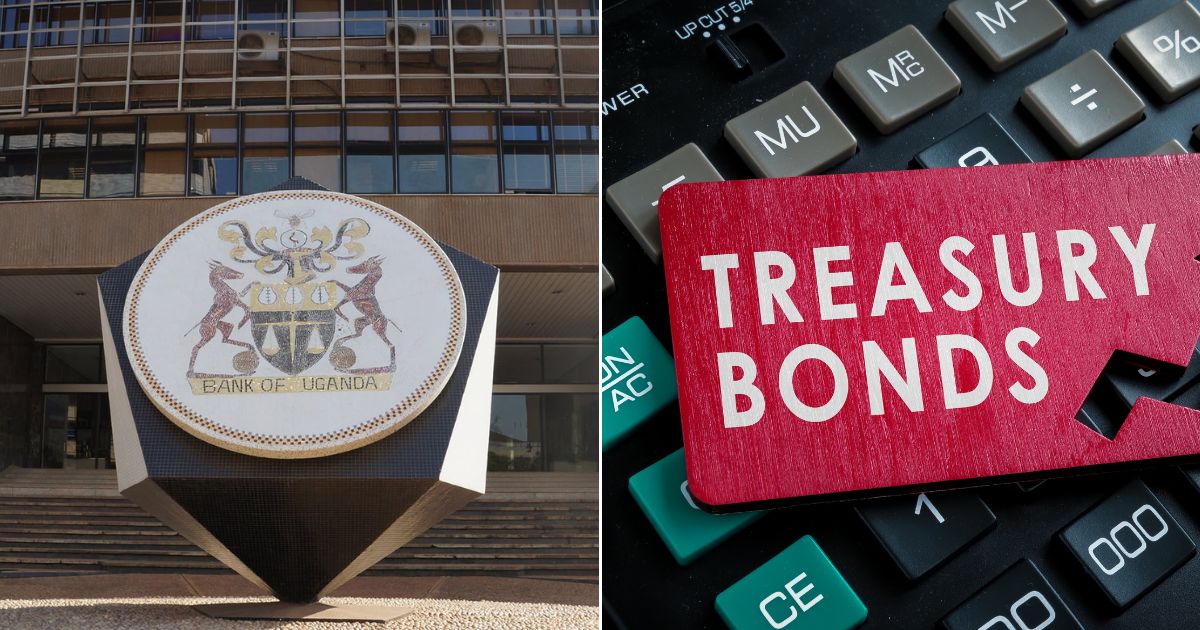
The National Treasury is developing a new retail bond programme that will allow Kenyans to invest from as little as Ksh500, in a bid to deepen the domestic debt market and reduce reliance on costly external borrowing.
As reported by the Business Daily, the initiative is a revamped version of the failed M-Akiba bond, which had a minimum investment of Ksh3,000.
The new programme, expected to launch in July 2027, will be integrated into the CBK’s DhowCSD system and linked to mobile money platforms, enabling small investors to buy bonds directly.
Returns are expected to range between 12% and 14%.
Treasury officials say the framework is still being finalised, with lessons from M-Akiba informing the redesign. The bond will also be rebranded to distance it from the earlier flop, as Treasury explores innovative financing options to manage public debt.
East African Breweries has declared an interim dividend of Ksh4 per share after posting a strong recovery in earnings for the six months to December 2025.
As reported by the Kenyan Wall Street, profit after tax rose by 38% to Ksh11.2 billion, supported by higher volumes, improved margins, and sharply lower finance costs following sustained debt reduction.
Revenue grew by 11% year on year to a record Ksh75.5 billion, with Tanzania and Uganda driving growth, while Kenya remained subdued amid weak consumer spending.
Earnings Before Interest and Taxes increased by 20% to Ksh18.6 billion, and operating cash flow rose to Ksh25 billion. Total debt declined to Ksh37 billion, strengthening the balance sheet and supporting higher shareholder payouts.
Meanwhile, as reported by the Business Daily, the company is planning to issue a sustainability bond (green bond) in the near future.
The Milimani High Court has declared unconstitutional the Salaries and Remuneration Commission’s (SRC) approval of salary increases for public servants for the 2023/2024 and 2024/2025 financial years.
Justice Lawrence Mugambi ruled that the pay rises were implemented without adequate public participation and violated constitutional requirements on fiscal responsibility.
The court found that national and county governments breached the law by failing to maintain the mandated 35% wage-bill-to-revenue ratio.
As a result, the SRC was directed to file annual affidavits from 30 June 2026 to 30 June 2030, detailing measures to achieve and sustain the wage ceiling, including curbing abuse of allowances.
As reported by Capital Business, the court also ordered that all public institutions must obtain SRC approval before adjusting salaries, benefits, or allowances, reinforcing the commission’s oversight role and the need for fiscal discipline.
Umeme Limited has issued a second profit warning in just over three months, confirming it expects to post a full-year loss for 2025 after its 20-year electricity distribution concession in Uganda expired in March.
The notice, released on 29 January 2026, follows an earlier warning based on interim results and reflects the absence of revenue after operations ended on 31 March 2025.
With no ongoing business, Umeme’s financial position is now shaped by wind-down costs, asset recoveries, and an ongoing London arbitration with the Ugandan government over post-concession compensation.
The Ugandan government values the buyout at Ksh 15 billion, based on the Auditor General’s audit, while Umeme disputes the figure. Any arbitration award would be one-off, non-operating, and uncertain in timing and size. Read more.
Several domestic airlines plan to shift some flights from Wilson Airport to Jomo Kenyatta International Airport (JKIA) due to ongoing rehabilitation works at Wilson.
The Kenya Airports Authority is upgrading pavements, aprons, and both runways, affecting flight operations.
Wilson Airport, popular for its proximity to Nairobi’s CBD and residential areas like Karen and Kilimani, handles about 90% of domestic traffic in East and Central Africa. Safarilink, Renegade Air, AirKenya Express, and Skyward Express are among the affected carriers.
Safarilink CEO Alex Avedi confirmed that evening flights arriving after 6:00 pm will land at JKIA from 3 February. The relocation adds costs, including running parallel operations and transferring passengers. Other airlines are expected to follow suit as work continues, causing temporary disruptions for travellers. Read more.
Investors at the Nairobi Securities Exchange (NSE) gained 4.7% or Ksh138.5 billion in January, building on last year’s record 51.8% or Ksh1 trillion growth in market capitalisation, which stood at Ksh3.083 trillion by month-end.
Gains were driven by Safaricom, Co-operative Bank, Absa Bank and NCBA, which collectively added Ksh100.8 billion.
Strong performance in larger stocks continues amid low returns from government securities, with Treasury bond rates at 12.87%–14.18% and T-bills at 7.7%–9.2%.
According to the Business Daily, local investor activity has increased, supported by fractional trading and the Ksh106.3 billion IPO of Kenya Pipeline Company.
Safaricom added Ksh50 billion, Co-op Bank Ksh19 billion, Absa Ksh17.7 billion, and NCBA Ksh14 billion. EABL reported a 37.6% rise in half-year profit to Ksh11.16 billion and raised its interim dividend 60% to Ksh4 per share, boosting its share price by 5.4% to Ksh258.50.
.png)


Join 1.5M Kenyans using Money254 to find better loans, savings accounts, and money tips today.


Money 254 is a new platform focused on helping you make more out of the money you have. We've created a simple, fast and secure way to find and compare financial products that best match your needs. All of the information shown is from products available at established financial institutions that our team of experts has tirelessly collected.









%20(1).jpg)