News and Analysis
November 26, 2026



Hello and welcome to the Money News Roundup. Today, we look at a US consortium’s plans for Kenya’s Ksh8 trillion Mrima Hills mineral deposits, including the government’s 10% stake. We also cover Tata Chemicals’ threat to pursue international arbitration over the revocation of its Magadi mining licence.
Kenya will receive a 10% stake in the Mrima Hills mining project in Kwale County, alongside royalties and taxes, under a deal with US-based Frontier Minerals Consortium to develop the rare earth and niobium deposits.
Frontier Minerals managing member Bradley Barnett, in an interview with the Business Daily, said the project would also create opportunities for local suppliers, community development programmes and technology transfer.
The consortium plans to establish a processing and refining plant, preferably in Kwale County, subject to feasibility studies assessing land, electricity, water, labour and environmental requirements.
The project will use ReElement Technologies’ chromatography separation system to refine rare earth minerals into individual products rather than intermediate mixtures. The company says the technology could reduce environmental pollution associated with conventional processing.
On employment, the consortium has committed to a 76% Kenyan workforce within three years, rising to 95% within five years of production. It also plans to train local workers to eventually take over technical and management positions.
Barnett cautioned that the Ksh8 trillion estimated value of the deposits is not the project's confirmed commercial value, which will depend on feasibility studies and development costs.
Meanwhile, Australian mining firm RareX Limited has challenged the proposed award of the Ksh8 trillion Mrima Hill niobium and rare earths project in Kwale County to a US-led consortium.RareX, which partnered with Iluka Resources, claims the winning Frontier Minerals Consortium submitted its Expression of Interest after the March 24, 2026 deadline, making it ineligible.
India’s Tata Chemicals has threatened to pursue international arbitration if Kenyan courts fail to overturn the cancellation of its subsidiary’s Magadi mining rights.
The Ministry of Mining revoked Tata Chemicals Magadi Limited’s operating licence on July 28, 2026, citing regulatory and statutory non-compliance.
As reported by the Business Daily, CEO Ramakrishnan Mukundan said the company would first pursue its case before Kenya’s Environment and Land Court but could invoke protections under the UK-Kenya Bilateral Investment Treaty.
The company argues that its UK-registered subsidiary has valid mining rights under a lease running until 2053 and that it has paid outstanding royalties.
Meanwhile, a joint committee involving the government and company is reviewing the dispute.
Kenyan commercial banks increased pre-tax profits by 17.4% to Ksh267.6 billion in the nine months to September 2026, benefiting from wider interest margins after cutting deposit rates faster than lending rates.
As reported by the Business Daily, CBK data shows average savings rates declined to 6.86% from 8.5%, while lending rates fell by a smaller margin to 15.5% from 16.5%.
The interest rate spread consequently widened to 7.6% from 6.9%, boosting lenders' earnings.
Equity Bank, KCB, NCBA and Co-operative Bank recorded significant profit growth. Meanwhile, customer deposits grew 0.8% to Ksh6.72 trillion, against 3.1% growth in loans to Ksh4.78 trillion.
Banks also benefited from improving loan quality, with non-performing loans declining from 14.8% in June to 13.9% in September.
Kenya is projecting a Ksh1.228 trillion budget deficit for the 2027/28 financial year, with the National Treasury planning to bridge the gap through Ksh570 billion in external borrowing and Ksh658.9 billion in domestic borrowing.
As reported by Citizen Digital, the Treasury has projected the national budget at Ksh5.235 trillion, up from Ksh4.819 trillion in the current financial year.
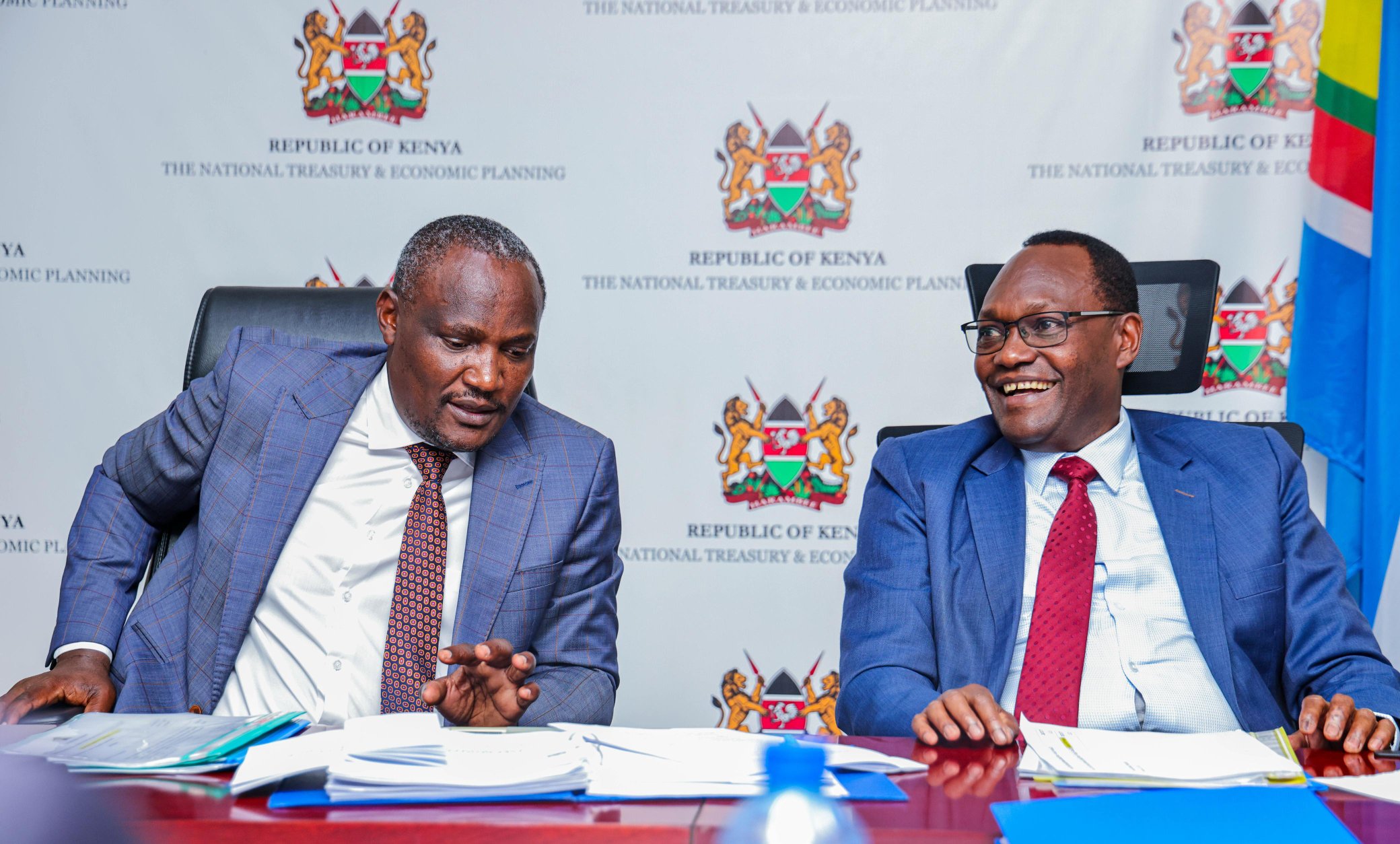
Treasury CS John Mbadi said the government expects to collect Ksh3.923 trillion in revenue.
The proposed expenditure includes Ksh3.810 trillion for recurrent spending and Ksh917.1 billion for development.
Education receives the largest allocation at Ksh857.35 billion, followed by energy, infrastructure and ICT at Ksh582.4 billion.
Kenya’s retirement preparedness improved to 57.9% in 2026, up from 54.2% in 2025, but most retirees still struggle financially, a new ICEA LION study has found.
As reported by the Star, the 2026 Retirement Preparedness Index revealed that only 39% of retirees can fully meet monthly expenses, despite 76% owning rural homes.
Healthcare and family obligations remain major burdens, with 45% spending over 30% of their income on medical bills, while 96% continue supporting dependants.
Meanwhile, pension coverage among working adults rose marginally to 58%, highlighting persistent retirement savings gaps.
Centum Investment Company Plc has confirmed Thomas Omondi-Achola as its Group Chief Executive Officer and Managing Director, months after appointing him in an acting capacity. His appointment takes effect immediately.
As reported by Capital Business, Omondi-Achola became Acting Group CEO on September 7, 2026, following James Mworia’s departure to head the National Infrastructure Fund.
Before his appointment, he served as Centum’s Partner in charge of Portfolio Operations and Group COO from 2018. He previously spent over 13 years at Kenya Airways in senior leadership roles, including Chief Transformation Officer.
Meanwhile, as reported by Nation, Kenya Pipeline Company (KPC) has confirmed Pius Mwendwa as its Managing Director and CEO, ending his acting tenure that began on April 8, 2026.
Mwendwa joined KPC in 2010 and previously served as General Manager for Finance, Corporate Finance Manager and Chief Accountant. Before that, he worked at Nation Media Group for over 10 years.
Also in the News


Join 1.5M Kenyans using Money254 to find better loans, savings accounts, and money tips today.


Money 254 is a new platform focused on helping you make more out of the money you have. We've created a simple, fast and secure way to find and compare financial products that best match your needs. All of the information shown is from products available at established financial institutions that our team of experts has tirelessly collected.