News and Analysis
October 23, 2026


Hello and welcome to the Money News Roundup Newsletter, where we cover government plans to build a railway line from Nakuru to the Turkana oil project. We also cover plans by the Aga Khan Fund to sell its stake in Nation Media Group to a Tanzanian Investor.
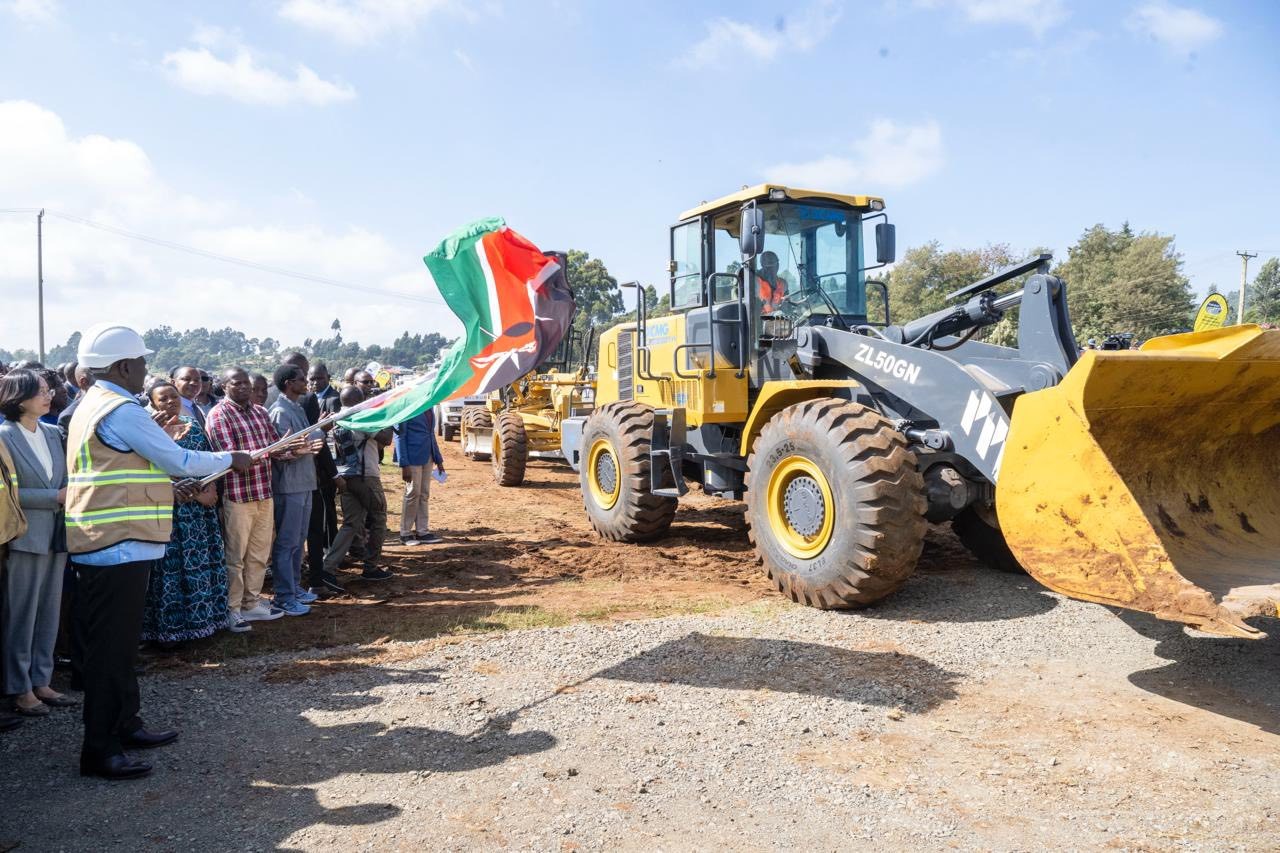
Kenya plans to build a metre gauge railway of about 640 km from Rongai in Nakuru to South Lokichar in Turkana at a projected cost of Ksh220 billion, replacing the earlier plan for an 892 km crude oil pipeline to Mombasa, which would have cost about Ksh193.87 billion.
Gulf Energy will start producing crude from Blocks 10BB and 13T by December 2026, initially trucking 20,000 barrels per day to the port, with the MGR handling exports from January 2032 when daily output is expected to hit 50,000 barrels.
As reported by the Business Daily, the MGR extension will eventually reach Nakodok at the South Sudan border, using 155 insulated train wagons daily in phase two.
Gulf acquired the blocks from Tullow Kenya BV for Ksh15.5 billion and leased an onshore oil rig for Ksh1.93 billion to meet the first oil target.
Also Read: All You Need to Know About Username SACCO
The Aga Khan Fund for Economic Development (AKFED) has agreed to sell its stake in Nation Media Group (NMG) to Taarifa Ltd, a company owned by Tanzanian businessman Rostam Azizi.
In a statement on Tuesday, AKFED said it would sell its 100% shareholding in NPRT Holdings Africa Limited, which holds a 54.08% controlling stake in NMG. The deal ends Aga Khan’s 66-year relationship with the regional media house that began in 1959.
As reported by Business Daily, the transaction is expected to close within three to four months, subject to regulatory approvals.
Taarifa Ltd said it has no plans to buy out minority shareholders or delist NMG from the Nairobi Securities Exchange, Uganda Securities Exchange, Dar es Salaam Stock Exchange and Rwanda Stock Exchange.
Founded by Aga Khan IV, NMG began with the Kiswahili newspaper Taifa Leo before launching the Daily Nation in 1960.
AKFED Director Sultan Allana said the group was proud to have built one of Africa’s most respected media institutions.
NMG CEO Geoffrey Odundo said operations would continue normally during the transition as the company pursues further digital growth.
Members of Parliament have revised the government’s plan to partially sell its stake in Safaricom, introducing protections for employees and business partners as the State proceeds with the transaction.
A joint report by the National Assembly’s Finance Committee, chaired by Kimani Kuria, and the Public Debt Committee, chaired by Omar Shurie, proposed amendments to the plan to divest part of the government’s shareholding.
The government intends to sell up to 15% of its stake to Vodacom Group through a block trade on the Nairobi Securities Exchange. The sale of about six billion shares at an estimated Ksh34 each could raise roughly Ksh204 billion.
As reported by the Capital Business, lawmakers strengthened provisions to prevent job losses and directed the National Treasury of Kenya to maintain Safaricom’s current operational structure for at least ten years.
Parliament also recommended that proceeds from the sale be channelled into the National Infrastructure Fund to finance major development projects.
The government plans to sell the Kenya Roads Board (KRB) bond to the public and list it on the Nairobi Securities Exchange, a move confirmed by President William Ruto.
As reported by the Business Daily, proceeds of Ksh175 billion will repay bridge loans used to settle pending road sector bills up to December 2024.
Investors will be paid from the securitised Road Maintenance Levy Fund, which hives off Ksh7 per Ksh25 of petrol and diesel sales.
Four banks, including KCB Bank Kenya and Trade and Development Bank, funded the initial settlements, allowing contractors to resume work.
A second bond of Ksh125 billion is planned, with Ksh12 per litre of fuel allocated to service both bonds.
KCB Group and other investors are set to earn over Ksh42 billion over 21 years from Kenya’s smart driving licence project, a public-private partnership (PPP) with NTSA.
The consortium, including Pesa Print, will recoup its investment through fees, including Ksh3,000 per licence and instant fines ranging from Ksh500 to Ksh10,000. The 21-year project aims to issue five million chip-embedded licences and deploy 1,000 smart cameras to curb speeding and traffic violations.
Pesa Print, partly owned by Jabir Abdul Nassir Abdalla Al-Kindy and Faryd Abdulrazak Sheikh, will invest the Ksh42 billion within the first three years.
The project, delayed from its original 2020 timeline, is designed as a self-funded system generating revenue for investors while improving road safety. Read more
A cyberattack on the National Social Security Fund (NSSF) system slowed operations, causing a rare drop in payouts to exiting members in the year ended June 2025.
Benefits paid fell to Ksh8.74 billion from Ksh9.71 billion the previous year, Ksh997 million below budget, marking the first decline in over five years.
The attack disrupted processing and led to backlogs, though the system has since been secured with enhanced cybersecurity measures. NSSF collected Ksh83.97 billion in contributions, averaging Ksh230 million daily, from 3.6 million active members and 77,764 employees.
During the period, the fund paid Ksh3.85 billion in age benefits, Ksh867.36 million in withdrawals, and Ksh298.76 million in survivors’ benefits. Cumulative members’ funds rose 43% to Ksh572.77 billion. Read more
The High Court has dismissed a petition seeking to suspend the new instant traffic fines system introduced by NTSA.
As reported by Citizen Digital, motorist Kennedy Maingi Mutwiri had argued that the system grants NTSA excessive powers that could be used to harass drivers. However, the court declined to halt its rollout.
The camera-based system, launched on Monday, detects speeding vehicles and issues instant fines, a move that has sparked debate among motorists who say the penalties are too high.
NTSA Director General Nashon Kondiwa defended the system, saying it aims to curb corruption and improve road safety.
He explained that cameras will capture vehicles exceeding speed limits and provide photographic evidence in case of disputes.
Motorists will initially pay fines through KCB Bank as NTSA expands payment options.
Stanbic Holdings has increased its dividend per share for the fourth consecutive year to Ksh22.35, even as net profit for the year ended December 2025 remained flat at Ksh13.72 billion.
As reported by the Business Daily, the final dividend of Ksh18.55 adds to the interim Ksh3.80, marking a 7.7% rise from last year and the highest payout in the company’s history at Ksh8.83 billion.
Net interest income fell to Ksh24.08 billion and non-interest income to Ksh14.43 billion, while operating expenses rose to Ksh17.95 billion.
Total assets grew to Ksh541.25 billion, with deposits increasing to Ksh418.61 billion, reflecting strong growth despite flat profits.
Mwalimu National DT Sacco, Kenya’s largest Sacco by assets, reported that its loans and advances grew by 19.3 per cent to Ksh56.3 billion, while total assets rose past Ksh76.3 billion.
As reported by the Kenyan Wall Street, Net interest income increased by 11 per cent to Ksh3.53 billion, although administrative expenses climbed faster, rising by 17.7 per cent to Ksh3.0 billion.
Loan impairment charges also rose by 5.4 per cent to Ksh960.3 million as credit risks in the sector persist.
The Sacco Societies Regulatory Authority (SASRA) previously flagged the Sacco for breaching the 8% institutional capital threshold after the Spire Bank divestiture.
The sacco announced a dividend payout of 13 per cent for investors based on the 2025 financial reports. The institution will also pay an interest of 10.05% on deposits.
The Retirement Benefits Authority (RBA) has renewed the operating licence of KUSCCO Mutual Assurance Limited, allowing the firm to continue administering pension schemes despite the financial scandal involving its parent body, KUSCCO.
In a notice dated February 28, 2026, RBA listed the firm among more than 30 pension administrators approved to operate under the Retirement Benefits Act (Kenya).
As reported by Capital Business, KUSCCO Mutual Assurance provides pension administration services, mainly to schemes linked to the Sacco sector.
The renewal comes as investigations continue into alleged financial mismanagement at KUSCCO, where senior officials are accused of overseeing losses of about Ksh15 billion belonging to depositors and cooperative societies.
.png)


Join 1.5M Kenyans using Money254 to find better loans, savings accounts, and money tips today.


Money 254 is a new platform focused on helping you make more out of the money you have. We've created a simple, fast and secure way to find and compare financial products that best match your needs. All of the information shown is from products available at established financial institutions that our team of experts has tirelessly collected.