News and Analysis
September 18, 2026


Hello and welcome to the Money News Roundup Newsletter. In today’s edition, we highlight why the Dangote IPO will not be cross-listed on the NSE, why Kenyans are turning to Treasury bills and bonds, and how Safaricom’s fixed internet subscriptions have surpassed one million.
Kenyan investors hoping to buy the Dangote Oil Refinery's initial public offering (IPO), which is currently open through the Nigerian Exchange, will have to wait after plans to list on the Nairobi Security Exchange (NSE) were halted.
According to Business Daily, the oil refinery's IPO listing, which had initially been planned for cross-listing on other exchanges including Kenya, South Africa, Egypt, Ghana and Rwanda, has been restricted to the Nigerian domestic market.
The IPO is aimed at raising up to Ksh200.8 billion ($1.55 billion) by selling a 3% stake in the global company.
The paper further reported that since the offer is domiciled in Nigeria with no cross-listing, Kenyan investors can only access it indirectly through private transactions. These alternative means include mobile and web-based trading and investment platforms, some of which have reported that only Nigerian investors could access the IPO.
Sources have also raised concerns over the short IPO window, noting that cross-listing on a market like Kenya could have required approval from the Capital Markets Authority (CMA).
NSE Chief Executive Officer Frank Mwiti, however, noted that the institution was “working on bringing an approved solution for all Kenyans which is also aligned with the issuer.”
The IPO opened on September 14 and is expected to run until October 13 this year.
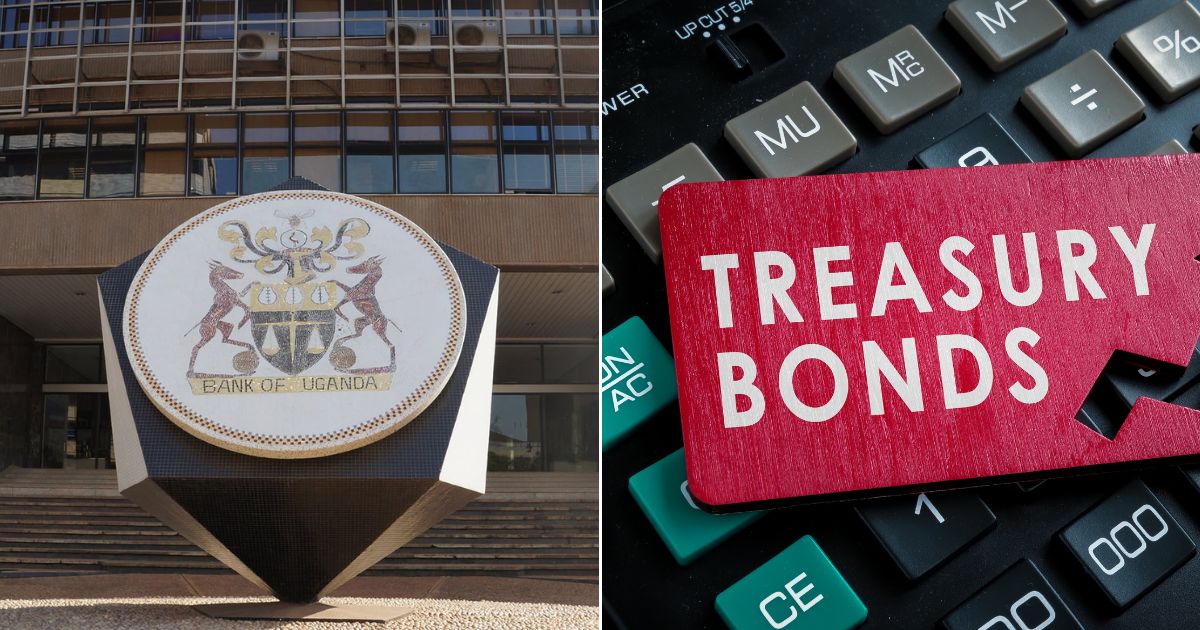
Kenyan investors are turning to Treasury bills and bonds as the stock market continues to record a decline in share prices.
A report by The Star indicated that investors bid Ksh42.7 billion for Treasury bills as of September 17, against Ksh28 billion that was on offer, representing a subscription rate of 152.6%.
The paper further reported that a day earlier, investors bid Ksh81.4 billion for the reopened 20-year and 30-year Treasury bonds. This represented a 135.7% oversubscription against a target of Ksh60 billion set by the Central Bank of Kenya.
The increased appetite for bills and bonds comes even as the two instruments have recorded a slight decline in returns, with the 364-day Treasury bills yielding an average of 9.1%, compared to 9.21% at the start of 2026.
Kenyan banks with core capital below 8.625% of their loan book could be barred from paying dividends under new proposals by the Central Bank of Kenya (CBK). Banks with capital ratios between 8.625% and 10.5% would face progressively stricter payout limits, while lenders above 10.5% could distribute their full profits as dividends.
Business Daily reports that under the proposed rules, banks with a CET1 ratio of 8.625%–9.25% would retain at least 80% of earnings, those between 9.25% and 9.875% would retain 60%, and those between 9.875% and 10.5% would retain 40%. Banks seeking to distribute more than allowed could raise additional private-sector capital equivalent to the excess amount.
The proposals also introduce a countercyclical capital buffer of up to 2.5% and additional capital requirements for domestic systemically important banks (D-SIBs). This could push the core capital requirement for some large banks to as high as 19.5%. The changes could weigh on dividend payouts in the short term, although analysts expect stronger capital buffers to improve banks' resilience to financial shocks over the long term.
Kenya has recorded a decline of 300 dollar millionaires, highlighting the challenging economic environment.
Citing the Africa Wealth Report 2026, The EastAfrican reported that the number of high-net-worth individuals with more than $1 million fell by 4.41% to 6,500 in the 12 months to June 2026, from 6,800 during the same period last year.
Experts attributed the decline to the high cost of living, elevated interest rates and recent political and social unrest, which have affected investor confidence and predictability.
Nairobi accounted for 200 of the decline, with the number of dollar millionaires falling from 4,200 to 4,000. Johannesburg remains Africa’s wealthiest city.
Safaricom has crossed the one-million mark in fixed internet subscriptions, reaching 1.025 million by June and securing a 36.1% market share. According to the Star, this represents a 39.3% increase from the 735,749 subscriptions recorded a year earlier.
Kenya’s overall fixed internet market also grew by 32.4% year-on-year to 2.84 million subscriptions, driven by rising demand for high-speed connectivity, increased competition and infrastructure expansion. Safaricom’s subscriptions have grown significantly from 269,397 five years ago and just 40,015 in September 2017.
Jamii Telecommunications ranked second with 541,003 subscriptions and a 19.1% market share, followed by Wananchi Group, which operates Zuku, with 294,375 subscriptions. Ahadi Wireless, which operates Konnect Internet, climbed to fourth with 270,586 subscriptions, while Poa Internet’s subscriptions declined 3.1% during the quarter to 248,601.
The Ministry of Energy and Petroleum on Sunday defended the government-to-government (G-to-G) fuel import arrangement, with CS Opiyo Wandayi noting that the programme was introduced at a time when Kenya was facing an acute shortage of US dollars. This came in response to scrutiny after Uganda President Yoweri Museveni lamented that his government had been buying petroleum products through intermediaries in Kenya at higher premiums.
Millions of Grade 11 learners in public schools could begin the 2027 academic year without textbooks if the government fails to clear outstanding payments and provide accurate enrolment data, the Kenya Publishers Association (KPA) has warned. Per People Daily, the association has asked the National Treasury to settle pending bills amounting to Ksh7 billion within a month to give publishers enough time to print and distribute textbooks ahead of the 2027 school calendar.
.png)


Join 1.5M Kenyans using Money254 to find better loans, savings accounts, and money tips today.


Money 254 is a new platform focused on helping you make more out of the money you have. We've created a simple, fast and secure way to find and compare financial products that best match your needs. All of the information shown is from products available at established financial institutions that our team of experts has tirelessly collected.




.jpg)









%20(1).jpg)