News and Analysis
September 14, 2026


Hello and welcome to the Money News Roundup Newsletter, where we are covering the latest court directive on SHIF and Housing Levy deductions on job termination benefits. We also cover the government response to sharing data with the US in the health funding deal.
The Employment and Labour Relations Court has ruled that deducting Housing Levy and SHIF contributions from compensation awarded for unfair termination of employment amounts to an unfair labour practice.
As reported by the Business Daily, however, the court affirmed that PAYE remains applicable to the benefits.
The Employment and Labour Relations Court made the decision in a dispute between Fourth Generation Capital Ltd and its former employee, Alexander John Frank Stubbs. Stubbs had earlier been awarded Ksh2.8 million as compensation for unfair termination and pay in lieu of notice.
However, his former employer deducted about Ksh1 million covering PAYE, NSSF, SHIF, and the Housing Levy before paying out the balance, triggering a fresh legal battle.
The court was asked to determine which statutory deductions lawfully apply to compensation paid after employment has ended. Stubbs argued that such awards are not employment income and should not attract deductions tied to ongoing employment.
The company maintained that all deductions were lawful, citing provisions of the Income Tax Act.
In its ruling, the court distinguished between income tax and employment-linked levies. It held that compensation for unfair termination qualifies as taxable income under Sections 3 and 5 of the Income Tax Act and is therefore subject to PAYE. However, it ruled that housing levy and social health insurance deductions are linked to active employment and cannot be imposed after separation, as this would amount to double payment.
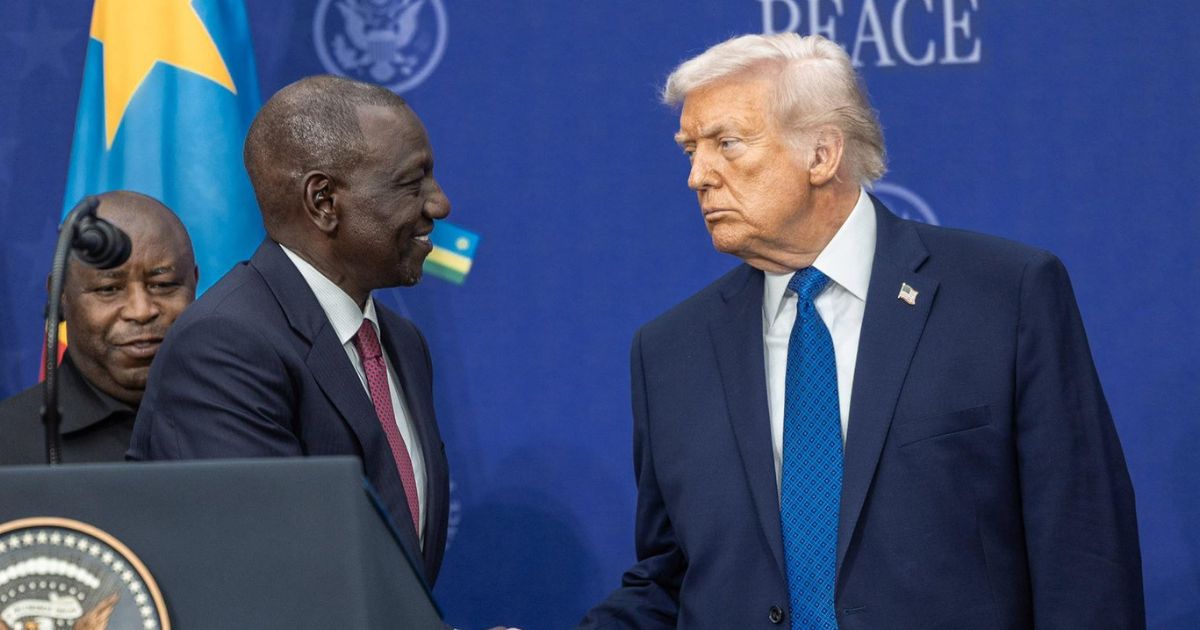
Health Cabinet Secretary Aden Duale has dismissed claims that Kenya will share citizens’ personal medical records with the United States under the newly signed Kenya–US Health Cooperation Framework.
As reported by Citizen Digital, he said the seven-year agreement only allows the exchange of aggregated health data and excludes personal identifiers such as IDs, addresses, or individual medical files.
Duale said the framework complies with the Constitution, the Health Act of 2017, and the Data Protection Act of 2019, insisting that Kenya retains full data sovereignty. He added that the government controls what data is collected, its purpose, security, and access.
The CS also clarified that any data-sharing arrangements will focus on totals, trends, and performance indicators. A process-metric audit will allow verification in up to 5% of selected health facilities.
Under the deal, the US will inject about Ksh208 billion into Kenya’s health sector over five years, followed by two years of reporting and reviews.
As in the Business Daily, Isuzu East Africa has begun local assembly of its mu-X sport utility vehicle (SUV), a move expected to cut prices by at least Ksh3.5 million and achieve 100% local production.
Previously imported from Thailand since 2020, the locally assembled mu-X now benefits from government tax incentives aimed at boosting domestic manufacturing.
The 3-litre diesel variant, which costs Ksh13.5 million as a fully built import, is expected to retail below Ksh10 million, while the 1.9-litre diesel model should fall below Ksh9 million from Ksh12 million.
Assemblers are exempt from the 35% import duty and 20%–35% excise duty, and pay lower import declaration and railway levies.
Isuzu says this supports the Buy Kenya, Build Kenya agenda and enhances its competitiveness against rivals such as the Toyota Fortuner.
SBM Bank Kenya has opened a special deposit window to raise Ksh3.5 billion in fresh funds, offering investors returns of up to 11.25% for shillings and 6.5% for dollars.
The high-yield fixed deposit, available in Kenyan shillings and US dollars, is open for about two weeks or until the target is met.
Shilling deposits of at least Ksh10 million locked for two years will earn 11% annually, rising to 11.25% for a three-year term.
Dollar deposits of at least $100,000 (about Ksh12.9 million) will earn 6% and 6.5% for two- and three-year terms, respectively. Interest will be paid every six months.
SBM aims to raise Ksh1.5 billion from two-year deposits and Ksh2 billion from three-year placements, at a time when average deposit rates have fallen to 7.5%, making the offer attractive to savers. Read more.
Kenya recorded the strongest private sector expansion among major African economies in November, topping S&P Global’s PMI rankings with a score of 55.0.
As reported by Finance in Africa, the reading marked the fastest growth in five years, driven by rising sales, new customer orders, and easing price pressures. Uganda followed with a PMI of 53.8, while Nigeria ranked third at 53.6, extending its expansion streak to 12 months.
Zambia, Egypt, Mozambique, and Ghana also posted readings above 50, signalling modest improvements, while South Africa remained the only economy in contraction. A PMI above 50 indicates growth.
The World Bank says sub-Saharan Africa’s recovery is strengthening, with GDP growth projected to rise from 3.5% in 2024 to 3.8% in 2025, supported by moderating inflation and improving business conditions across the region.
The World Bank has renewed pressure on Kenya’s telecoms regulator to cut mobile termination rates (MTRs), arguing that delayed adoption of cost-based pricing has denied consumers cheaper calls.
The current MTR of Ksh0.41 per minute, reduced from Ksh0.58 in March 2024, expires on February 28, 2026.
The lender says the rate remains well above the estimated cost of Ksh0.06 per minute identified by the Communications Authority and is higher than peers such as Tanzania and Ghana. Tanzania’s MTR, currently about Ksh0.089, will fall further by 2027.
The World Bank warns that high MTRs favour large operators like Safaricom, which holds a 63.4% market share.
As in the Business Daily, the World Bank says lower wholesale charges would boost competition and reduce call prices, especially for low-income users who rely heavily on voice calls.
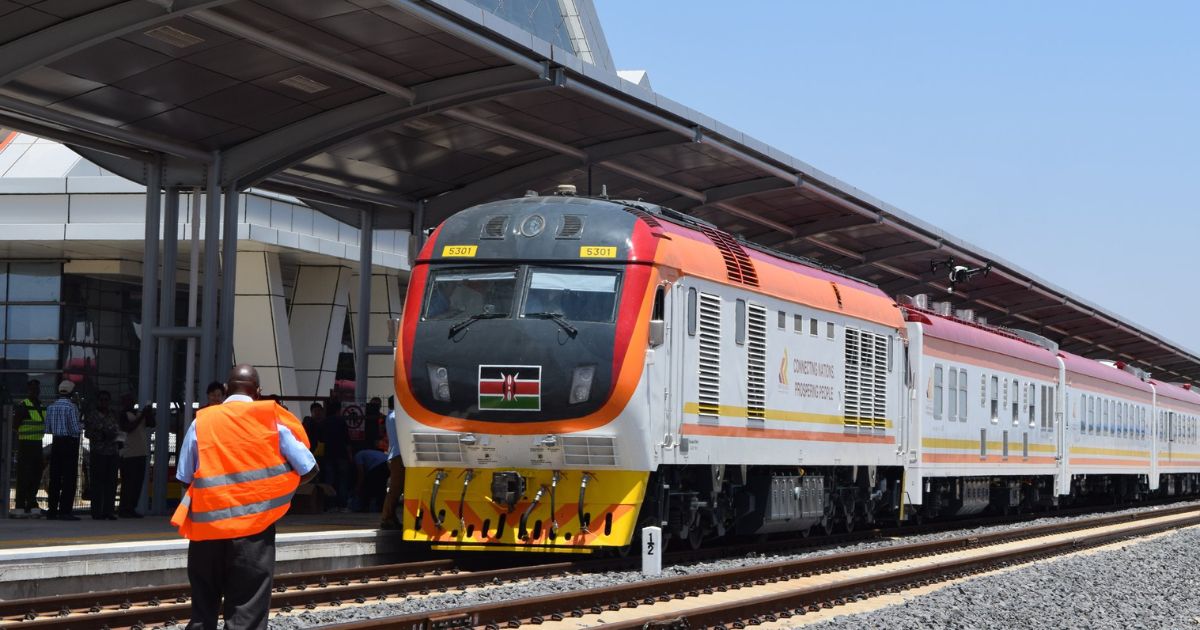
Gulf Energy wants the Government to extend the railway to Lokichar, Turkana County, by 2030 to transport crude oil to Mombasa, abandoning earlier plans for an export pipeline.
In its Field Development Plan (FDP), the firm proposes a government-funded metre-gauge railway linking Lokichar to the existing network at towns such as Kitale, Nakuru, or Eldoret.
The plan replaces a proposed pipeline to Lamu that was estimated to cost Ksh193.5 billion. Gulf targets commercial production by December 2026, starting at 20,000 barrels per day using trucks, before scaling up to 50,000 barrels per day supported by rail transport. Combined trucking and rail costs are estimated at Ksh687.29 billion.
As reported by the Business Daily, Gulf says extending the rail line is more viable than running up to 1,500 trucks daily. The Ministry of Energy has approved the FDP, which is awaiting parliamentary ratification.
The Universities’ Academic Staff Union (UASU) has petitioned the International Monetary Fund (IMF) to intervene in Kenya’s public university sector over stalled salaries, unimplemented collective bargaining agreements (CBAs), and alleged overreach by the Salaries and Remuneration Commission (SRC).
As reported in the Eastleigh Voice, UASU says SRC advisories have become binding directives, undermining free collective bargaining guaranteed under Article 41 of the Constitution.
The union also blames delayed and inadequate funding from the National Treasury for persistent salary and allowance arrears, which it says have hurt staff morale and triggered repeated strikes.
UASU further cites a lack of budgeting for promotions, acute staff shortages exceeding 25,000 lecturers, and pay disparities where academic staff receive a 4% annual increment compared with up to 12% for other public servants.
The petition was submitted to the IMF ahead of its wage bill mission, which was scheduled for November 17–25, 2025.
.png)


Join 1.5M Kenyans using Money254 to find better loans, savings accounts, and money tips today.


Money 254 is a new platform focused on helping you make more out of the money you have. We've created a simple, fast and secure way to find and compare financial products that best match your needs. All of the information shown is from products available at established financial institutions that our team of experts has tirelessly collected.








%20(1).jpg)