News and Analysis
October 15, 2026


Welcome to the Money News Roundup. Today, we break down EPRA's new electricity charges and explain how the government will retain a share of excess profits under the deal with the Chinese firms constructing the Rironi-Mau Summit Highway.
Electricity bills will increase in July 2026 after EPRA approved monthly adjustments, adding about Ksh5.18 per kilowatt-hour (kWh) to power costs.
As reported by Kenyans.co.ke, the biggest increase is the Fuel Energy Cost Charge, which rose to Ksh3.20 per unit, followed by a Foreign Exchange Fluctuation Adjustment of Ksh1.4841 per unit.
Consumers will also pay an Inflation Adjustment of Ksh0.48 per unit and a Water Resources Management Authority levy of 1.57 cents per unit.
Overall, a household consuming 100 units of electricity will pay about Ksh518 more before taxes and other statutory charges.
The monthly adjustments are separate from the base electricity tariff and are reviewed based on fuel prices, exchange rates and other regulatory costs.
Already, consumers have noticed a reduction in their token amounts. For instance, at the end of June, for Ksh100, one would have received 4.1 tokens. However, currently, they are receiving 3.8 tokens.
The government will receive 60% of profits earned above a 16% internal rate of return (IRR) from the Rironi-Mau Summit toll road under a new revenue-sharing arrangement with Chinese contractors.
As reported by Nation, according to National Treasury documents, the excess earnings will be shared with the State and partly reinvested in maintaining and upgrading the 236-kilometre highway.
The model also shields taxpayers by avoiding a minimum revenue guarantee, meaning private investors will bear the risk if toll collections fall short.
A consortium of China Road and Bridge Corporation (CRBC) and NSSF is constructing part of the road, while Shandong Hi-Speed Road and Bridge International Engineering is building another section.
Unlike the Nairobi Expressway concession, where the operator keeps all excess revenue, the new model allows the government to benefit from strong traffic performance while private firms absorb construction and operational risks.
Tanzanian billionaire Mohammed Dewji has expressed his willingness to invest about Ksh13 billion ($100 million) in Aliko Dangote's proposed oil refinery in Lamu.
As reported by Bloomberg, Dewji said he plans to reach out to Dangote to discuss joining the Ksh2.2 trillion refinery project, whose construction is expected to begin this month.
The proposed refinery is expected to take about five years to complete and will mirror Dangote's Lagos refinery, making it one of Africa's largest refining complexes.
The project was initially planned for Tanzania before being moved to Kenya, with Dangote citing commercial and technical considerations for the change in location.
The Dangote Group is also expected to source funding from other investors to finance the project. However, the exact amount it plans to raise from external partners has not yet been made public.
Dewji is also expected to set up a Ksh6.5 billion beverage plant in Lamu.
The High Court has upheld Kenya Power's decision to terminate a Ksh410.6 million contract for the supply of electricity poles after finding the supplier repeatedly failed to meet delivery deadlines.
As reported by the Business Daily, the court dismissed Inter Tropical Timber Trading Ltd's Ksh284.9 million breach-of-contract claim, ruling that an expired contract cannot be revived through later negotiations or emails.
The dispute arose from a 2012 agreement to supply 29,500 treated poles, but the supplier failed to deliver all the poles despite receiving several extensions.
The court found Kenya Power lawfully terminated the contract after it expired, adding that the supplier remained in material breach. It also rejected claims for compensation over undelivered poles and other alleged losses, citing insufficient evidence.
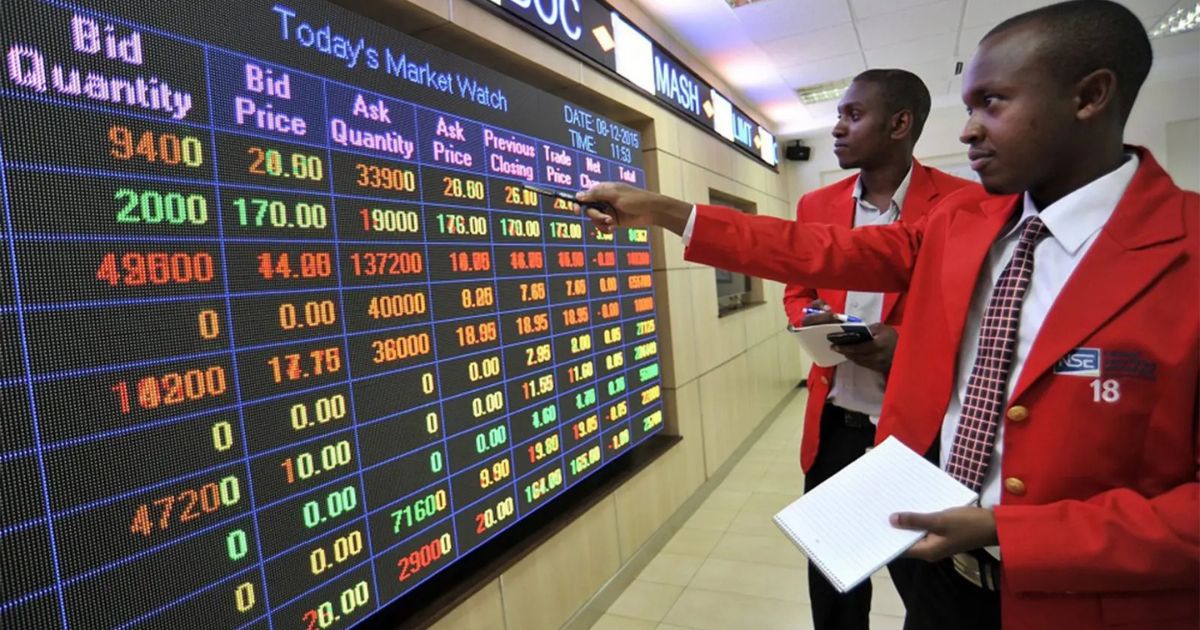
The Nairobi Securities Exchange (NSE) raised Ksh4.7 million after 10 of 17 artworks were sold at its inaugural art auction held on July 2, 2026.
As reported by the Kenyan Wall Street, the event, organised with Circle Art Agency, brought together collectors, investors and business leaders as the NSE sought to position art as an alternative investment alongside stocks and bonds.
Officiated by Culture Principal Secretary Ummi Bashir and chaired by outgoing NSE Board Chairman Kiprono Kittony, the auction forms part of the Exchange's broader strategy to develop East African art as an investable asset, with plans including art-backed securities and fractional ownership.
Kenya and Ethiopia have signed a new electricity supply agreement aimed at expanding cross-border power trade and strengthening regional energy connectivity.
As reported by Capital Business, under the deal signed between the Ethiopian Electric Utility (EEU) and Kenya Power, Ethiopia will supply electricity at about 24.07 birr (approximately $0.15) per kilowatt-hour.
The agreement is expected to improve reliable electricity supply along the shared border while supporting regional economic growth.
Ethiopia has significantly expanded its electricity generation capacity, increasing installed capacity from 4,462 megawatts to 9,752 megawatts over the past seven years. The country already exports electricity to Kenya, Djibouti, Tanzania and Sudan, with plans to expand further across Africa.
.png)


Join 1.5M Kenyans using Money254 to find better loans, savings accounts, and money tips today.


Money 254 is a new platform focused on helping you make more out of the money you have. We've created a simple, fast and secure way to find and compare financial products that best match your needs. All of the information shown is from products available at established financial institutions that our team of experts has tirelessly collected.






![Kenya's Richest Counties By Contribution to GDP [2026]](https://cdn.prod.website-files.com/6038c1030be2580db46ccf46/6acf79cc000d099ee32f507a_top%20image%20%2B%20Templates%20%20-%202026-10-14T154332.222.jpg)