![Govt Bans Sale of 21 Phone Brands [LIST]](https://cdn.prod.website-files.com/6038bfe131e18166ff8529be/608bd5c5fec5b02494df92a3_home_24px.png)


News and Analysis
September 23, 2026


Hello and welcome to the Money News Roundup Newsletter, where we cover the CA's warning over the sale and purchase of 21 phone brands. We also cover the plans by KRA to introduce eTIMS compliance certificates.
The Communication Authority of Kenya (CA) has flagged the sale of 21 phone brands in Kenya, stating that they have not been approved for the Kenyan market.
In a notice dated Tuesday, February 10, CA Director General David Mugonyi cautioned Kenyans against buying the phone brands noting that they posed health risks and safety to users.
As detailed in My Gov, the listed phone brands include Tinsik, Bundy, Xoda, Realfone,qqmee, Smba, F+, U-Fm, Q-Seven, Fonrox, Chatada, Ugbad, Mez, Superx, FT, Nemojo
Other Brands Include Momofly, Raeno, Vue, WT and Switch.
Equally, phone dealers were warned against selling the phones to the public.
“The authority advises the public not to buy the above non-type approved brands of mobile phones, and vendors are strictly prohibited from selling the same,” read the notice in part.
“Verify and buy mobile phones from licensed telecommunication equipment vendors available on the Authority's website at: https://www.ca.go.ke/licensee-register.”
Unremitted deductions to the National Social Security Fund (NSSF) rose to a cumulative Ksh5.1 billion in the year to June 2025, highlighting growing losses to workers’ retirement benefits.
Of this amount, Ksh2.03 billion relates to the review period alone, split equally between employees and employers, up from Ksh3.14 billion a year earlier.
NSSF said the arrears have attracted penalties of Ksh11.6 billion, excluded from its accounts on prudence grounds.
Higher defaults have coincided with increased monthly deductions, set to reach Ksh6,480 per worker.
Failure to remit contributions denies employees investment returns and weakens retirement payouts.
NSSF is pursuing recovery through penalties, courts and dispute resolution. Industry-wide unremitted pension contributions stood at Ksh72 billion, with 98% linked to county governments and State-linked institutions. Read more
Banks have urged the Central Bank of Kenya (CBK) to keep the benchmark lending rate unchanged at 9% ahead of Tuesday’s Monetary Policy Committee (MPC) meeting, saying this would allow earlier cuts to fully take effect and support a smooth shift to risk-based loan pricing.
According to Eastleigh Voice, the Kenya Bankers Association (KBA) said holding the Central Bank Rate (CBR) steady would help banks complete the transition of existing loan portfolios and maintain lending stability.
The CBK cut the CBR by 25 basis points to 9% in December 2025, citing easing inflation, improved credit uptake and a stable exchange rate.
KBA noted inflation remains within the 2.5–7.5% target, standing at 4.4% in January 2026, but warned of risks from food prices and global shocks.
It added that economic growth, stable exchange rates and improving credit conditions support a hold decision.
The Kenya Revenue Authority (KRA) will introduce a new Merchant Tax Compliance Certificate for businesses that fully adopt the Electronic Tax Invoice Management System (eTIMS).
As reported by the Business Daily, unlike the current certificate, which focuses on filing and payments, the new one will embed eTIMS compliance to ensure all expenses are supported by valid electronic invoices.
The certificate is required for government tenders, customs clearance and licences, while individuals need it for government jobs and work permits. KRA Commissioner General Humphrey Wattanga said the move will level the playing field by electronically capturing all corporate transactions.
KRA has also begun validating income and expenses using eTIMS, withholding tax and customs data. Detectives have flagged 392,162 firms and individuals owing Ksh759.7 billion. Monthly VAT collections have risen to Ksh28–30 billion from Ksh20 billion, driven by eTIMS enforcement.
Wananchi Group (K), which operates Zuku, faces possible liquidation after fibre equipment supplier CP Cables filed an insolvency demand of Ksh46.9 million over unpaid bills.
The firm moved to the High Court, issuing a statutory demand under the Insolvency Act (2015) requiring Wananchi to pay, secure or dispute the amount within 21 days.
The claim relates to fibre cables and equipment, including optical network units, supplied under a local purchase order, with invoices dating between May and November 2025.
CP Cables warned that failure to comply could trigger liquidation proceedings, as ignoring the demand would signal insolvency under the law.
Wananchi has not responded in court or publicly commented. The case underscores financial pressure in Kenya’s competitive fibre and digital services sector, where expansion relies heavily on imported network equipment. Read more
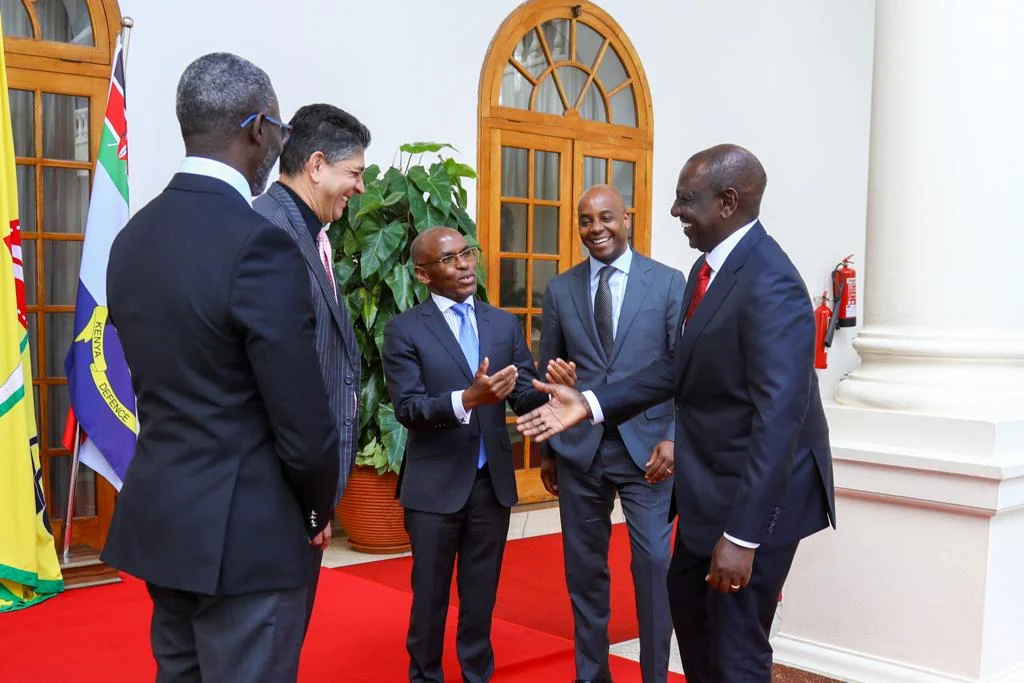
Safaricom launched Ziidi Trader on the morning of Tuesday, February 10, a mobile trading platform that allows investors to buy and sell shares directly via M-Pesa. The launch was led by President William Ruto.
As reported by the Business Daily, Safaricom has appointed Kestrel Capital as the sole broker for the service, breaking from the traditional broker-led equity trading model.
Kestrel, ranked 11th among Kenya’s 22 stockbrokers by commissions to June, will process trades through an omnibus CDS account, eliminating the need for individual CDS accounts. Transactions are capped at M-Pesa’s daily limit of Ksh500,000.
The NSE hopes the platform will boost retail participation by leveraging M-Pesa’s over 35 million users. The move follows the success of mobile bond trading and Ziidi Money Market Fund, which attracted 1.15 million investors.
.png)


Join 1.5M Kenyans using Money254 to find better loans, savings accounts, and money tips today.


Money 254 is a new platform focused on helping you make more out of the money you have. We've created a simple, fast and secure way to find and compare financial products that best match your needs. All of the information shown is from products available at established financial institutions that our team of experts has tirelessly collected.




.jpg)




.jpg)




%20(1).jpg)