
Investments
September 15, 2026


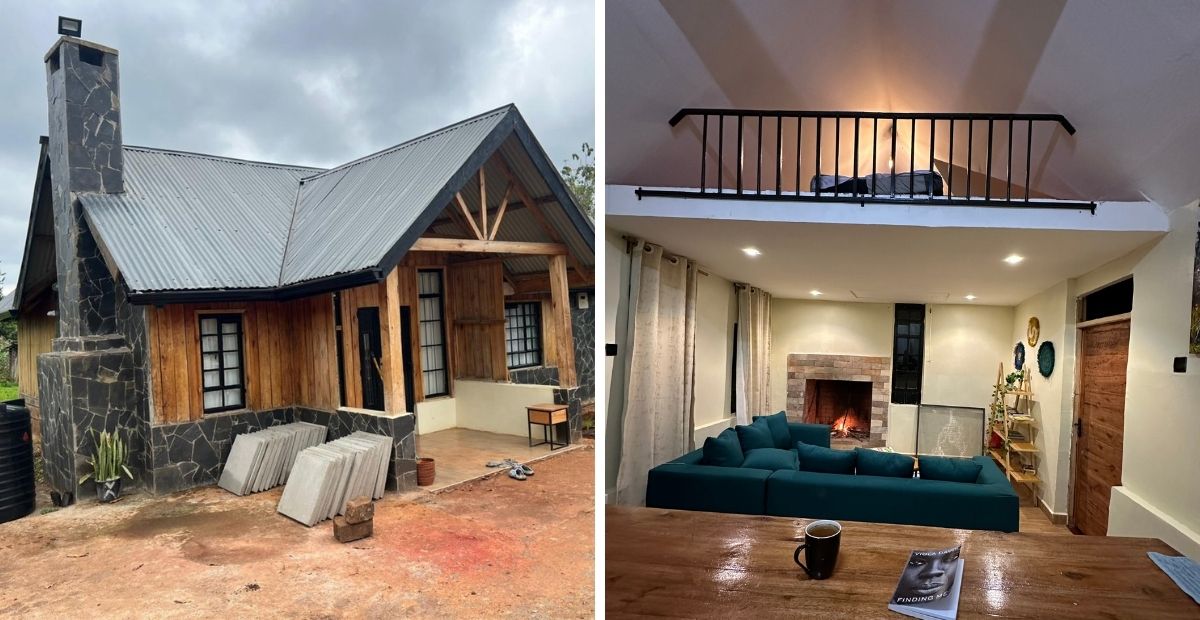
There was a time when I genuinely believed I was making a terrible financial decision.
Every time I mentioned that I was building a house at my rural home in Othaya, Nyeri the reactions were almost identical.
"Why would you build there when you live in Nairobi?"
"Start with a plot in Kitengela or Kamulu."
"Hiyo sasa ndio dead capital."
I understood where they were coming from because, for many young Kenyans, that is the accepted roadmap once you start making some money.
You buy a small plot in the city outskirts of Nairobi and build pole pole. The plan is always that as retirement beckons, you will start improving your village home, or build elsewhere depending on where you wish to retire.
I’m not against that dream. And I’m well aware that the people who love us usually want us to make the decisions that have worked for them or for those around them. But a well-meaning person's dream isn't necessarily your dream.
Dreams are not always logical, I always knew that I left home to change home, not abandon it.
There is something special about being home. My family is still there. My roots are there. Every time I visited, I wanted somewhere I could retreat to, reconnect with family and enjoy the quiet that Nairobi rarely allows.
I knew I would still own a home in the city one day. But I didn't want to rush into buying a burton maguta maguta simply because everyone else was doing it.
Also Read: I Thought Offgrid Living Was Paradise, I’m Back to Nairobi Full of Regrets
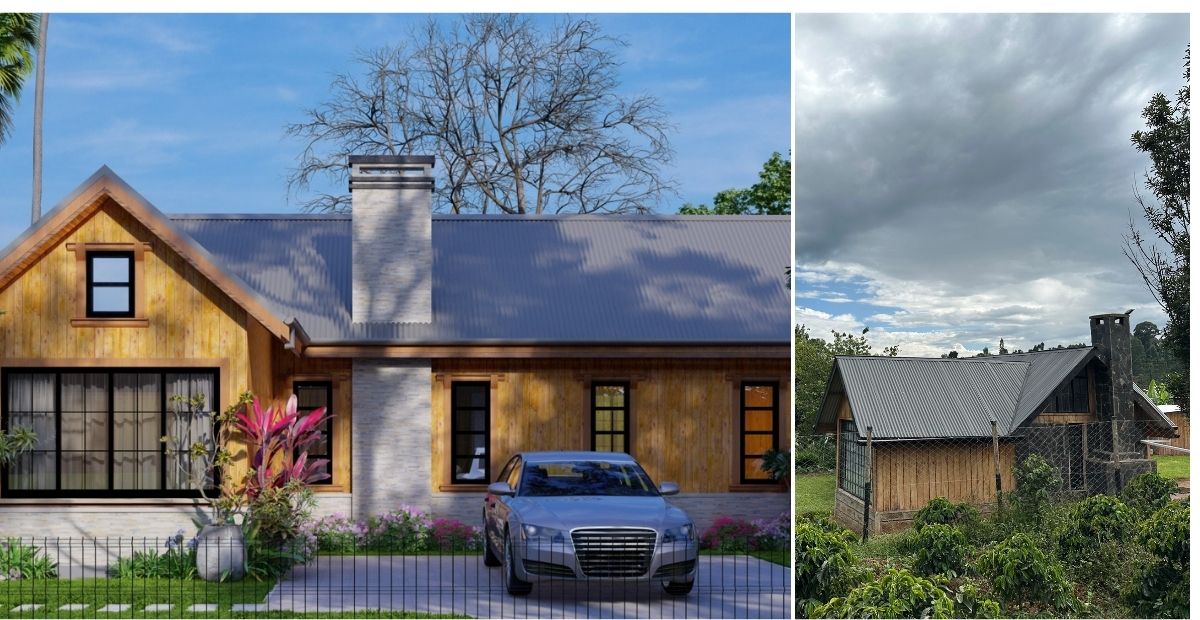
That decision shaped everything that followed. Instead of a conventional stone house, I settled on a wooden cottage.
That alone attracted resistance.
Many Kenyans equate stone houses with prestige. Timber, to many, sounds temporary, almost like you're settling for less.
Yet some of the world's most admired homes are built using materials that are abundant where they are. Timber is common in places like Canada and parts of the United States, bamboo has shaped traditional architecture across much of Asia, while other regions build with earth, brick or stone depending on what nature provides.
The lesson wasn't that timber is better than stone. It was that good homes are designed around their environment, not around someone else's idea of prestige.
Back to my vision, I wanted large windows to invite in the scenery, a steep roof, exposed timber and, most importantly, a fireplace at the heart of the living room.
That fireplace nearly ended the project before it even began.
My sister had connected me with an excellent architect who produced beautiful designs. Since my parents live on the property, they agreed to supervise the day-to-day work while I drove from Nairobi on weekends to check progress.
About a month into construction, I arrived eager to see my future living room. Instead, I found a massive chimney sitting right inside what was supposed to be the open-plan kitchen.
Confused, I asked the fundi whether he had misunderstood the drawings.
"Kijana, hakuna nyumba inawekwa jiko katikati ya sitting room,” he replied dismissively.
To him, chimneys belong in kitchens. Building one simply to keep people warm while they sat in the living room made absolutely no sense.
Also Read: All You Need to Know About Precast Construction in Kenya
We parted ways, the lesson being experience and innovation don't always walk hand in hand.
Demolishing the chimney would have stretched my already tight budget, so I did something I had never planned for. Instead of forcing the house back to the original design, we flipped the entire layout. The living room moved to the opposite side, the kitchen swapped places.
Sometimes your best design decisions are born out of problems you never budgeted for.
The journey has had many surprises. One thing I quickly discovered is that remote-managing a construction site is an extreme sport.
More than once, I would arrive from Nairobi only to discover window openings much smaller than what appeared on the architectural drawings.
The explanation was almost always the same. "Hii ni kubwa sana.""Hivi ndio tunajenga."
Breaking down walls to enlarge windows is an expensive lesson to learn twice.
Eventually, I started insisting on daily updates, photographs before every major stage and evening debriefs on what had been completed. I also became intentional about working with younger, more tech-savvy fundis who appreciate that architectural drawings are not suggestions.
My experience has also taught me that wastage is often the reason why construction costs are very high in Kenya. One plumber submitted a quotation that contained almost five times the materials actually required.
Fortunately, instead of sending him shopping with my money, I bought the materials myself.
Only then did I realise just how much unnecessary expenditure had been included.
That experience changed how I approach every quotation thereafter. I compare prices, and question every quantity.
But not every redesign came from a bad place. When discussions about the ceiling began, I suddenly realised all that beautiful timber structure would disappear behind gypsum boards, leaving only spiders and dust to enjoy it.
Almost on impulse, I abandoned the conventional ceiling altogether. Instead, I let the roof follow the rafters, exposing the timber beams.
The decision completely transformed the interior.

Also Read: 4 Modern House Construction Techniques Saving Homeowners Up to Ksh800K
The additional roof height also created enough space to build two attic rooms, turning what was essentially a two-bedroom cottage into a 4-bedroom unit.
Finding a ladder for those attics became another adventure. The hidden ladder system I wanted wasn't readily available in Kenya. One supplier quoted me Ksh114,000 before installation.
I nearly abandoned the idea until I started searching overseas. Eventually I found a similar system in China for about Ksh15,000. Even after shipping, I still spent a fraction of what I had been quoted locally.
Perhaps my proudest financial decision wasn't even inside the house. After construction, I wanted the compound landscaped professionally.
The quotation came back at Ksh80,000. It was fair. It was also money I simply didn't have.
Instead of postponing the dream, I asked a neighbor whether they could spare some mature grass.
Two gunny bags were enough.
I spent about Ksh600 on manure, another Ksh800 on labor to help with planting, watered it patiently and waited.
Months later, the lawn had spread beautifully across the compound.
That experience reminded me that money isn't always the answer. Sometimes relationships, patience and kidogo thinking outside the box are worth much more.
Now, I wasn't building the cottage because I had projected its value on my net worth or on cash flow.
I was building the life I wanted. Then one weekend changed everything.
The house was complete. The fireplace was glowing. The Nyeri air was cold enough to justify wrapping myself in a blanket.
Outside, everything was quiet except birds and the occasional breeze through the trees.

Also Read: He Built a Mansion in Kiserian, Went Back to Renting in Just 2 Months
For the first time since construction began, I wasn't thinking about cement, budgets or delayed deliveries. I was simply enjoying being home.
I found myself wishing I didn't have to leave. That was when another idea quietly formed.
If I loved this place so much, perhaps other people would too. Rather than letting the house sit empty most weekends, I started welcoming guests. I wanted to name it the Tea Cottage since it sits on my family’s tea farm. There were too many Tea Cottages so I branded it the T Cottage.
Over the past seven months, dozens of families have stayed there. Many tell me they struggle to leave when checkout time arrives.
One group has returned more than seven times.
Ironically, the investment many people dismissed as "dead capital" has become anything but.
It now helps pay for its own upkeep. It gives me a place to recharge whenever city life becomes overwhelming. And every booking quietly supports people within the village, from the cleaner who prepares the house to the local fundis who work on expansion projects.
Building this cottage taught me that personal finance is deeply personal. The best investment is not always measured by appreciation on a spreadsheet.
Sometimes it is measured by its alignment to your dreams.
Like having a place where your family gathers, where strangers create memories, where your community quietly benefits, and where you can finally hear yourself think.
.png)


Join 1.5M Kenyans using Money254 to find better loans, savings accounts, and money tips today.


Money 254 is a new platform focused on helping you make more out of the money you have. We've created a simple, fast and secure way to find and compare financial products that best match your needs. All of the information shown is from products available at established financial institutions that our team of experts has tirelessly collected.




%20(1).jpg)





%20(1).jpg)