News and Analysis
September 18, 2026


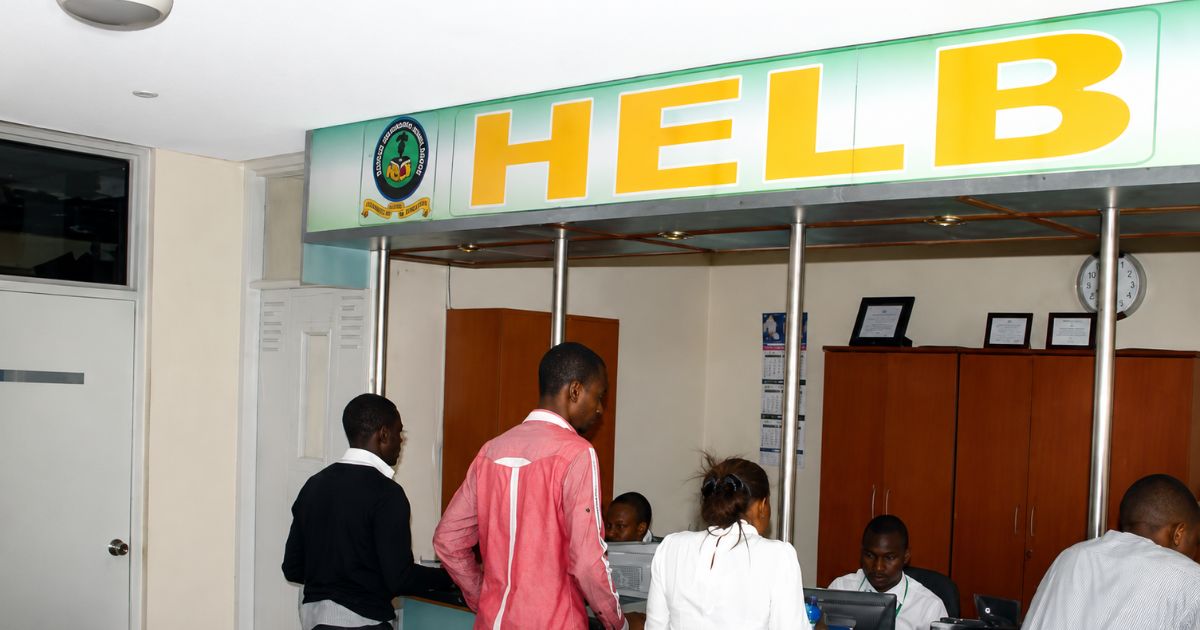
Welcome to the Money News Roundup. In today's edition, we break down the proposed university funding model and the new loan repayment requirements for graduates. We also examine why cooking oil prices have spiked.
Graduates who obtain formal employment will be required to immediately disclose their university loan status to their employers to facilitate monthly loan deductions under the proposed University Funding Bill.
As reported by Citizen Digital, the Bill proposed by President William Ruto’s government seeks to scrap scholarships and will see the government issue loans for students joining universities and colleges to fund 100% of their education. This could see students graduate with outstanding loans of over Ksh1.2 million.
Graduates who will join the informal sector after their graduation will instead be required to sign repayment agreements with the Higher Education Loans Authority, specifying how and when they will repay their loans.
To protect borrowers, the proposed law caps loan deductions at a maximum of 25% of a beneficiary's earnings.
The Bill also grants the authority powers to recover unpaid loans as civil debts, allowing it to pursue legal action against defaulters where necessary.
Meanwhile, the Tertiary Education Placement and Funding Bill also seeks to consolidate higher education funding under a single authority.
The University Funding Bill has already been tabled before the National Assembly's Education Committee and will now proceed to debate by MPs.
Kenya is in talks to secure about Ksh58 billion ($450 million) in emergency funding from the World Bank to cushion the economy against the effects of the conflict in Iran and potential weather shocks.
As reported by Bloomberg, the funds are expected to be accessed through the World Bank's Contingent Emergency Response Project, which allows countries to redirect up to 10% of undisbursed funds from existing projects during eligible crises.
The financing is expected by October, although the amount and timing could change.
The World Bank has warned Kenya's economic growth could slow to 4.3% in 2026 from 4.6% in 2025 due to the Middle East conflict, which has increased inflation risks, disrupted tea exports and reduced remittances. El Niño has also been projected for later this year.
Kenya had initially sought Ksh77.5 billion in emergency funding from the World Bank, which had delayed approving the loan
Data from KNBS shows a litre of salad cooking oil averaged Ksh358.09 in July, the highest since October 2022, when it retailed at Ksh366.48. The latest price is just Ksh21.75 below the record Ksh379.84 reached in September 2022.
As reported by Business Daily, the increase has been driven by higher global vegetable oil prices, with the Food and Agriculture Organisation (FAO) reporting a 23.3% year-on-year rise in its vegetable oil price index.
Kenya imports most of its crude palm oil, leaving local prices vulnerable to global commodity markets, supply disruptions and rising production costs.
The Co-operative Tribunal has ordered KUSCCO to refund Ksh489.5 million to Mhasibu Sacco, ruling that the umbrella body must honour its investment contract despite its financial troubles.
As reported by the Business Daily, the dispute arose after Mhasibu Sacco invested Ksh450.1 million in a fixed deposit with KUSCCO in July 2023 at an annual interest rate of 13.5%. The investment matured in January 2024, but KUSCCO failed to release the funds despite acknowledging the debt.
In its ruling, the Tribunal said a binding contract existed between the parties and ordered KUSCCO to pay Ksh489.5 million.
KUSCCO is recovering from a Ksh13.3 billion financial scandal and is pursuing asset sales and loan recoveries to compensate affected saccos.
The DPP has charged the CEOs of NCBA, KCB and Co-operative Banks with allegedly failing to report suspicious transactions linked to an alleged Ksh363.3 million fraud scheme.
As reported by Capital Business, the charges relate to investigations into the alleged theft of funds from First Assurance Investment Company Limited between 2018 and 2024.
The three CEOs are expected to take a plea on August 11 over alleged failure to report suspected proceeds of crime as required under the Proceeds of Crime and Anti-Money Laundering Act.
In a separate but related case, prosecutors charged a former nominated MCA with allegedly stealing the funds while serving as a director of the company. The prosecution alleges he forged the signature of a co-director to authorise withdrawals from accounts held at the three banks.
Absa Asset Management has received approval from the Capital Markets Authority (CMA) to launch two global multi-asset special funds.
As reported by Kenyan Wall Street, the regulator approved the Absa Global Multi-Asset Special Fund (KES) and the Absa Global Multi-Asset Special Fund (USD) as sub-funds under the existing Absa Unit Trust Scheme.
The approval expands Absa's product offering from five to seven funds, adding global multi-asset investments to its existing money market, fixed income, balanced and equity funds.
The move comes as Special Funds continue to gain traction among investors. According to CMA data, the funds managed Ksh203.5 billion by March 2026, accounting for 23.9% of Kenya's collective investment scheme assets.
NCBA Group posted a 12.2% increase in net profit to Ksh12.4 billion in the first half of 2026, driven by stronger earnings from its Kenyan banking business, regional subsidiaries and continued growth in digital lending.
As reported by Capital Business, the lender said its Kenya banking subsidiary remained the group's biggest profit contributor, recording a 24.3% increase in profitability to Ksh13.7 billion. Regional operations in Uganda, Tanzania and Rwanda also contributed Ksh1.6 billion in profit, supported by higher lending, income growth and improved loan recoveries.
During the six months ended June, NCBA disbursed Ksh819 billion in digital loans, a 26.9% increase from the same period last year. Customer deposits rose 11% to Ksh551 billion, while total assets grew 11.5% to Ksh739 billion.
Safaricom has promoted Caroline Wambugu to Group Lead for Finance Controls, Performance and Investor Relations, expanding her responsibilities across the telecommunications firm's finance function.
As reported by Kenyan Wall Street, Wambugu will now oversee financial controlling, reporting, treasury, tax, shared services and credit collections, in addition to retaining responsibility for performance management and investor relations. She previously served as Head of Finance, Planning, Analysis and Investor Relations after joining Safaricom in December 2021.
Before joining Safaricom, Wambugu spent nearly six years at Absa Bank Kenya as Head of Finance Decision Support and close to 13 years at NIC Bank, now part of NCBA Group, in various finance leadership roles.
.png)


Join 1.5M Kenyans using Money254 to find better loans, savings accounts, and money tips today.


Money 254 is a new platform focused on helping you make more out of the money you have. We've created a simple, fast and secure way to find and compare financial products that best match your needs. All of the information shown is from products available at established financial institutions that our team of experts has tirelessly collected.




.jpg)







%20(1).jpg)