News and Analysis
November 12, 2026


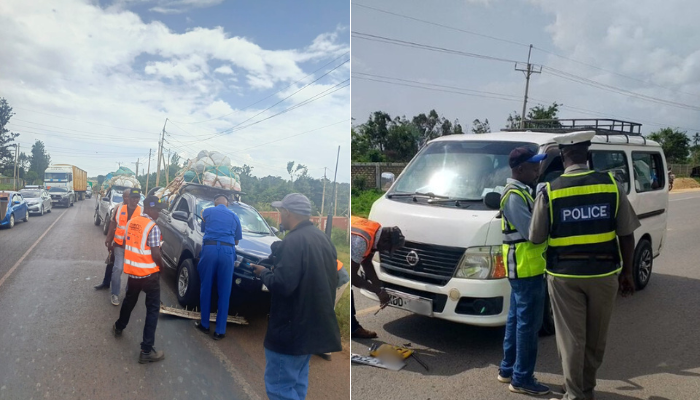
Motorists in Kenya who refuse to allow a police officer or other authorised official to enter their vehicles during a lawful inspection risk fines of up to Ksh50,000 or imprisonment of up to one year.
Section 105 of the Traffic Act outlines the powers of police officers, licensing officers and inspectors when stopping and inspecting motor vehicles to establish whether they comply with traffic regulations.
The law gives police officers in uniform the authority to stop any vehicle. It also allows police officers, licensing officers and inspectors to enter a vehicle, drive it or cause it to be driven for inspection purposes.
However, these powers are not unlimited.
Also Read: Dealing With a Traffic Offence in Kenya: Important Rights to Know as a Driver
Under Section 105(1) of the Traffic Act, a police officer in uniform can stop any vehicle.
Additionally, a police officer, licensing officer or inspector is authorised to enter a vehicle or drive it, or cause it to be driven, to conduct an examination or test.
The inspection is intended to establish whether the vehicle meets the requirements of the Traffic Act or is being operated in contravention of the law.
The provision also gives officers the authority to order a vehicle owner to bring the vehicle to them for inspection or testing where there is reasonable suspicion that an offence under the Act has been committed.
Also Read: List of NTSA Number Plate Offences and Their Penalties
Section 105(2) of the Traffic Act makes it an offence to fail to comply with an instruction or order issued under the section.
A motorist who refuses to follow a lawful inspection instruction could therefore be prosecuted and face the penalties provided under the law. For a first conviction, the offender faces a fine not exceeding Ksh30,000.
For a second or subsequent conviction, the penalty increases to a fine not exceeding Ksh50,000 or imprisonment for a term of up to one year.
The law therefore provides for higher penalties for motorists who repeatedly fail to comply with instructions issued under Section 105.
“Any person who fails to comply with any instruction or order given under this section shall be guilty of an offence and liable on a first conviction, to a fine not exceeding Ksh30,000, and for a second or subsequent conviction, to a fine not exceeding Ksh50,000 or to imprisonment for a term of one year,” reads the Act in part.
Also Read: Police to Lose Arresting Powers for Minor Traffic Offences Under New NTSA Reforms
1. Requiring Production of a Vehicle Registration Certificate
Section 13 of the Traffic Act states that police officers can require vehicle owners to produce their vehicle's registration certificate for inspection. The owner may present it immediately or, if unable to do so at the time, within five days at a police station of their choice.
2. Requiring Drivers to Produce Their Driving Licences
Under Section 36 of the Traffic Act, motorists must carry their driving licences or provisional licences whenever they drive. They are required to produce the documents when requested by a police officer. Failure to comply is an offence punishable by a fine of up to Ksh10,000.
3. Requiring Motorists to Obey Police Directions and Traffic Signs
Section 52 of the Traffic Act states that drivers must obey verbal instructions and signals issued by police officers in uniform while performing their duties. They must also follow traffic signs and stop when instructed by an officer. Failure to comply attracts fines or imprisonment, with repeat offenders potentially losing their driving licences.
4. Inspecting Vehicles Involved in Accidents
Section 74 of the Traffic Acts states that where an accident occurs involving a motor vehicle on a road, police officers have the authority to inspect the vehicle connected to the incident. They may also enter premises where the vehicle is kept, at any reasonable time, to carry out the inspection.
5. Detaining Vehicles for Police Investigations
Police officers may detain vehicles that have been removed from a road or public place under Section 106 of the Traffic Act. The vehicle can be held at a police station or another safe location while officers conduct any inquiries they consider necessary.


Join 1.5M Kenyans using Money254 to find better loans, savings accounts, and money tips today.


Money 254 is a new platform focused on helping you make more out of the money you have. We've created a simple, fast and secure way to find and compare financial products that best match your needs. All of the information shown is from products available at established financial institutions that our team of experts has tirelessly collected.