News and Analysis
September 25, 2026


Hello and welcome to the Money News Roundup Newsletter, where we cover why the government is negotiating its SGR terms with China. We also cover the audit that exposed over 900,000 ghost learners in schools.
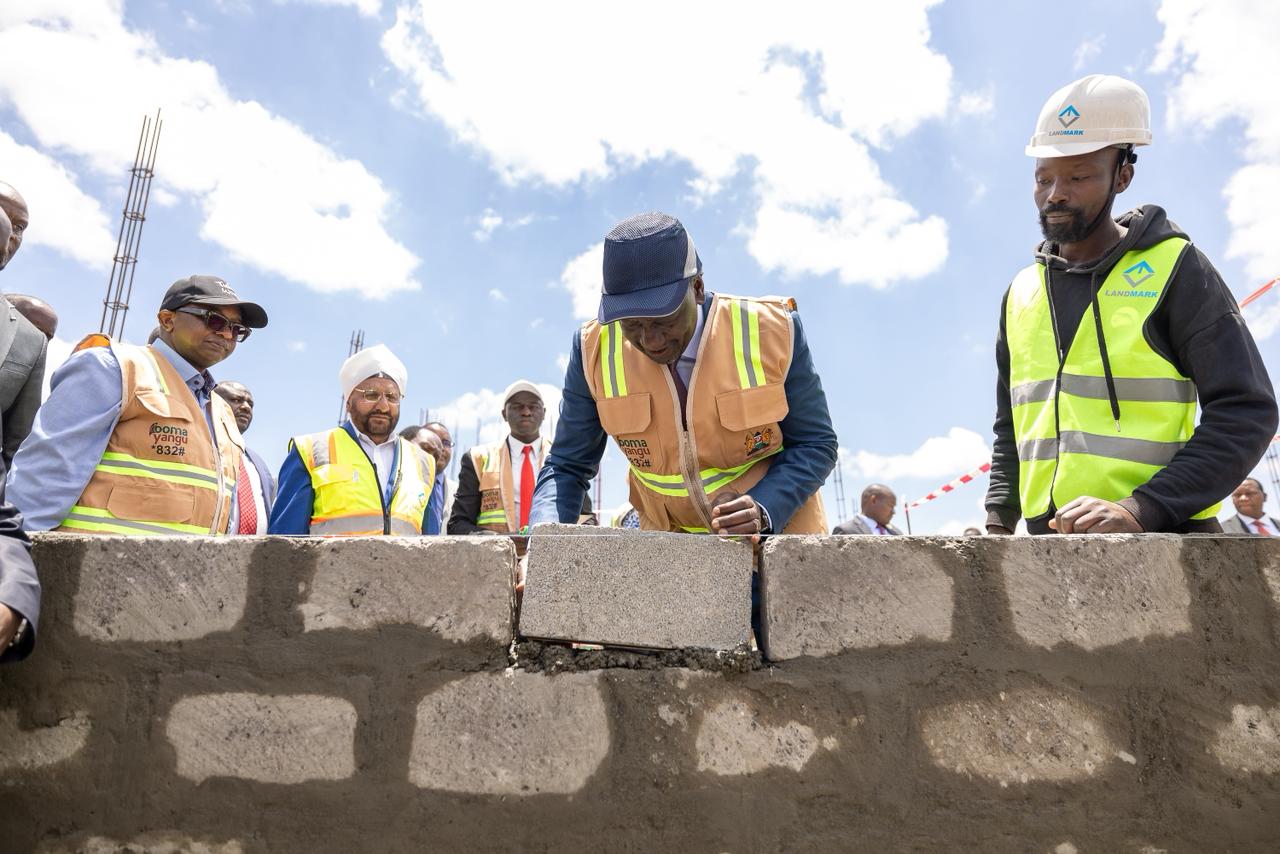
Kenya is negotiating with China over a Standard Gauge Railway (SGR) clause that ties proceeds from the Railway Development Levy (RDL) to repayment of earlier railway loans.
The government wants the provision waived to pave the way for issuing a 15-year Ksh390 billion bond to extend the SGR from Naivasha to Malaba.
Treasury Cabinet Secretary John Mbadi said discussions are ongoing with the Export-Import Bank of China to allow the levy to be used as security for the planned bond instead of servicing existing debt.
As reported by the Business Daily, the government plans to securitise the levy, currently 1.5% on imports and generating about Ksh39 billion annually, to back the bond.
Two issuances could raise about Ksh387 billion, potentially making it Kenya’s largest bond.
Kenya previously borrowed Ksh655 billion ($5.08 billion) from China Exim Bank to build the Mombasa–Nairobi–Naivasha line.
Last year, Treasury restructured the loans, converting dollar facilities into yuan and extending the longest maturity to 2040.
With Beijing slowing infrastructure lending under the Belt and Road Initiative, the government is exploring capital markets and development banks.
The SGR currently ends in Naivasha, 468 kilometres short of the Uganda border, limiting seamless cargo movement to regional neighbours.
A nationwide audit by the Ministry of Education has revealed over 800,000 learners in schools. The verification exercise, launched on September 1, 2025, across all 47 counties, sought to align government capitation with accurate enrolment data.
Education CS Julius Ogamba noted that primary schools had 5,833,175 learners in the National Education Management Information System (NEMIS), but only 4,947,271 were verified, a gap of 885,904. Junior schools recorded a positive variance of 543,250 learners, while secondary schools showed a shortfall of 87,730.
As reported by Eastleigh Voice, the audit also exposed that 27 schools, 10 secondary and 17 primary, are non-operational despite being listed in the NEMIS.
The audit also flagged 14 institutions that failed to submit data and uncovered duplicate or invalid learner records. Additionally, 102 junior and 84 primary schools were operating below minimum enrolment thresholds.
Ogamba warned that falsifying data amounts to gross misconduct. The report will be forwarded to the Directorate of Criminal Investigations, and unverified learners will not receive public funds.
It is estimated that the government lost Ksh912 million through the ghost students in the 3rd term of 2025.
President William Ruto has announced that the Kenya–Somalia border will reopen in April after being closed for 15 years due to repeated Al-Shabaab attacks.
As reported by Citizen Digital, the Mandera Border Post was shut in October 2011 following cross-border assaults linked to the Islamist group, which has battled Somalia’s central government for over 15 years.
Ruto said it was unfair for residents of Mandera to remain cut off from relatives and trade opportunities in Somalia.
Previous reopening attempts in 2022 and 2023 stalled after fresh attacks near the frontier killed civilians and police officers.
Kenya, a key contributor to the African Union mission fighting the Al-Qaeda-linked militants, shares a 680-kilometre border with Somalia.
Johnson Sakaja has announced that Nairobi’s BRT Line 5 project is at the final approval stage at the National Treasury, ending months of uncertainty.
According to Citizen Digital, the update followed a meeting with Kang Hyung-shik, who reaffirmed South Korea’s commitment to linking the CBD to Jomo Kenyatta International Airport.
The corridor is expected to ease congestion on Mombasa Road, cut daily transport costs, create jobs, and boost tourism. Line 5 will deploy 30 high-capacity buses, carrying 4,200 passengers per hour per direction at peak.
Since 2018, the project has faced funding delays but secured support from the European Investment Bank and a Ksh7.6 billion loan from the Export-Import Bank of Korea in 2024.
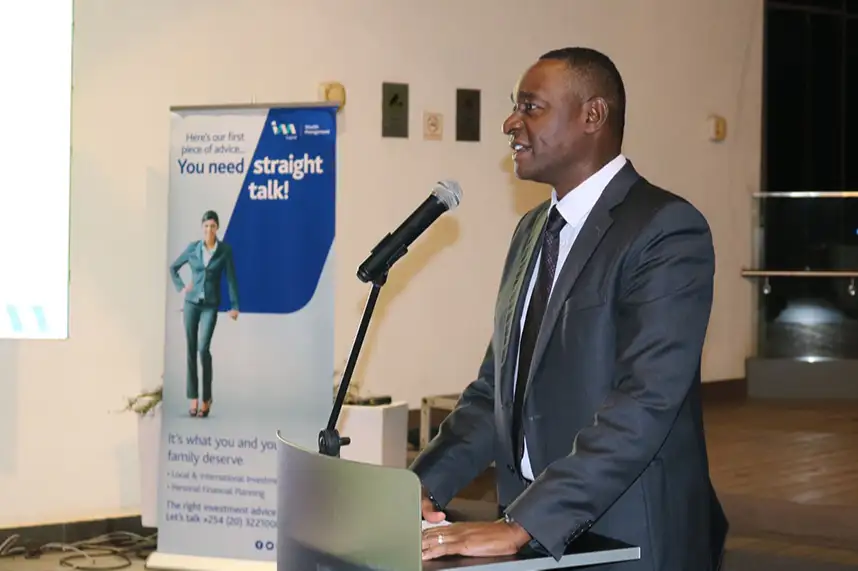
Stanbic Holdings PLC has appointed Joshua Oigara as Chief Executive and Director, effective March 1, 2026, subject to regulatory approval. He succeeds Patrick Mweheire, who retires on February 28, 2026.
As reported by Kenyan Wall Street, Oigara currently serves as Regional Chief Executive for East Africa at Standard Bank Group, overseeing six markets. He previously led KCB Group for nearly a decade, driving regional expansion and sector growth.
Mweheire has led Stanbic since 2020, steering strategic execution and strengthening its position within the Standard Bank franchise. The Board praised his leadership and contribution.
Oigara holds an MBA from Edith Cowan University and is a CPA (K) and a member of ICPAK.
Maize flour prices have surged as North Rift farmers hoard grain, anticipating higher returns amid fears of shortages.
As reported by Nation, a 90kg bag of maize now retails at Ksh4,200, up from Ksh3,800, while a 2kg packet of flour has jumped to Ksh160 from Ksh120.
The government has issued a 30-day ultimatum urging farmers to release stocks or risk duty-free imports to stabilise prices.
Mutahi Kagwe said the National Cereals and Produce Board raised its buying price to Ksh4,000 per bag and set aside Ksh1.7 billion to build reserves. However, it has bought fewer than 200,000 bags against a two-million target.
Over 2.5 million Kenyans face worsening food insecurity as drought persists, with several arid and semi-arid counties in alert and alarm phases.
Safaricom shares have rallied to Ksh34, matching the price at which the National Treasury agreed to sell a 15% stake to Vodacom Group.
The State will earn Ksh204.3 billion from the sale of six billion shares and Ksh40.2 billion as upfront dividends from its remaining 20% stake, totalling Ksh244.5 billion.
Earlier, Treasury CS John Mbadi said the Ksh34 price reflected an 18.4% premium on the 90-day average price before the offer.
As reported by the Business Daily, the rally follows a 52.1% jump in half-year net profit to Ksh42.7 billion and a 54.5% rise in interim dividend to Ksh0.85 per share. The government will receive Ksh11.92 billion from its 35% stake.
KCB Bank Kenya, Equity Bank Kenya and NCBA Bank Kenya have cut their base lending rates to 8.75% following the Central Bank of Kenya's move to lower the Central Bank Rate from 9.00% to 8.75% on February 10, 2026.
All three lenders said new Kenya shilling variable-rate loans will be priced at CBR plus a customer-specific premium under the Risk-Based Credit Pricing Model.
Existing CBR-linked facilities will adjust after the statutory 30-day notice period, while older loans will transition to the revised framework by February 28, 2026.
The coordinated repricing reinforces reliance on CBR as the main benchmark, even as some banks adopt KESONIA. The rate cut aims to spur private-sector credit growth and support economic activity. Read more:
.png)


Join 1.5M Kenyans using Money254 to find better loans, savings accounts, and money tips today.


Money 254 is a new platform focused on helping you make more out of the money you have. We've created a simple, fast and secure way to find and compare financial products that best match your needs. All of the information shown is from products available at established financial institutions that our team of experts has tirelessly collected.




.jpeg)

.jpg)