News and Analysis
September 25, 2026


Hello and welcome to the Money News Roundup Newsletter. In today's edition, we cover plans to extend the SGR into Tanzania. We also look at why Kenya Power's revenue from new customers declined despite adding more electricity connections.
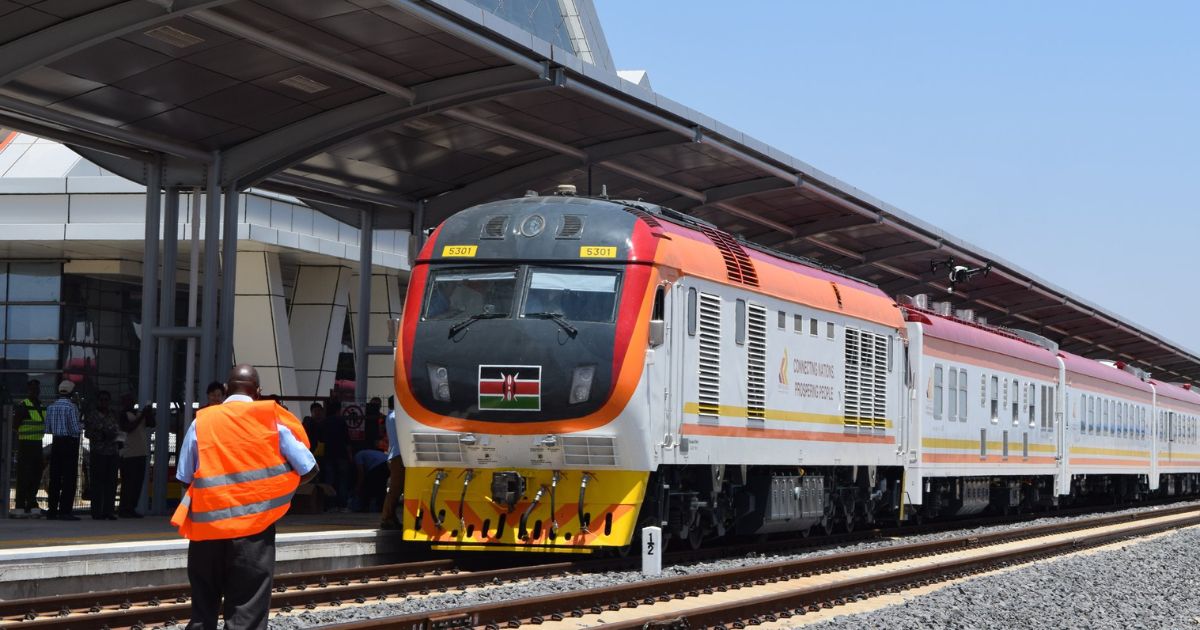
President William Ruto has announced plans to extend the Standard Gauge Railway (SGR) from Kenya into Tanzania, with the government setting aside Ksh5 billion for the project.
As reported by Citizen Digital, Ruto said the line will connect Voi to Tanzania through stations in Mwatate, Bura, Mwakitau and Taveta.
He said the extension will support passenger transport and cargo movement while boosting economic activity in the region.
The project complements plans to extend the SGR from Naivasha to Kisumu and the Malaba border, which is currently being undertaken by the China Communications Construction Company (CCCC) and the China Road and Bridge Corporation (CRBC).
Ruto said the broader goal is to strengthen transport links between Kenya, Tanzania, Uganda and other East African countries through an integrated regional railway network.
The Port of Lamu has received 2,930 metric tonnes of heavy construction machinery for the proposed Ksh2 trillion Dangote East Africa Refinery ahead of a planned groundbreaking ceremony this week.
As reported by Capital Business, the cargo arrived aboard MV Da Yang, marking a key milestone for the project, which is expected to become northern Kenya’s first oil refinery.
According to KPA, the refinery will process crude oil from Turkana’s Lokichar fields and other regional sources. The authority said Lamu Port is ready to handle the specialised cargo, petroleum tankers and increased traffic expected during construction and operations.
Meanwhile, the Standard Investment Bank, values the Dangote Petroleum Refinery IPO at approximately Ksh57 per share, representing a 14.7% premium over its current price of about Ksh50 per share. The valuation factors in the refinery’s planned expansion, which will see its processing capacity increase from 650,000 barrels per day to 1.4 million barrels per day.
The value of loans issued by licensed digital lenders in Kenya almost doubled to Ksh110.1 billion in 2025, according to CBK.
As reported by the Star, the CBK’s Bank Supervision Annual Report 2025 shows that gross outstanding loans held by Digital Credit Providers (DCPs) rose by 99.6% from Ksh55.2 billion in December 2024.
The number of licensed digital lenders increased to 195 by the end of 2025, up from 85 in 2024. Active loan accounts also grew by 71% to 6.74 million from 3.9 million a year earlier.
CBK attributed the growth to rising use of mobile and USSD-based lending services, alongside increased regulation, consumer protection measures and improved compliance among lenders.
CBK has reopened two long-term Treasury bonds as it seeks to raise Ksh50 billion in its October bond sale.
As reported by the Business Daily, the offer includes a 15-year bond first issued in 2019 at 12.34% and a 20-year bond issued the same year at 12.873%. Both have been reopened multiple times over the past year after attracting strong investor demand.
Outstanding amounts on the bonds have grown to Ksh161 billion and Ksh209.8 billion, respectively. CBK hopes demand seen in September, when the bonds attracted billions in bids, will continue as the government accelerates domestic borrowing, which has already surpassed half of its annual target.
CBK and banks are seeking amendments to the Banking Act to clarify who has authority to approve changes in lending rates.
According to the Business Daily, the Kenya Bankers Association (KBA) says discussions with CBK aim to embed the risk-based credit pricing framework in law and remove the requirement for Treasury approval under Section 44 of the Banking Act.
The move follows years of court disputes over whether banks must obtain prior approval from the Treasury Cabinet Secretary before varying loan rates. Banks argue interest rate adjustments fall under CBK’s mandate, while court rulings have created uncertainty. Proposed reforms also include establishing a banking tribunal to resolve customer disputes.
Revenue from electricity sales to new Kenya Power customers fell by Ksh1.07 billion in the year to June 2026 despite an increase in connections, highlighting weaker consumption and rising adoption of solar power.
The Business Daily noted that new customers consumed 161.7 GWh of electricity, down 20% from 202.98 GWh a year earlier, reducing revenue from this segment to Ksh4.05 billion from Ksh5.12 billion. This came even as Kenya Power added 412,249 new customers.
Industry players attributed the decline to slower business expansion, increased use of off-grid solar systems and low electricity consumption among beneficiaries of the Last Mile Connectivity Project. Overall electricity revenue, however, rose to Ksh238.24 billion.
Also in the News
.png)


Join 1.5M Kenyans using Money254 to find better loans, savings accounts, and money tips today.


Money 254 is a new platform focused on helping you make more out of the money you have. We've created a simple, fast and secure way to find and compare financial products that best match your needs. All of the information shown is from products available at established financial institutions that our team of experts has tirelessly collected.




.jpeg)

.jpg)