News and Analysis
September 21, 2026


Hello and welcome to the Money News Roundup Newsletter. Today, we cover a new report that has revealed 176 stalled affordable housing projects despite billions collected through the Housing Levy. We also look at how remittances from Tanzania surpassed those from Saudi Arabia for the first time.
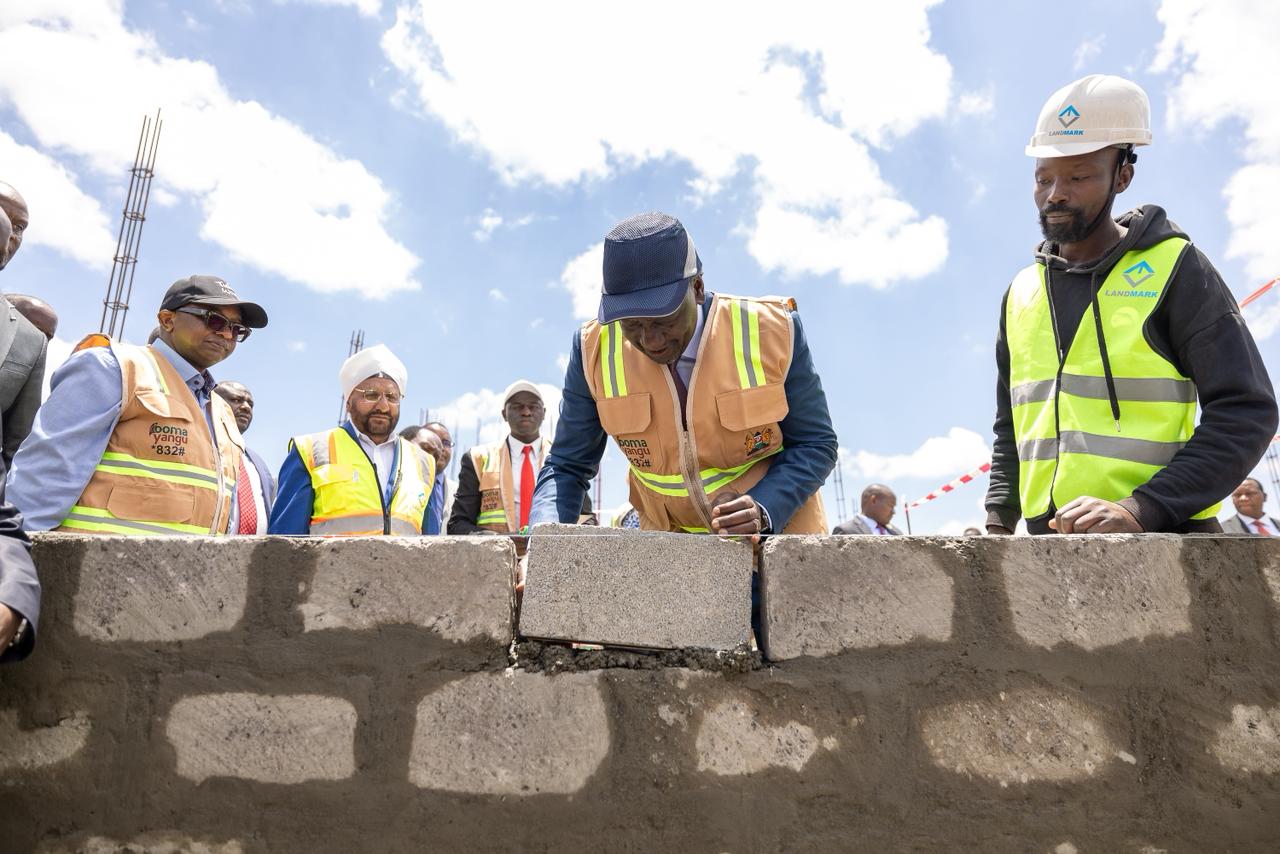
The government's affordable housing programme is facing a funding shortfall that has led to stalled projects, delays and rising construction costs, according to a report by the Parliamentary Budget Office.
As reported by Bloomberg, the Ksh1.76 trillion housing pipeline has spent Ksh198 billion since 2023, but 176 projects (about 15% of those under construction) had stalled by June due to delayed payments to contractors.
“The stalled projects include 16 affordable housing projects, 22 social housing and slum upgrading projects, 91 institutional and student housing projects and 47 social and physical infrastructure projects,” read the report in part.
The report estimates a funding gap of Ksh118.3 billion, more than half of the programme’s financing needs for the current financial year. This comes despite the government collecting Ksh205.7 billion from the 3% housing levy since its introduction in 2023.
The Budget Office warned that delays could increase project costs and recommended prioritising near-complete developments to unlock sales revenue.
Earlier, the government revealed plans to securitise future proceeds from the 1.5% Affordable Housing Levy as collateral for a Ksh100 billion loan, a move that could keep the deduction in place for years.
Kenyans living and working in Tanzania sent home Ksh1.52 billion (US$11.72 million) in August, surpassing remittances from Saudi Arabia, which stood at Ksh1.50 billion (US$11.61 million), for the first time since CBK began publishing country-level remittance data in 2019.
As reported by the Business Daily, the shift coincided with new foreign-worker rules in Saudi Arabia that have disrupted earnings and money transfers.
Remittances from Saudi Arabia fell 28.7% year-on-year, while inflows from Tanzania surged 72.3%. Despite the decline, Saudi Arabia remains a major diaspora market, having contributed Ksh25.65 billion (US$198.1 million) in the 12 months to June 2026.
Overall remittances rose 6% to Ksh58.51 billion (US$451.85 million) in August, supported by strong growth from Tanzania, the UK, Australia, Canada and the UAE.
KCB Group is set to acquire a 22.23% stake in digital payments firm Pesapal as it deepens its expansion into fintech and digital payments.
As reported by the Business Daily, the stake size was disclosed by Tanzania’s Fair Competition Commission as it reviews the transaction, whose value remains undisclosed.
Pesapal operates in Kenya, Uganda, Tanzania, Rwanda and Zambia, providing payment and business management solutions. KCB says the investment will strengthen its digital capabilities and expand services for SMEs by combining banking, payments and business tools.
The move follows KCB’s acquisition of a 75% stake in Riverbank Solutions for Ksh1.44 billion in 2025 and reflects the lender’s strategy of investing in digital financial services and fintech infrastructure.
Telkom Kenya subscribers recorded the longest average on-net calls in the three months to June, spending 3.9 minutes per call, more than double the national average of 1.8 minutes, according to Communications Authority (CA) data.
As reported by the Kenyan Wall Street, Airtel customers averaged 2.8 minutes, while Safaricom users spent 1.6 minutes per on-net call. Kenya recorded 33.01 billion mobile voice minutes during the quarter, with 84% generated within the same networks.
Mobile subscriptions rose to 88 million, while smartphone users reached 52.3 million. However, average monthly voice and SMS usage per subscriber declined as internet-based platforms such as WhatsApp gained popularity.
Aliko Dangote has announced plans to construct a pipeline linking the planned Lamu refinery to Ethiopia, adding that the project is among several major infrastructure investments he intends to undertake in the region.
As covered by Bloomberg, Dangote said he was also considering another pipeline connecting Djibouti to Ethiopia. He noted that the Kenya-Ethiopia pipeline would form part of the planned Ksh2 trillion refinery project in Lamu, whose groundbreaking ceremony is scheduled for September 30.
The announcement comes months after President William Ruto revealed that the government was in discussions with Dangote over the construction of a pipeline connecting Turkana's oil fields to the proposed Lamu refinery.
Kenya is expected to begin crude oil production in Turkana by the end of 2026, with the first export cargo targeted for the first quarter of 2027.
The East African Community (EAC) has restarted efforts to integrate capital markets across member states as part of preparations for the East African Monetary Union.
As reported by Capital Business, during a September 15-17 meeting, capital markets regulators, securities exchanges and depositories endorsed updated terms of reference to guide regional market integration. The framework focuses on harmonising regulations, developing new financial products and linking market infrastructure across EAC countries.
The committee also agreed to develop a regional connectivity framework to ease cross-border investing.
Also in the News
.png)


Join 1.5M Kenyans using Money254 to find better loans, savings accounts, and money tips today.


Money 254 is a new platform focused on helping you make more out of the money you have. We've created a simple, fast and secure way to find and compare financial products that best match your needs. All of the information shown is from products available at established financial institutions that our team of experts has tirelessly collected.





.jpg)





%20(1).jpg)