.jpg)
News and Analysis
September 22, 2026


Hello and welcome to the Money News Roundup Newsletter. In today's edition, we explain why Kenyans are likely to pay more for cooking gas from October. We also look at new data showing an increase in the number of bank accounts holding more than Ksh500,000.
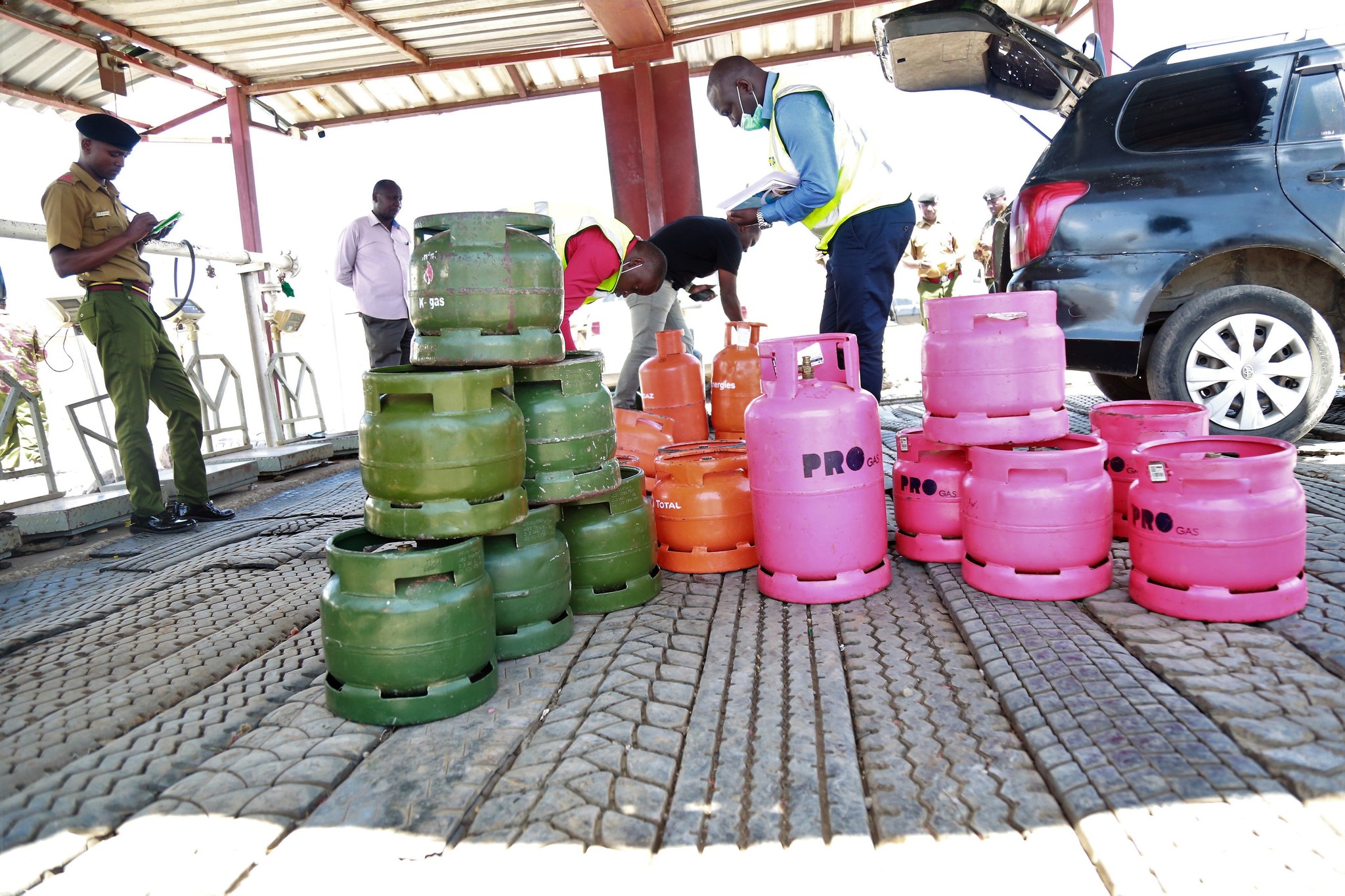
Cooking gas prices are expected to increase in October after the cost of key LPG components surged amid renewed tensions in the Middle East.
As reported by Business Daily, data from Saudi Aramco shows butane prices rose 25.8% to Ksh81,326 ($628) from Ksh64,620 ($499) in August, while propane increased 23.2% to Ksh63,973 ($494) from Ksh51,930 ($401).
Industry players say the higher costs will be passed on to consumers since Kenya relies heavily on LPG imports from Saudi Arabia and other Middle East suppliers.
owever, the exact amount the prives will increase by is not known.
Refilling a 13kg cylinder currently ranges from Ksh3,200 to 3,400 while refilling a 6kg gas costs between Ksh1,050 to Ksh1,510 across major towns in Kenya.
Petrol, diesel and kerosene prices are also expected to rise. Kenya does not regulate LPG prices, leaving cooking gas costs to market forces despite tax exemptions introduced in 2023.
In affidavits sworn on September 17, 2026, Attorney General Dorcas Oduor and Treasury CS John Mbadi told the Court of Appeal that the Ksh204.3 billion proceeds from the sale of a 15% government stake in Safaricom cannot be refunded, as the shares have already been transferred and are traded on the NSE.
As reported by Citizen Digital, the government is seeking to overturn a High Court ruling that nullified the transaction and has asked for a stay of the judgment pending appeal.
It argues that reversing the transfer of six million Safaricom shares would be difficult without refunding the purchase price and an additional Ksh40.2 billion paid in lieu of future dividends. The government says the case has significant implications for capital markets, investor confidence and fiscal planning.
The number of bank accounts holding more than Ksh500,000 rose by 5.7% to 781,977 in 2025 from 739,803 a year earlier, according to CBK data.
As reported by the Business Daily, the accounts represented just 0.97% of Kenya’s 80.68 million bank accounts, highlighting the concentration of wealth among a small segment of depositors.
The increase came despite economic growth slowing to 4.6% in 2025. NCBA, Equity Bank and KCB had the largest number of deposit accounts, driven by digital banking platforms.
However, smaller lenders such as Citibank Kenya, Victoria Commercial Bank and Bank of India recorded the highest proportion of high-value accounts.
Banks held Ksh6.12 trillion in customer deposits, with only Ksh1.195 trillion covered under Kenya’s deposit insurance scheme.
Banks, mobile money providers and payment platforms could soon be required to share customer data with licensed third parties under Kenya’s proposed National Payment System Bill, 2026.
The Business Daily reports that the draft law introduces open finance, allowing customers to permit fintechs, banks and other providers to access their financial data, boosting competition, innovation and interoperability across the sector.
The Bill would also require payment systems to communicate seamlessly and enable secure fund transfers across platforms. Electronic money providers such as M-Pesa and Airtel Money would be required to hold customer funds in trust accounts backed by bank deposits or government securities.
Firms will have one year to comply if the law is passed. Violations could attract fines of up to Ksh20 million for companies and Ksh5 million for repeat offences by officers, alongside daily penalties of up to Ksh100,000.
Milk prices have surged across parts of Kenya as prolonged drought and high production costs reduce supply.
As reported by Nation, in South Rift counties including Bomet, Narok and Kericho, a 500ml packet of processed milk now retails at Ksh100, up from Ksh50–Ksh55, while a 250ml packet costs Ksh50–Ksh60 from Ksh25–Ksh30.
Raw milk prices have also doubled to Ksh100 per litre from Ksh50–Ksh60. Farmers cite depleted pasture, drying water sources and expensive animal feed as key challenges.
The government says some farmers are increasingly selling to informal traders offering better prices than cooperatives.
The government has launched an inquiry into NHIF Sacco to assess its financial health and governance following the transition from NHIF to the SHA.
As reported by the Business Daily, Commissioner for Co-operatives David Obonyo said the probe seeks to establish the sacco’s true financial position, including outstanding loans, after members were redistributed across government agencies, disrupting payroll deductions.
The 12-day inquiry will review the sacco’s bylaws, finances, membership and governance structures. The move comes weeks after authorities warned that insolvent Metropolitan Sacco could face liquidation if merger or acquisition efforts fail.
Standard Chartered Bank Kenya has been downgraded from tier one to tier two after its market size index fell to 4.5 in 2025 from 5.4 in 2024, according to Central Bank of Kenya (CBK) data. Its net asset market share also declined to 4.4% from 5.1%.
As reported by Capital Business, the drop comes after the lender began paying about Ksh7 billion to former employees following a Supreme Court ruling on pension benefits affecting more than 600 retirees.
KCB Kenya remained the largest tier one bank with a market size index of 17.3, followed by Equity Bank Kenya at 11.8. Other tier one lenders include Co-operative Bank, NCBA, Absa, Stanbic, I&M Bank and Diamond Trust Bank.
Also in the News
.png)


Join 1.5M Kenyans using Money254 to find better loans, savings accounts, and money tips today.


Money 254 is a new platform focused on helping you make more out of the money you have. We've created a simple, fast and secure way to find and compare financial products that best match your needs. All of the information shown is from products available at established financial institutions that our team of experts has tirelessly collected.







.jpg)




%20(1).jpg)