News and Analysis
October 14, 2026


Hello and welcome to the Money News Roundup Newsletter, where we cover how the war in the Middle East has affected Kenya’s trade deal. We also cover the increase in water bills for Nairobi residents.
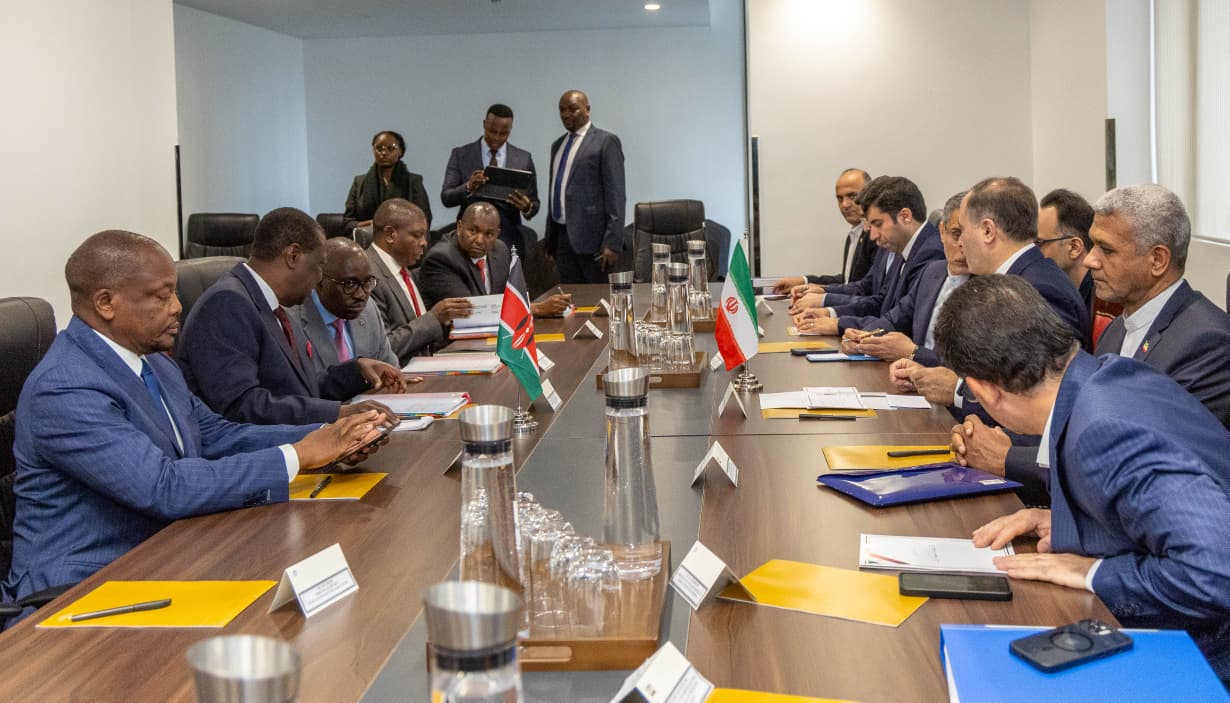
Talks between Kenya and Iran to resume tea exports, worth nearly Ksh5 billion, face uncertainty as the US-Israel war against Tehran intensifies.
As reported by the Business Daily, the two countries had set up a joint committee to remove trade barriers, restore trust, enforce quality standards, and resume shipments within a 60-day framework.
The conflict, with Tehran launching attacks on Israel and Gulf states in retaliation, has slowed Kenya’s engagement. US sanctions also complicate matters, with President Donald Trump last month imposing a 25 per cent tariff on countries trading with Iran, including essential items.
The Iranian ban on Kenyan tea followed a fraud case in which low-grade tea was sold as premium, prompting arrests and asset recovery.
Iranian Ambassador to Kenya, Ali Gholampour, said relations would resume once tensions ease.
The tea sector supports 750,000 smallholders across 19 counties and 6.5 million livelihoods, meaning delayed exports have a significant financial impact on farmers and factories.
The joint committee continues aligning standards, verification processes, and safeguards to reopen shipments once political conditions allow, aiming for a “win-win” for both countries.
Nairobi residents will pay more for water and sewerage services after the Nairobi City Water and Sewerage Company (NCWSC) revised its tariffs for domestic and large consumers.
As reported by Capital Business, a household using an average of 10,000 litres per month will now pay Ksh748, up from Ksh538. The new rates were approved by the Water Services Regulatory Board (WASREB) after public participation.
Water kiosks will be charged Ksh44 per 1,000 litres, translating to less than Ksh1 for a 20-litre container. NCWSC said the 20–30 per cent increase will help meet rising operating costs and fund infrastructure upgrades.
Acting Managing Director Martin Nang’ole said the plan includes 180 kilometres of new water pipelines and 100 kilometres of sewer lines, alongside key projects such as the Ngethu raw water pipeline and rehabilitation works at Kabete treatment plant.
A new report by the Kenya National Bureau of Statistics shows 70.89 per cent of Nairobi households fall in the low-income bracket, spending under Ksh46,355 per month.
After statutory deductions such as PAYE, the Housing Levy, and the Social Health Insurance Fund, a worker earning Ksh50,000 takes home about Ksh39,029.40. Of this, roughly Ksh12,840 goes to food, Ksh5,698 to housing and utilities, Ksh3,746 to transport, and Ksh1,131 to healthcare, leaving limited funds for school fees or savings.
The 2023–24 Kenya Housing Survey indicates Nairobi has 1.66 million households, yet only 7.7 per cent own homes.
As reported by Eastleigh Voice, most pay rent, with one-bedroom flats averaging Ksh8,500 and three-bedroom units about Ksh30,000.
Middle-income households account for 25.58 per cent, while only 3.54 per cent spend above Ksh184,395 monthly, highlighting widening inequality.
President William Ruto has directed the Ministry of Transport to fast-track a Public-Private Partnership framework for nationwide vehicle inspection, saying private investors can modernise the system at no cost to taxpayers while generating revenue.
According to Capital Business, Ruto questioned plans to spend Ksh12 billion on government-run centres.
Transport CS Davis Chirchir said new inspection regulations have been gazetted, allowing the National Transport and Safety Authority to license private operators from July 1.
Ruto also issued a one-month ultimatum to roll out instant fines and install road cameras in major towns. Offenders will receive penalties directly on their phones.
The President also backed demerit points and progressive fines for drivers to curb repeat traffic offences.
COMESA’s Competition and Consumer Commission (CCCC) has cleared Vodacom Group’s Ksh272 billion bid to take majority control of Safaricom, removing a key regulatory hurdle in the transaction.
As reported by the Business Daily, the commission ruled that the merger is unlikely to harm competition in the Common Market or contradict public interest.
The approval allows Vodacom to raise its stake in Safaricom from 35 per cent to 55 per cent, acquiring 15 per cent from the Kenyan government and 5 per cent from Vodafone Group at Ksh34 per share.
Safaricom remains Kenya’s dominant telecom, leading in mobile voice, data, and mobile money services, making the deal significant regionally.
The transaction was notified at the regional level after the Competition Authority of Kenya opted not to conduct a full review. Attention now turns to the East African Community Competition Authority, which is assessing the deal under the new EAC Competition Act.
Amazon’s Project Kuiper is set to launch satellite broadband in Kenya, competing with Elon Musk’s Starlink.
As documented by the Business Daily, the company’s Low Earth Orbit (LEO) satellite team recently met ICT PS John Tanui to discuss expanding fast, reliable internet to underserved communities within one to two years.
Kuiper plans to deploy over 3,000 LEO satellites, offering low-latency broadband comparable to fibre, targeting rural areas, enterprises, and government services.
Starlink, which entered Kenya in 2023, currently enjoys a first-mover advantage but at higher costs. Amazon’s scale, cloud services, and logistics footprint could allow competitive pricing and bundled solutions.
Satellite operators must secure licensing from the Communications Authority of Kenya and comply with spectrum and data regulations.
The Tax Appeals Tribunal has ruled that Premier Credit Limited cannot deduct unrecovered loan principal from taxable income, clarifying that only interest and fees qualify as deductible losses.
The dispute arose after a 2018 audit by the Kenya Revenue Authority issued a Ksh138.4 million tax assessment. While most issues were settled, about Ksh30 million linked to written-off loans remained contested.
The tribunal held that the loan principal is capital, not income, and since it was never taxed, it cannot be deducted when borrowers default. It also declined to invalidate a 2011 regulation barring capital bad-debt deductions, citing limited jurisdiction.
As reported by the Kenyan Wall Street, the decision affects banks, SACCOs and digital lenders, who must now absorb defaulted principal without tax relief.
Gold prices at the Nairobi Securities Exchange rose on Monday as global rates jumped amid investor fears over US-Israel strikes on Iran, heightening Middle East tensions.
The Absa NewGold ETF increased to Ksh6,555 per unit from Ksh6,230 on Friday, resuming a yearlong rally after peaking at Ksh6,800 last month.
Global gold rose over 2.4 per cent to $5,400 an ounce (Ksh696,708) as investors sought safe-haven assets, with the dollar’s strength further boosting local ETF prices.
Each NewGold ETF unit represents 0.01 ounces (0.28 grams) of gold, allowing Kenyans to gain from price increases without trading physical bullion.
About 1,750 units changed hands on Monday. Since January last year, NSE gold prices have nearly doubled, rivalling top-performing counters like Safaricom and KCB. Read more
Low-value transaction customers at GTBank Kenya will now pay zero fees for PesaLink transfers below Ksh1,000 following a revision of digital banking charges.
Effective March 1, 2026, transfers up to Ksh1,000 will attract no fees, amounts between Ksh1,001 and Ksh5,000 will cost Ksh5, and transfers from Ksh5,001 to Ksh999,999 will incur Ksh20.
As reported by Capital Business, Managing Director Jubril Adeniji said the move reflects the bank’s focus on practical, inclusive solutions that reduce costs for everyday users.
The change benefits individuals and small businesses that frequently send small sums, enabling cost-effective transactions while maintaining speed and convenience.
GTBank Kenya noted that growing competition in digital banking is pushing institutions to adopt customer-friendly pricing strategies targeting low-value transaction users.
The United States has sanctioned the Rwanda Defence Force and four senior commanders over alleged support for the M23 rebels in eastern DRC.
The Office of Foreign Assets Control cited training, material support, and joint operations that enabled M23 to seize territory, including Goma, Bukavu, and strategic mining sites.
Sanctioned officials include Army Chief of Staff Vincent Nyakarundi, Major General Ruki Karusisi, RDF Chief of Defence Staff Mubarakh Muganga, and Special Operations Commander Stanislas Gashugi.
As reported by the East African, their US-based assets are blocked, and any entities owned 50% or more by them are also frozen, with all transactions prohibited without OFAC approval.
Rwanda condemned the sanctions as “unjust,” accusing DRC of ceasefire violations. Kenya has been among the countries leading in the talks to end the conflict in DRC and ease tensions with Rwanda.
.png)


Join 1.5M Kenyans using Money254 to find better loans, savings accounts, and money tips today.


Money 254 is a new platform focused on helping you make more out of the money you have. We've created a simple, fast and secure way to find and compare financial products that best match your needs. All of the information shown is from products available at established financial institutions that our team of experts has tirelessly collected.





![Kenya's Richest Counties By Contribution to GDP [2026]](https://cdn.prod.website-files.com/6038c1030be2580db46ccf46/6acf79cc000d099ee32f507a_top%20image%20%2B%20Templates%20%20-%202026-10-14T154332.222.jpg)