News and Analysis
October 6, 2026


Hello and welcome to the Money News Roundup newsletter. Today, we cover Uganda’s rejection of Kenya’s request to access fuel reserves at the Kenya Pipeline and the recent rise in matatu fares.
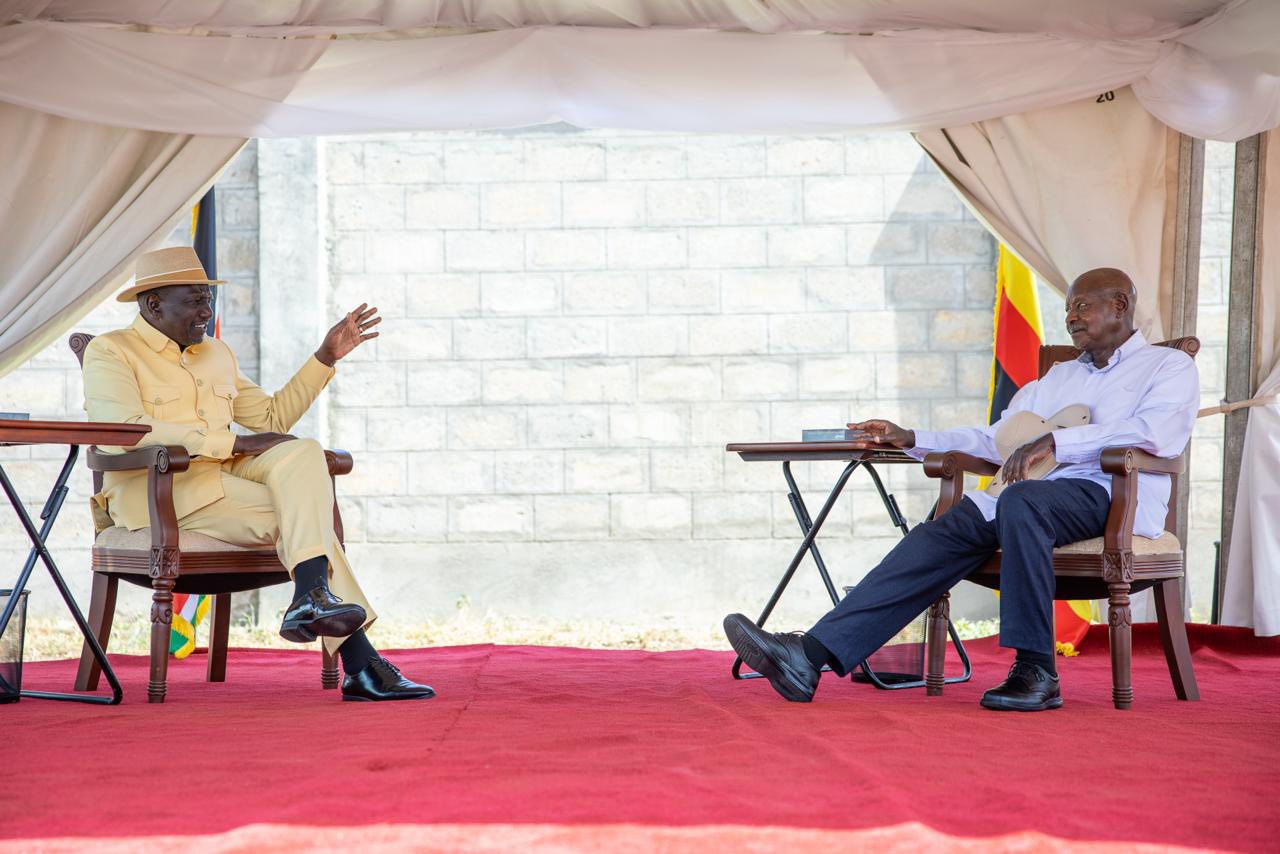
Uganda declined Kenya’s request to access its fuel reserves stored in the Kenya Pipeline Company network, a move that prompted government officials to plan fuel imports outside the G2G framework.
As reported by Business Daily, a brief by former Petroleum PS Mohamed Liban, who resigned following the fuel scandal, shows that Kenya sought Uganda’s petrol stocks as a stop-gap measure, promising to reimburse the fuel once delayed shipments arrived.
However, Uganda rejected the request amid fears of regional shortages linked to tensions in the Middle East.
Petrol stations in Uganda had already increased pump prices amid speculation of a looming shortage.
Kenya then turned to emergency imports, awarding contracts to One Petroleum and Oryx Energies.
The move sparked controversy, with Energy CS Opiyo Wandayi terming the cargo overpriced at Ksh198,000 per tonne compared to Ksh140,000 under Gulf deals.
According to the CS, the imports would have increased pump prices by Ksh14 per litre.
The fallout has led to arrests and resignations of top energy officials, with authorities ordering the disputed cargo to be removed.
US and Iran have agreed to a two-week ceasefire, halting American-Israeli attacks in exchange for Tehran reopening the Strait of Hormuz.
As reported by Bloomberg, President Donald Trump announced the deal after Pakistani mediation urged him to suspend threats of massive bombardment. The truce allows the safe passage of ships coordinated with Iran’s armed forces, while the US pledged to restart tanker traffic, easing global energy tensions.
Strait of Hormuz is a key pathway for fuel products and other commodities to Kenya and other parts of the world. The conflict had seen global oil prices increase.
As a result, oil prices have dropped by nearly 16% to Ksh11,925 ($91.70) a barrel, while global stock markets surged. Experts caution that the ceasefire provides only temporary relief, with broader conflict resolution still unresolved.
As reported by the Nation, some matatu operators across the country have begun increasing fares following fuel shortages reported in towns such as Nakuru.
As a result, major SACCOs have increased fares from Nakuru to Nairobi from Ksh450 to Ksh600.
Fuel shortages have also been reported in parts of Nairobi and Murang’a, which experienced panic buying on Tuesday.
Last Thursday, Treasury Cabinet Secretary John Mbadi noted that Kenya has enough fuel to last 16 days, adding that prices were unlikely to increase over the next two months amid plans to apply fuel subsidies.
At the same time, the government has directed companies that imported fuel linked to the Ksh4.8 billion scandal to remove the products from the Kenyan market.
The products were imported outside the G2G framework and have led to the arrests and resignation of top energy officials.
Zenith Bank Plc has completed the acquisition of the entire issued share capital of Paramount Bank Kenya Limited after securing regulatory approvals in both Kenya and Nigeria.
In a statement signed by Company Secretary Michael Osilama Otu on Tuesday, the lender said the deal marks a key milestone in its expansion into East Africa.
As reported by the Cable, the bank noted that the acquisition aligns with its long-term growth strategy and strengthens its footprint across sub-Saharan Africa.
Zenith Bank added that the move enhances its ability to support customers’ cross-border business operations while reinforcing its position as a leading financial institution in the region.
The transaction comes months after the bank had denied plans to acquire the Kenyan lender in November 2025.
The Kenya Bankers Association has urged the Central Bank of Kenya to retain the policy rate at 8.75% ahead of the April 8 MPC meeting, warning that global risks could fuel inflation and weaken the shilling.
In its research note, the KBA said rising oil prices, geopolitical tensions, and supply chain disruptions pose threats to Kenya’s economic stability. Inflation remains within the 2.5%–7.5% target but edged up to 4.4% in March, driven by food and transport costs.
While GDP growth hit 4.9% in Q3 2025, recent indicators show slowing momentum, with private sector activity easing.
Credit growth has improved but remains fragile amid high non-performing loans, which stood at 15.5% in January 2026.
As reported by Eastleigh Voice, KBA warned that exchange rate pressures and rising import costs could further strain the economy.
Uchumi Supermarkets PLC has scheduled its 38th AGM for April 29, 2026, its first since 2018, as it struggles to avoid liquidation under a prolonged debt restructuring process.
Shareholders will adopt financial statements for eight years and vote on new directors, with three nominees replacing outgoing board members.
As reported by the Kenyan Wall Street, for the year ended June 2025, Uchumi posted an operating profit of Ksh8.8 million on revenue of Ksh86.29 million, largely driven by rental income, including contributions from China Square.
Despite this, liabilities remain high at Ksh9.8 billion.
A failed land sale tied to a dispute with the Kenya Defence Forces has weakened its recovery plan, with liquidation likely if its appeal fails.
Kenya’s top social media influencers earned a combined Ksh296 million in 2025 from brand-sponsored posts, pushing total creator economy payouts to Ksh1.07 billion, according to a report by OdipoDev.
As reported by the Business Daily, top earners included Eric Omondi (Ksh57M), Amber Ray (Ksh44M), Dem wa Facebook (Ksh34M), Jaymo Decin (Ksh25M), and Tom Daktari (Ksh25M).
Brands such as Coca-Cola, Unilever, and Safaricom led influencer campaigns, with beauty and personal care dominating.
While SMEs accounted for 80% of partnerships, large firms secured higher-value deals.
Instagram remained the most lucrative platform, monetising 40.8% of views, while TikTok, despite massive reach, monetised just 12.1%, highlighting a widening gap between visibility and earnings.
KRA is intensifying efforts to raise Ksh932 billion in the final three months of the financial year to meet its Ksh2.97 trillion annual revenue target.
By March, KRA had collected Ksh2.038 trillion, the first time it surpassed Ksh2 trillion within nine months, though this fell short of the Ksh2.122 trillion target.
As reported by the Business Daily, Commissioner-General Humphrey Wattanga said the authority is focusing on stronger compliance and targeted interventions.
KRA is deploying digital tools such as the AI-powered WhatsApp chatbot “Shuru,” USSD services for non-smartphone users, the Electronic Tax Invoice Management System (eTIMS), and GavaConnect for automated integration with businesses.
Enforcement measures, including body-worn cameras for customs officers, complement these initiatives. Customs collections rose 13.3 per cent to Ksh733.7 billion, while domestic taxes grew 10.4 per cent to Ksh1.301 trillion, reflecting challenges from subdued consumer demand and high business costs.
In 2025, Kenya’s pay TV sector lost 4,530,195 subscribers: MultiChoice’s mass-market GOtv suffered the largest blow and shed 2,384,521, DStv dropped 954,120, and StarTimes fell by 1,218,170.
As reported by Tech Weez, rising broadband subscriptions (up 32.9%), increased smartphone penetration, and access to cheaper or pirated content fueled the decline.
Attempts to attract new customers through decoder discounts had a limited impact.
On the flip side, Zuku grew 23% to 190,557 subscribers, and Azam TV rose 21.4% to 34,233.
DStv’s new owners, Canal+, are streamlining services, cutting sub-brands like Showmax, and shifting focus to digital platforms such as DStv Stream to compete with Netflix and other streaming services.
Profit warnings on the Nairobi Securities Exchange (NSE) have surged to eight this financial year, with Nairobi Business Ventures (NBV) the latest to flag a downturn.
NBV expects earnings for the year ending March 2026 to fall by at least 25 per cent, with net profit dropping below Ksh24.1 million from Ksh32.2 million in 2025.
The decline is attributed to challenging market conditions across its aviation, automobile, and cement operations following diversification under Delta International.
Other firms issuing warnings include CIC Insurance (82% drop to Ksh513 million), Standard Chartered Bank of Kenya (38% decline to Ksh12.4 billion), Kenya Airways (net loss of Ksh17.2 billion), Shri Krishna Overseas, TPS Eastern Africa, Limuru Tea, and WPP Scangroup.
NBV shares gained marginally 4.2% to Ksh1.47 but have dropped 27.7% over the past year, underperforming broader NSE trends. Read more
.png)


Join 1.5M Kenyans using Money254 to find better loans, savings accounts, and money tips today.


Money 254 is a new platform focused on helping you make more out of the money you have. We've created a simple, fast and secure way to find and compare financial products that best match your needs. All of the information shown is from products available at established financial institutions that our team of experts has tirelessly collected.









![CBK Approves 29 New Digital Lenders [LIST]](https://cdn.prod.website-files.com/6038c1030be2580db46ccf46/6abce37f51393f90d11dbea6_top%20image%20%2B%20Templates%20%20-%202026-09-30T132202.886.jpg)



![You Have Ksh7 Million: Buy a Home in Cash or Rent and Invest? [The 10-Year Numbers]](https://cdn.prod.website-files.com/6038c1030be2580db46ccf46/6abbbdaf2080b24be31d8e0b_top%20image%20%2B%20Templates%20%20-%202026-09-29T162813.614.jpg)