News and Analysis
October 9, 2026



Hello and welcome to the Money News Roundup Newsletter, where we cover the State House's daily expenditures during national holidays. We also cover why egg prices have skyrocketed.
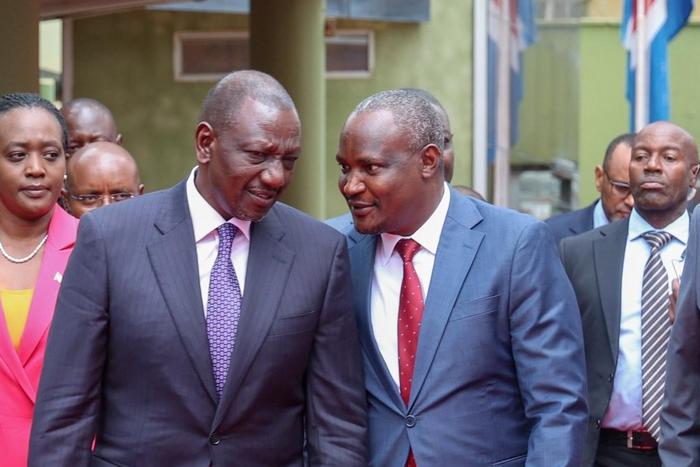
State House Comptroller Katoo ole Metito has revealed that State House spends an average of Ksh123 million per national holiday function, hosting a minimum of 4,500 guests, covering tents, food, and other logistics.
As reported by Citizen Digital, he defended the expenditure after the institution received Ksh11 billion of a proposed Ksh20 billion allocation in the next budget.
Appearing before the National Assembly Committee on Administration and Internal Security, Katoo disclosed that most State Houses and Lodges’ land has been grabbed, hampering renovations.
They have recovered 100 acres in Kakamega and are now focusing on Nakuru and Kisumu, where encroachments pose security risks.
MPs raised concerns over multi-storey buildings being constructed next to these sites, directing that construction near Nakuru State House be halted.
Katoo said hundreds of acres have been repossessed county by county, including Eldoret. Currently, 13 renovation projects are underway across State Houses and Lodges to restore them for official functions.
State House expenditure has come under scrutiny in recent months after a Treasury audit revealed that it exceeded its full-year recurrent budget by Ksh2.7 billion within the first seven months of the 2025-26 financial year.
By the end of January 2026, State House had spent Ksh10.4 billion against an annual allocation of Ksh7.7 billion, surpassing its approved ceiling by 35 per cent with five months remaining.
January alone accounted for Ksh1.3 billion in recurrent expenditure, averaging Ksh42.6 million daily. Recurrent spending covers travel, allowances, hospitality, and administrative costs tied to the daily functioning of State institutions.
The price of poultry eggs in Nairobi has surged by up to 20% over the past month, driven by rising feed costs and seasonal demand. An egg in most estates in Nairobi is sold between Ksh15 and Ksh18.
As reported by Nation, retail prices now range from Ksh450 to Ksh480 per tray, while major supermarkets charge between Ksh575 and Ksh604, up to 30% higher than street prices.
Timothy Mulwa, chairman of the Poultry Breeders Association of Kenya, attributes the spike to production cost pressures, feed shortages, and regional supply constraints.
On February 16, feed manufacturers increased the price of Layers Mash by Ksh100. Feed accounts for 85–90% of egg production costs, so any rise directly impacts farm-gate prices, which now average Ksh400 per tray.
A Competition Authority of Kenya inquiry found local animal feed prices are 42–54% higher than in South Africa and Brazil.
Additional factors include non-tariff barriers on maize imports from Tanzania, inconsistent egg supplies from Uganda, rising fuel and transport costs, and drought, which has driven households toward eggs as a cheaper protein option.
Seasonal factors such as Ramadhan and school reopenings have further heightened demand. Combined with supply constraints, these pressures have sustained elevated egg prices, affecting both households and institutional buyers.
The Treasury has unveiled tougher action against digital and microfinance lenders accused of exploiting borrowers through excessive interest rates and aggressive debt collection.
As reported by Eastlegh Voice, Treasury Cabinet Secretary John Mbadi told the Senate that penalties for violating the Banking Act have been increased from Ksh500,000 to Ksh2 million to deter non-compliance among non-deposit-taking credit providers.
As reported by Eastleigh Voice, the move follows concerns that some lenders are breaching the duplum rule, charging interest beyond twice the principal, and misusing customers’ personal data.
Mbadi said data privacy violations fall under the Office of the Data Protection Commissioner.
The Treasury and the Central Bank will also target logbook lenders accused of inflating loan costs. However, Mbadi cautioned against capping interest rates, warning it could hurt investment and economic competitiveness.
According to Reuters, Kenya’s planned IPO of Kenya Pipeline Company has been oversubscribed, driven largely by institutional investors, according to lead adviser Faida Investment Bank.
The government offered a 65% stake to raise Ksh106.3 billion in what could become East Africa’s largest IPO in local currency terms.
Priced at Ksh9 per share, the offer ran from January 19 to February 24, with results due March 4.
Of the shares on sale, 15% were reserved for oil marketers, 5% for employees, and the rest split among retail, institutional, regional and foreign investors. The government will retain 35%.
Uganda secured a 20.15% stake, citing reliance on the pipeline for over 95% of its fuel imports through Mombasa.
Automobile Association of Kenya has launched an International Driving Permit (IDP), enabling Kenyan motorists to legally drive in over 150 countries without local tests.
As reported by Citizen Digital, the move addresses rising cases of Kenyans facing legal action abroad for using counterfeit permits.
AA Kenya CEO Francis Theuri said the IDP is tamper-proof, digital, and verifiable online via Interpol. Developed with support from the International Automobile Federation, AA Dubai, and the UK, the permit translates a valid Kenyan license into multiple languages, easing vehicle rentals and insurance validation abroad.
The rollout aligns with government efforts to promote international travel and work, offering opportunities for youth in driving-intensive jobs.
Families of police and prison officers did not receive death or disability claims in 2025 after the National Police Service (NPS) failed to remit Ksh2 billion in premiums to Britam for a group life insurance policy covering 141,961 employees.
Secretary for Administration Bernice Lemedeket said delays were worsened by budget shortfalls, with the Treasury allocating only Ksh2.3 billion of a required Ksh4.3 billion for 2022/2023, and a Ksh6.46 billion shortfall in 2025/2026.
As of November 2023, Ksh220.14 million in claims remained unpaid, affecting 312 officers injured on duty.
As reported by Business Daily, the policy, covering work-related injuries, death, and permanent disability, replaced older schemes and includes 24-hour Group Personal Accident coverage.
Non-payment was also linked to delays in document submission, family disputes, and recovery periods.
Motor vehicle accident claims and forgery accounted for nearly two-thirds of insurance fraud cases in Kenya during the first nine months of 2025, according to the Insurance Regulatory Authority (IRA).
As reported by Capital Business,The regulator’s January–September 2025 report shows the two categories made up 36 of 57 cases (63.2%), up from 20 of 55 cases (36.4%) in 2024.
Fraudulent accident, theft, or electrocution claims rose from 16 to 24, while forgery cases tripled from four to 12. Other cases included obtaining money by false pretences (five), theft by agents (five), and fraudulent funeral, death or medical claims (three).
Contraventions of the Insurance Act fell from 10 to three. Four suspects were arrested and arraigned in courts in Embu, Milimani and Mombasa.
APA Apollo Group has appointed Risper Ohaga as its new Group Chief Executive Officer, effective July 1, 2026.
Ohaga, currently Chief Financial Officer and Executive Director at East African Breweries Limited (EABL), will step down on June 30, 2026. She succeeds Ashok Shah, who has led APA Apollo since 2012.
As reported by Capital Business, Ohaga previously held senior finance and audit roles at Barclays/Absa across Nairobi, Johannesburg and Lusaka, and at KPMG East Africa.
She said she is eager to build on Shah’s legacy and strengthen APA’s regional footprint. Ohaga also cited opportunities arising from collaboration with key equity partners, including Hollard International and Swiss Re, aimed at driving innovation, enhancing customer value and sustaining growth across East Africa.
Pesalink has partnered with Pan-African Payment and Settlement System (PAPSS) to simplify cross-border payments and deepen regional financial integration.
As reported by Capital Business, the deal enables instant, 24/7 transfers from PAPSS participants directly into Kenyan banks and mobile money wallets on the Pesalink network, with settlements in local currencies.
PAPSS, backed by the African Export-Import Bank in collaboration with the African Union and the AfCFTA Secretariat, connects over 160 banks and fintechs across Africa. Pesalink now links more than 80 Kenyan institutions to the platform.
With cross-border transfers in Africa costing 7–8% on average and taking up to seven days, the partnership aims to cut costs, reduce reliance on foreign currencies, and speed up transactions for individuals and businesses.
Standard Chartered Bank Kenya has appointed Gladys Warirah as Chief Financial Officer and Executive Director, replacing Chemutai Murgor, who will leave on 31 May 2026.
As reported by the Kenyan Wall Street, the appointment is subject to approval by the Central Bank of Kenya and the Capital Markets Authority.
Warirah, previously Financial Controller in Kenya and Country Treasurer in Standard Chartered Malaysia, brings over 20 years of experience in treasury, finance, governance, and controllership.
Murgor departs after more than 25 years, having overseen finance across East Africa and Africa, improving balance sheet management, efficiency, and technology-led transformation.
.png)


Join 1.5M Kenyans using Money254 to find better loans, savings accounts, and money tips today.


Money 254 is a new platform focused on helping you make more out of the money you have. We've created a simple, fast and secure way to find and compare financial products that best match your needs. All of the information shown is from products available at established financial institutions that our team of experts has tirelessly collected.