News and Analysis
October 16, 2026


Hello and welcome to the Money News Roundup Newsletter, where we cover the increase in cooking gas prices. We also cover KRA's introduction of a “PIN with No Obligation” (PWO) for Kenyans with no income.
Cooking gas prices in Nairobi have risen by up to Ksh390 following global supply disruptions linked to the Middle East conflict.
As reported by Nation, a 13kg cylinder now retails between Ksh3,510 and Ksh3,530 from Ksh3,140 at major petrol stations that also have their cooking gas brands.
The increase is driven by a surge in global propane and butane prices. Saudi Aramco raised propane by Ksh26,477.80 ($205) per tonne to Ksh 96,870 ($750), while butane rose by Ksh33,581.60 ($260) to Ksh 103,328 ($800).
Algeria’s Sonatrach also increased prices, pushing propane to Ksh109,786 ($850) and butane to Ksh116,244 ($900).
Shipping costs have also climbed due to disruptions in the Strait of Hormuz, further raising LPG import costs.
Local suppliers say the higher global prices and freight charges have increased the landed cost of gas.
The price hike comes amid rising fuel costs, with petrol at Ksh 197.60 and diesel at Ksh 196.63 per litre. Analysts warn the increase could dampen demand, especially among low-income households, despite growing LPG adoption in recent years.
KRA has introduced the “PIN with No Obligation” (PWO) category for Kenyans who have been filing nil returns.
As reported by Capital Business, the change is set to benefit students and individuals without taxable income, who were previously required to file annual Nil Returns despite having no earnings.
KRA announced that its upgraded iTax system now allows both resident and non-resident individuals to register for a PIN without attaching any tax obligations, as long as they are not engaged in income-generating activities.
Individuals registered under the PWO category will not be required to file annual returns.
However, KRA clarified that tax obligations will automatically take effect once a PIN holder begins earning taxable income.
Lua, an AI startup that is building an Operating System for human-agent collaboration, has raised Ksh748M ($5.8 million) to scale its operations.
The funding series was led by Norrsken22, with backing from Y Combinator, Flourish Ventures, 20VC, P1 Ventures, Enza Capital, Phosphor Capital. Henri Stern, the CEO Privy, Kaz Nejatian, the CEO of Opendoor, and Med Benmansour, CEO of Nuitee; also participated as angel investors.
Founded by Lorcan O'Cathain and Stefan Kruger, Lua enables teams to build, deploy and manage AI agent workforces without deep technical expertise.
Its platform offers full-stack infrastructure, allowing businesses to create agents through code or natural language interfaces. Already, a number of Kenyan businesses are using Lua to deploy custom-built AI agents designed to pre-qualify and convert clients on online platforms such as WhatsApp or a website.
Earlier this month, Lua hosted a hackathon in Nairobi, drawing over 120 participants - developers and entrepreneurs working on building AI agents that integrate into real-life businesses.
Since launching in October 2025, Lua has recorded rapid growth, with revenue rising nearly 30% week-on-week and strong uptake among developers.
The firm plans to use the funding to expand its developer ecosystem and grow its global implementation network. Lua is already active across Africa, Asia, the US and Europe, targeting businesses seeking to integrate AI into daily operations.
Kenya plans to issue its debut green sovereign bond worth Ksh 64.5Bn ($500 million) before June, with support from the World Bank.
As reported by the Business Daily, the Central Bank of Kenya said the bond remains part of its external financing pipeline despite earlier delays.
The green bond, which is usually tax-free for investors, will fund environmentally sustainable projects such as renewable energy, clean transport and green housing. Kenya had initially targeted a March issuance but prioritised a Ksh 290.4 billion ($2.25 billion) Eurobond, using part of the proceeds to buy back Ksh 53.6 billion($415 million) in maturing debt.
The move is part of efforts to diversify funding sources amid rising fiscal pressure, with the deficit widening to Ksh1.3 trillion. The government is also exploring instruments like diaspora and sustainability-linked bonds.
If successful, the bond will boost foreign reserves, currently at Ksh1.7 trillion ($13.3 billion), and strengthen Kenya’s buffer against external shocks.
Uganda has shifted financing for its Ksh411.5 billion ($3.19 billion) railway project from China to Western-backed institutions, appointing Citibank as lead arranger.
As reported by Business Insider, the move follows the cancellation of a 2015 deal with China Harbour Engineering Company after prolonged funding delays.
A new construction contract has been signed with Turkish firm Yapi Merkezi to build the line linking Kampala to Malaba at the Kenyan border. Uganda is also in talks with the World Bank to support financing.
Officials say the project will improve regional connectivity, lower freight costs, and boost trade competitiveness. Once complete, it will connect to Kenya’s rail network and the Port of Mombasa.
The shift signals a broader strategy to diversify funding sources after China-backed financing failed to materialise.
In Kenya, the SGR extension to the Malaba border is being undertaken by China Communications Construction Company (CCCC) and China Road and Bridge Corporation (CRBC).
Unlike previous phases that relied heavily on direct Chinese loans, this extension utilises a multi-funding model involving a mix of Public-Private Partnerships (PPP), government funds, and revenue securitisation.
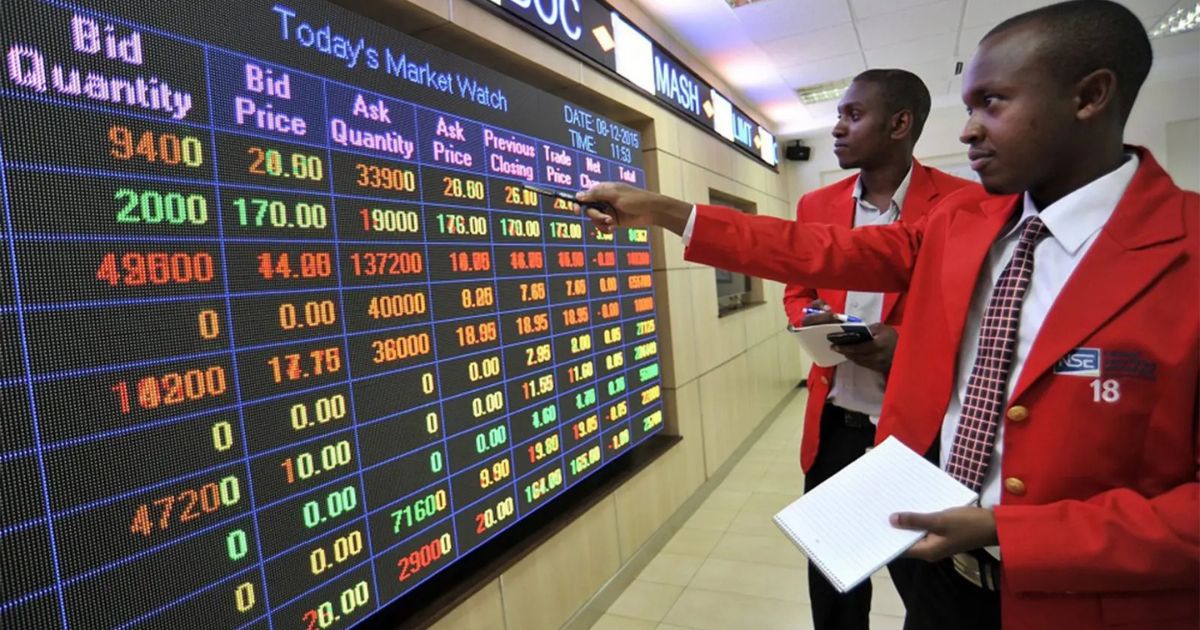
The Nairobi Securities Exchange posted a third straight week of gains, though momentum eased. Market capitalisation rose 0.54% to Ksh 3.45 trillion, adding Ksh18.53 billion, and has now recovered most losses from the Week 13 selloff.
All indices closed higher, with NASI up 0.54% to 208.13, while the NSE 10 edged up just 0.08%. Equity turnover nearly doubled to Ksh5.41 billion, largely driven by Kenya Pipeline Company, which accounted for over 40% of activity.
As reported by the Kenyan Wall Street, foreign investors recorded a net inflow of Ksh78.17 million, ending a six-week outflow streak, supported by easing geopolitical tensions after a US-Israel-Iran ceasefire.
The shilling strengthened slightly to Ksh129.18 per dollar, while inflation ticked up to 4.4%. Bond turnover declined, even as long-term government debt saw strong demand.
Kenya is seeking fresh funding from the World Bank and IMF as fallout from the US-Israel-Iran conflict strains the economy. The government is pursuing concessional financing to replace costly domestic borrowing and ease debt pressures.
Foreign exchange reserves have dropped by Ksh167.9 billion ($1.3 billion) to Ksh1.7 trillion ($13.3 billion), increasing the urgency for external support.
As reported by the Business Daily, Kenya is now pushing to unlock more than the previously frozen Ksh 96.8 billion ($750 million) World Bank loan, alongside additional rapid financing before June.
The IMF is also in talks with Kenya on a new programme, with conditions likely to include spending cuts and stronger tax enforcement.
The financing push comes as rising fuel costs and global uncertainty weigh on revenues. However, inflows such as Ksh245.3 billion ($1.9 billion) from Safaricom stake sales are expected to support reserves and cushion the economy.
TVET graduates will no longer wear academic gowns during graduation ceremonies following a new directive aimed at reinforcing technical identity.
As reported by Eastleigh Voice, TVET Principal Secretary Esther Muoria said the change will take effect from the next graduation cycle, with students instead wearing attire aligned to their fields, such as overalls for mechanics and chef uniforms for culinary trainees.
She noted that gowns fail to reflect the practical nature of TVET courses and make it difficult to distinguish specialisations. The reform is part of broader efforts to strengthen skills-based training.
Muoria said enrolment has grown from 350,000 in 2022 to 850,000, prompting plans to recruit 1,000 trainers.
Meanwhile, KNEC has introduced an SMS service to allow parents to confirm entries for the Kenya Primary School Education Assessment (KPSEA), Kenya Junior School Education Assessment (KJSEA) and the KCSE. Parents can verify the details by sending the learner’s assessment or index number to 20076.
Large multinationals in Kenya face compliance uncertainty as the government delays regulations for the new global minimum tax ahead of the April 30 deadline. The law requires firms with revenues above Ksh114 billion (€750 million) to pay at least 15% tax on profits through a top-up mechanism.
Although Kenya adopted the OECD-led framework in 2024, subsidiary regulations guiding calculation, reporting and payment remain unpublished, leaving firms unable to comply effectively.
The tax is due four months after year-end, meaning companies with a December 2025 financial year must pay by April 30, 2026. Analysts say the rules are complex, relying on financial accounting data, adjusted taxes and excess profit calculations.
KRA says it is engaging stakeholders to clarify implementation, noting the framework protects Kenya’s tax base by ensuring taxes are collected locally instead of by a foreign jurisdiction. Read more
KRA has directed oil marketers to reconfigure invoicing systems to reflect the reduced 8% VAT on fuel, tightening compliance requirements.
As reported by the Business Daily, firms using third-party systems must introduce new tax categories, update product codes, and restrict the application of the rate to transactions between April 15 and July 14, 2026.
KRA said systems must align with eTIMS, which captures transactions in real time, raising the risk of penalties for coding or timing errors. Smaller firms relying on external vendors face higher costs due to system updates and tight deadlines.
The directive signals increased audit scrutiny, with KRA building detailed digital trails for post-compliance reviews.
The VAT cut lowered Nairobi petrol prices by Ksh 9.37 to Ksh 197.60 per litre and diesel by Ksh 10.21 to Ksh 196.63, offering short-term relief but increasing operational pressure on businesses.
Roam has unveiled the Roam Air Gen 3, an electric motorcycle designed to overcome key barriers to EV adoption in Africa.
As reported by the Kenyan Wall Street, the bike delivers over 1 kilometre of range per minute of charging, with its battery moving from 20% to 80% in under 40 minutes at 2.2 kW.
Built for boda boda riders, it offers an 80-kilometre range and features an IP67-rated battery housed in industrial-grade aluminium for durability in harsh conditions. The reinforced chassis has been tested across 200,000 vibration cycles under heavy loads.
The bike also includes GPS tracking and real-time monitoring via a mobile app to deter theft and improve fleet management. Roam is offering a 100,000-kilometre guarantee, aiming to boost confidence among riders and financiers.
.png)


Join 1.5M Kenyans using Money254 to find better loans, savings accounts, and money tips today.


Money 254 is a new platform focused on helping you make more out of the money you have. We've created a simple, fast and secure way to find and compare financial products that best match your needs. All of the information shown is from products available at established financial institutions that our team of experts has tirelessly collected.






![Kenya's Richest Counties By Contribution to GDP [2026]](https://cdn.prod.website-files.com/6038c1030be2580db46ccf46/6acf79cc000d099ee32f507a_top%20image%20%2B%20Templates%20%20-%202026-10-14T154332.222.jpg)