News and Analysis
September 14, 2026


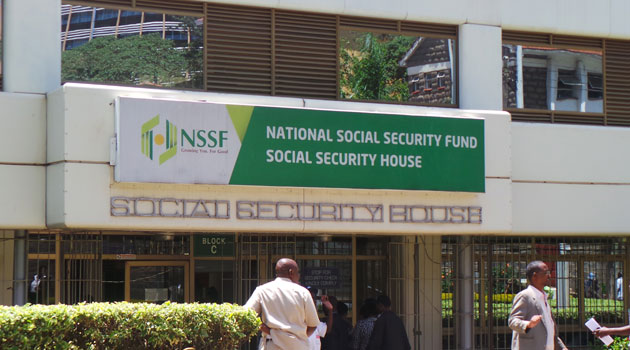
Hello and welcome to the Money News Roundup Newsletter, where we are covering the new NSSF rates taking effect in 2026 and the rollout of instant fines on the roads following Cabinet’s approval for new licences.
Employees will pay up to Ksh2,160 more to the National Social Security Fund (NSSF) from February 2026, further reducing their disposable incomes.
This marks the fourth year of implementing higher mandatory NSSF contributions, which rose from Ksh200 to Ksh1,080 in 2022 and currently stand at Ksh4,320.
As reported by Business Daily, employees earning below Ksh50,000 will not be affected. However, workers earning over Ksh100,000 will see monthly NSSF deductions rise to Ksh6,480 from Ksh4,320.
Due to tax deductibility, the actual reduction on payslips will be about Ksh1,512, not the full Ksh2,160. Employers are required to match employee contributions.
With the new rates, the pay for Kenyans earning Ksh75,000 will be Ksh54,735 from Ksh54,861. (The new NSSF rate for these employees will be Ksh4,500).
Those earning a gross pay of Ksh100,000 will be taking home Ksh70,442, a reduction from the current Ksh71,618. (The new NSSF rates for these employees will be Ksh6,000).
The new NSSF rates for Kenyans earning between Ksh200,000 to Ksh1 million will be Ksh6,480.
As a result, Ksh200,000 gross earners will have their take-home pay reduced from Ksh138,643 to Ksh137,131, while those earning Ksh300,000 will have their pay reduced from Ksh205,668 to Ksh204,256.
Individuals earning Ksh500,000 gross pay will have their net pay at Ksh338,206, down from Ksh339,718. Those earning Ksh1 million will have their take-home pay reduced from Ksh659,684 to Ksh658,280.
The increases have made NSSF Kenya’s largest pension fund, with assets growing to Ksh558 billion by June, up from Ksh476 billion last December. Annual contributions rose to Ksh83.97 billion and are expected to exceed Ksh100 billion next year.
The higher NSSF rates come alongside other deductions, including the 1.5% housing levy and the 2.75% health insurance levy.
The new rates introduced by the government are aimed at reducing old-age poverty, noting that over 70% of Kenyans retire without adequate savings.
Chinese firms set to build and operate the Rironi–Mau Summit toll road will share excess revenues with the government under a revenue cap agreement aimed at limiting excessive private profits.
The PPP Directorate said revenues collected above an agreed threshold will be shared with the State, with no minimum revenue guarantee in place. This means operators will bear demand risk while the government benefits only from surplus collections.
As reported by the Business Daily, the model differs from the Nairobi Expressway arrangement, where the operator absorbs losses but keeps all excess revenue.
The 236-kilometre road has been split between China Road and Bridge Corporation and Shandong Hi-Speed Road and Bridge International Engineering to avoid lengthy approvals from Beijing.
The Ksh170 billion project will be privately financed, with contractors bearing construction and operational risks, while toll rates will be set through a regulated formula. The highway is expected to ease congestion and cut travel time to western Kenya and the region.
The Cabinet has approved the creation of the National Infrastructure Fund (NIF) and the Sovereign Wealth Fund (SWF).
As reported by Citizen Digital, the NIF will be established as a limited liability company to mobilise private capital for priority infrastructure, reducing reliance on borrowing and taxation.
Each shilling invested by the government is expected to crowd in up to Ksh10 from long-term investors.
The SWF will manage revenues from minerals, petroleum, public investments, and privatisation proceeds to stabilise the economy and safeguard future generations. Introduced through the SWF Bill, 2025, it focuses on stabilisation, strategic infrastructure investment, and future savings.
Together, the funds are expected to support a Ksh5 trillion development programme over 10 years, spanning transport, energy, education, and water infrastructure.
Some of the projects to be financed with the two funds include the dualling of 2,500km of highways and the tarmacking of 28,000km of roads, extension of the Standard Gauge Railway (SGR).
The government has approved the rollout of second-generation smart driving licences through a public–private partnership to modernise Kenya’s licensing system and enhance road safety.
As reported by Eastleigh Voice, the smart licences will integrate instant fines, a mobile licence wallet, and a driver merit and demerit points system.
The move follows years of delays in issuing chip-embedded licences under a contract with the National Bank of Kenya, with the Auditor General citing unprinted cards and management challenges at NTSA.
Only 2.1 million of a targeted five million licences have been issued since 2017, with many motorists preferring yearly electronic licences.
Under the PPP model, private investors are expected to improve efficiency, strengthen security, modernise enforcement, and complete the long-delayed transition to digital driving licences.
Meanwhile, NTSA, the police, and the Judiciary announced the introduction of mobile courts across the country during the festive season, following the increase in road accidents.
The mobile courts, which will also be online, will be used to charge traffic offenders on the spot.
The Kenyan government has signed a Ksh40.4 billion Public-Private Partnership (PPP) agreement to strengthen the national power transmission network, boosting grid stability and supporting renewable energy integration.
As reported by Kenyans.co.ke, The deal, signed on December 15 between KETRACO, Africa50, and India’s PowerGrid Corporation, was witnessed by Treasury PS Chris Kiptoo.
The privately financed project will involve constructing two high-voltage transmission corridors and substations to reduce technical losses, curb load shedding, and improve system reliability.
The 400kV Lessos–Loosuk line will serve parts of Rift Valley, while the 220kV Kibos–Kakamega–Musaga line will enhance power supply in Western Kenya.
The government said the PPP model attracts capital and expertise while maintaining fiscal discipline, with affected communities assured of fair compensation and livelihood restoration.
The new deal replaces the Adani deal that was cancelled after public uproar.
Chinese automaker Dongfeng has entered Kenya’s electric vehicle market through a partnership with ePureMotion, launching two passenger EV models supported by local retail and service operations.
As reported by Business Daily, the rollout features the ePureCitie hatchback in Classic and Lux trims, priced at Ksh4 million and Ksh4.5 million, with ranges of about 330 km and 430 km, respectively.
ePureMotion has partnered with Associated Vehicle Assemblers (AVA) to begin local assembly, benefiting from tax incentives, including exemption from the 35% import duty on fully built units and a lower 10% excise duty.
The move aims to reduce costs, improve spare parts availability, and support industrialisation.
Dongfeng plans to introduce more passenger and light commercial EVs in early 2026, alongside expanded charging infrastructure.
Britam Holdings’ micro-insurance unit is expanding its flood cover to reach up to 20,000 households in Tana River after a successful pilot that paid Ksh14.1 million in claims in 2023.
The index-based cover, Britam Mafuriko, triggers automatic payouts when rainfall exceeds set thresholds, benefiting 300 families during recent floods.
Offered through Britam Connect, the product uses satellite rainfall and river-gauge data to deliver fast payouts without claims paperwork. The rollout is supported by ALDEF, Risk Shield, and the InsuResilience Solutions Fund, with a mobile-based early warning system included.
The expansion follows devastating floods that affected over 10,200 households, with past beneficiaries using payouts to rebuild homes and livelihoods. Britam’s climate insurance portfolio now covers about 560,000 farmers and pastoralists nationwide. Read more.
Kenya is seeking to turn vehicle waste into economic value under the proposed National Automotive Industry Development Bill, 2025, which places sustainability and end-of-life vehicle management at the centre of automotive policy.
The Bill empowers a National Automotive Council to regulate decommissioned vehicles, with NTSA data showing about 30,000 units written off but still holding economic value.
As reported by Kenyan Wall Street, these vehicles would be recycled into spare parts and steel, lowering production costs, creating jobs, supporting SMEs, and improving environmental outcomes.
The move comes as car demand cools, with KNBS data showing vehicle registrations falling from 22,632 units in January to 20,132 units in May, an 11% decline. Motorcycle registrations also fell, while demand for higher-cost vehicles remained subdued amid tight credit conditions.
.png)


Join 1.5M Kenyans using Money254 to find better loans, savings accounts, and money tips today.


Money 254 is a new platform focused on helping you make more out of the money you have. We've created a simple, fast and secure way to find and compare financial products that best match your needs. All of the information shown is from products available at established financial institutions that our team of experts has tirelessly collected.








%20(1).jpg)