News and Analysis
October 23, 2026


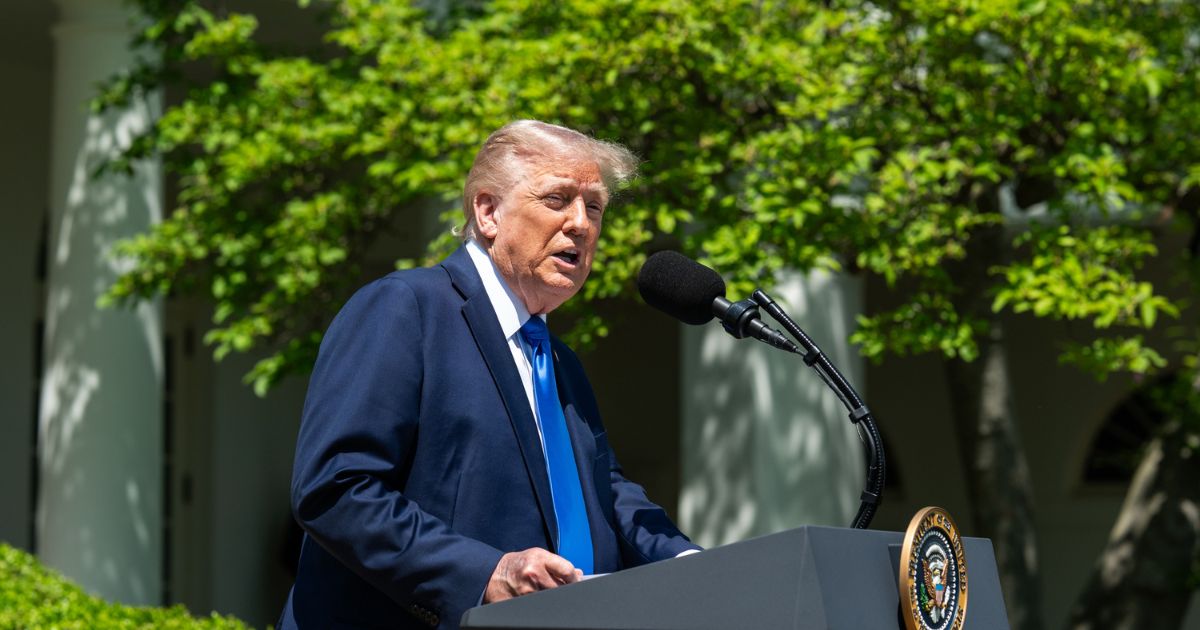
Hello and welcome to the Money News Roundup Newsletter. Today, we cover the decline in diaspora remittances from the US following Trump's tax changes. We also look at the agreements reached between the government and small-scale traders on taxes and cargo clearance.
Money sent home by Kenyans in the US fell by nearly Ksh22 billion in the first half of 2026, marking the sharpest decline since the Central Bank of Kenya (CBK) began publishing country-specific remittance data.
As reported by the Business Daily, remittances from the US dropped 12.6% to Ksh152.5 billion, down from Ksh174.5 billion a year earlier.
The drop came after Trump's administration imposed a 1% tax on money transfers abroad. The tax took effect in January 2026.
The decline erased Ksh21.94 billion from Kenya’s largest source of diaspora income and pushed the US share of total remittances below 50% for the first time since 2019, falling to 48.2%.
Overall diaspora remittances declined 3% to Ksh315.75 billion during the six months to June.
The slowdown has also been linked to the economic impact of the Iran conflict, higher inflation.
KRA will lower the clearance benchmark for general consolidated cargo from Ksh2.5 million to Ksh2 million following a meeting between President William Ruto and small-scale traders. The benchmark was recently raised to Ksh3.2 million.
As reported by the Citizen Digital, the agreement, reached on September 2, also retains existing rates for ready-made garments, footwear and fabrics, while keeping negotiated air cargo rates recently unchanged.
The government will further scrap the Advance Cargo Declaration requirement to simplify cargo clearance.
KRA will publish an exclusion list of goods that do not qualify under the consolidated cargo framework and will re-register all cargo consolidators by October 15, 2026.
To reduce logistics costs, Kenya Railways has cut cargo transport charges from the Inland Container Depot to the Bomaline De-consolidation Centre from Ksh58,000 to Ksh10,000 with immediate effect.
Meanwhile, as reported by the Star, the President directed foreign nationals engaged in hawking and other small-scale trading activities in Kenya to stop, saying the move will protect local traders from unfair competition.
While meeting medium and small traders, the President announced that a nationwide crackdown targeting foreign nationals would begin next week.
Uganda has announced that it expects to start exporting crude oil before the end of 2026, and has also named its crude oil "Pearl Sweet".
As reported by CNBC Africa, the exports will be transported through the East African Crude Oil Pipeline (EACOP), a 1,443-kilometre electrically heated pipeline linking Uganda's oilfields in Hoima to the port of Tanga in Tanzania.
Currently 92% complete, the pipeline has a capacity of 216,000 barrels per day and is expected to play a key role in Uganda's transition into an oil-exporting nation.
Crude from the Tilenga and Kingfisher oilfields will be transported through the heated pipeline to Tanzania, where it will be stored and loaded onto tankers for export to international markets.
Recently, Tanzania and Uganda also signed an agreement to set up a joint refinery amid plans by Aliko Dangote to set up a Ksh2 trillion refinery in Lamu.
Uber will shut down its ride-hailing services in Nigeria and Uganda from September 2 as part of a global business review.
As reported by Bloomberg, the move comes amid a wider restructuring under CEO Dara Khosrowshahi that includes cutting 3,300 jobs.
Uber said the decision affects only the two markets and does not change its commitment to sub-Saharan Africa, where it still sees strong growth opportunities. Uber launched in Nigeria in 2014 and Uganda in 2016.
Meanwhile, as reported by the Business Daily, Ride-hailing companies such as Uber and Bolt will continue setting their own commission rates in Kenya after the High Court suspended the enforcement of a law that sought to cap commissions at 18%, allowing the platforms greater flexibility in determining their charges.
A Bungoma court has ordered a separated couple to share the upkeep, maintenance, and school-related expenses of their three children equally after finding that their incomes are nearly equal.
As reported by Nation, Senior Resident Magistrate T.O. Omono ruled that both parents have a responsibility to provide for their children and rejected the mother's request for the father to fully shoulder maintenance costs.
The court granted both parents equal legal custody, requiring them to jointly make major decisions on education, religion and healthcare.
Also in the News
.png)


Join 1.5M Kenyans using Money254 to find better loans, savings accounts, and money tips today.


Money 254 is a new platform focused on helping you make more out of the money you have. We've created a simple, fast and secure way to find and compare financial products that best match your needs. All of the information shown is from products available at established financial institutions that our team of experts has tirelessly collected.