News and Analysis
October 19, 2026


.jpg)
Hello and welcome to the Money News Roundup Newsletter, where we cover the closure proposed levies for the fishing industry. We also cover Tanzania's response to President William Ruto over the stats on roads.
The fish industry could soon face higher costs under a government plan to introduce two new levies targeting fishermen and fish traders as part of reducing illegal fishing.
The proposed measures are part of a wider plan that also includes the creation of three regulatory bodies to oversee different aspects of the fisheries value chain.
As reported by The EastAfrican, the new levies will be imposed on fishers, traders, and processors, potentially increasing the cost of related delicacies.
The government aims to use the cash raised through the levies to strengthen oversight, improve compliance, and boost revenue collections.
Officials say the reforms are also designed to curb illegal and unregulated fishing while aligning Kenya’s fisheries management with international standards.
Industry stakeholders, however, have raised concerns that the additional charges could reduce profitability and push up fish prices for consumers.
Banks and digital lenders may soon be required to reassess borrowers’ financial capacity before increasing loan limits under new draft regulations aimed at curbing predatory lending.
The Central Bank of Kenya (CBK) and other regulators want lenders to evaluate a borrower’s income, expenses, assets, and existing obligations before issuing new credit or raising limits.
As reported by the Business Daily, currently, many lenders rely on repayment history alone to increase loan limits, a practice regulators say has contributed to rising debt levels among borrowers.
The proposed rules seek to ensure credit is suitable and affordable, reducing cases of financial distress.
Digital lending has grown rapidly, with loans disbursed within minutes via mobile platforms, often without collateral or thorough checks. As of February 2026, digital lenders had granted 7.5 million loans valued at Ksh133.5 billion
While this has boosted financial inclusion, concerns have emerged over unethical practices and over-indebtedness, especially among low-income borrowers.
CBK data shows 16.6 per cent of borrowers are over-indebted, while digital lenders record default rates as high as 40 per cent.
The new rules will also require lenders to support distressed borrowers through restructuring and repayment relief before enforcement actions.
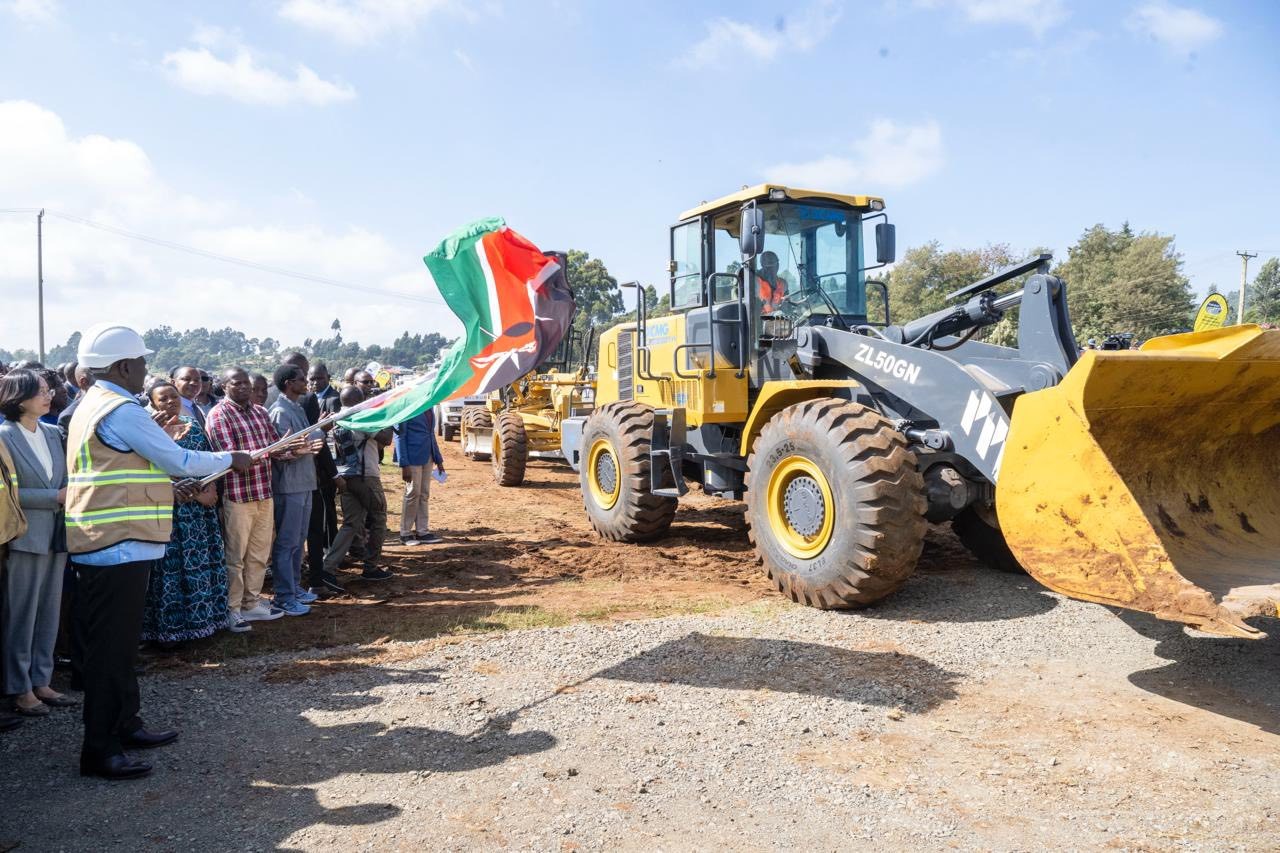
Tanzania has publicly called out President William Ruto’s claims that Kenya has more tarmacked roads than all East African Community (EAC) countries combined, terming the remarks as false.
Ruto, speaking in Nairobi, had said Kenya was being unfairly compared to its neighbours on the fuel prices in the region. He added that Kenya was the only middle-income country in East Africa and claimed that the country had more kilometres of tarmac than the entire EAC countries combined.
In a rare diplomatic spat, the claim was dismissed by Tanzania’s Works Minister Abdallah Ulega, who added that Tanzania also holds middle-income status alongside Kenya.
As reported by Citizen Digital, Ulega noted that the claim that Kenya’s 20,000 kilometres of tarmac was more than the other EAC countries was false.
“Let it be known that Tanzania is also a middle-income economy. And in East Africa, we are only two, us and Kenya. Tanzania has a total of 16,000 kilometres of tarmac. Our other neighbors (Uganda), have 6,100km. If you combine just the two of us, it’s over 22,000 kilometres. That report of Kenya having more kilometres of tarmac than the entire EAC countries combined is a lie meant to humiliate us,” the Tanzanian Minister stated.
The statements made by Ruto followed the recent hike in pump prices, where the government collects Ksh25 per litre for the Road Maintenance Levy. Currently, a litre of Super Petrol in Nairobi retails at Ksh197.60, while Diesel will cost Ksh196.63.
In Tanzania, petrol costs Ksh191.44 and diesel Ksh190.74 per litre. The neighbouring country recently increased its pump prices by over Ksh40 following the rise in international oil prices that was occasioned by the Middle East war.
According to the World Bank, Kenya remains East Africa’s largest economy at about Ksh15.5 trillion ($120 billion), compared to Tanzania’s Ksh10.2 trillion ($78.8 billion), though Tanzania continues to post stronger growth in agriculture.
ASA Microfinance Bank (Pakistan) Limited has formalised a partnership with Turaco to roll out embedded insurance solutions to over 750,000 customers, significantly expanding financial protection in the country.
The move builds on Turaco’s presence in Uganda, Kenya, and Nigeria, effectively doubling its reach across markets.
Through the partnership, insurance will be integrated directly into the lending process, making it more affordable and accessible for underserved communities.
The agreement was formalised during a signing ceremony attended by senior leadership from both organisations, including Turaco CEO Ted Pantone.
Global banks have warned that the Kenyan shilling could weaken to Ksh135 against the US dollar if oil prices remain elevated.
As reported by Bloomberg, strategists from Citigroup and Société Générale (SocGen) have flagged rising global oil prices as the key risk, noting that Kenya’s heavy reliance on fuel imports continues to strain foreign exchange reserves.
They warned that any sustained increase in oil prices would widen the gap between Kenya’s export earnings and import bill, putting further pressure on the local currency.
Citigroup’s Chief Africa Economist, David Cowan, cautioned that if oil prices rise above USD100 (about Ksh12,910) per barrel and remain there, the shilling could slide to Ksh135 within the year, a level last seen two years ago.
Currently, the shilling is trading at around Ksh129.11 to the dollar, and any further weakening could push up the cost of imported goods such as fuel.
Junior Secondary School (JSS) teachers across Kenya have issued a nationwide strike notice set to begin Monday, April 27, citing poor employment terms and welfare concerns.
Led by the Kenya Union of Post-Primary Education Teachers (KUPPET), the teachers are demanding that the Teachers Service Commission (TSC) convert over 44,000 intern teachers to permanent and pensionable terms, following a High Court ruling that declared the internship model illegal.
As reported by Citizen Digital, they are also calling for a reliable medical cover to replace the struggling Social Health Authority (SHA) system and greater administrative independence from primary school management.
Union officials warned that learning will be disrupted, urging parents to keep students at home.
Leaders insisted they will proceed with protests and a full withdrawal of labour until their demands are addressed.
Multinational companies with stakes in firms listed on the Nairobi Securities Exchange (NSE) are set to repatriate Ksh42.2 billion in dividends to their parent companies.
Companies such as Safaricom, BAT Kenya, EABL, Absa Bank Kenya, Standard Chartered, and Equity Group have increased their payouts following strong financial performance in 2025.
As reported by the Business Daily, the 11.7 per cent rise in dividend payouts reflects improved profitability and solid growth among Kenyan units of global firms, including Vodafone, Diageo, and Standard Bank.
Safaricom alone will channel billions to its major shareholders, while banks like Absa and Equity have also raised dividends to foreign investors.
Analysts attribute the higher payouts to strong earnings, healthy cash reserves, and stable operations, allowing firms to increase distributions without affecting capital plans.
Despite concerns that dividend repatriation could strain dollar supply, current market liquidity remains strong, limiting pressure on the shilling. A stable exchange rate also means foreign investors are unlikely to experience major currency losses when converting dividends.
Co-operative Bank of Kenya has announced plans to restructure into a Non-Operating Holding Company (NOHC), becoming the latest NSE-listed lender to adopt the model.
In a notice dated April 22, 2026, the bank said the listed entity will transition into “Co-op Bank Group PLC,” while a new subsidiary, Co-op Bank Kenya Limited, will handle all licensed banking operations.
The move, subject to shareholder and regulatory approvals, aligns the bank with peers such as Equity Group and KCB Group.
As reported by the Kenyan Wall Street, the lender said the restructuring will enhance efficiency, support regional expansion, and strengthen capital allocation across subsidiaries.
Co-op Bank currently holds assets worth Ksh827.4 billion and operates across Kenya and South Sudan.
Its subsidiaries span banking, insurance, and investment services. Under its “Good to Great” strategy, the group aims to grow its balance sheet beyond Ksh1 trillion.
All cargo entering and leaving Kenya will undergo specialised inspection under new directives by the Kenya Nuclear Regulatory Authority (KNRA) to curb the illicit movement of radioactive materials.
In a notice issued Tuesday, KNRA said the measures will apply to both containerised and non-containerised shipments at all entry points.
As reported by Eastleigh Voice, containerised cargo will be screened using radiation portal monitors at key locations such as the Port of Mombasa and Inland Container Depots to detect gamma and neutron radiation.
KNRA stated that all legitimate radioactive materials must have a valid import licence and accurate documentation, including correct HS codes.
Importers and agents have been directed to follow designated traffic routes to avoid bypassing checkpoints. The directive takes effect May 1, 2026, targeting all cargo stakeholders.
A suspect linked to an alleged Ksh8.9 million fraud at Mwietheri Sacco Society Ltd has been arraigned at Gichugu Law Courts following investigations by the Sacco Societies Fraud Investigation Unit (SSFIU) under SASRA.
As reported by Capital Business, the accused, Alfred Maina Munene, a former SACCO employee, was arrested on April 20, 2026, over claims he fraudulently accessed SACCO funds via mobile banking between April 2025 and December 2025.
Appearing before Magistrate Sarah Manyura, he denied four charges, including stealing by servant, computer fraud, and handling proceeds of crime.
Court documents indicate he allegedly stole Ksh8,929,644.64 and obtained additional funds through his line and his spouse’s mobile account.
He was granted a Ksh20 million bond with surety and no cash bail option.
The fourth contingent of Kenyan police officers deployed to Haiti under the Multinational Security Support (MSS) mission has returned home, marking the end of Kenya’s role in the Caribbean nation.
As reported by Citizen Digital, the 150 officers arrived at JKIA and were received by senior security officials led by Inspector General Douglas Kanja.
The team, led by Deputy Inspector General Gilbert Masengeli, is part of the 980 officers Kenya has deployed since 2024 to help stabilise Haiti, particularly gang-controlled areas in Port-au-Prince.
The mission has now transitioned into the Gang Suppression Force (GSF), expected to include 5,500 personnel and will be backed by the United Nations’ Security Council.
.png)


Join 1.5M Kenyans using Money254 to find better loans, savings accounts, and money tips today.


Money 254 is a new platform focused on helping you make more out of the money you have. We've created a simple, fast and secure way to find and compare financial products that best match your needs. All of the information shown is from products available at established financial institutions that our team of experts has tirelessly collected.







![Kenya's Richest Counties By Contribution to GDP [2026]](https://cdn.prod.website-files.com/6038c1030be2580db46ccf46/6acf79cc000d099ee32f507a_top%20image%20%2B%20Templates%20%20-%202026-10-14T154332.222.jpg)