News and Analysis
September 25, 2026


Hello and welcome to the Money News Roundup Newsletter, where we cover new data that shows that Kenyans are borrowing approximately Ksh3.3 billion on Fuliza per day. We also cover billions top bank investors will earn in dividends for 2025.
Kenyans borrowed Ksh1.24 trillion through Fuliza in 2025. This translates to Ksh3.3 billion per day.
Data from NCBA Group shows its digital lending business contributed 31.9% of total pre-tax profits, bringing in Ksh8.9 billion, a 20.2% increase from the previous year.
As reported by Business Daily, earnings from Fuliza and M-Shwari rose by a third to Ksh6.68 billion, driven largely by increased usage of the overdraft service.
While Fuliza usage surged, M-Shwari loans dipped slightly to Ksh96 billion from Ksh99 billion in 2024.
In total, NCBA disbursed Ksh1.35 trillion in digital loans in Kenya, equivalent to about Ksh3.7 billion daily.
Fuliza, launched in 2019, allows M-Pesa users to complete transactions even with an insufficient balance, with repayments automatically deducted once funds hit the account.
Borrowers pay a 1% access fee plus a daily maintenance fee ranging from Ksh5 to Ksh30, depending on the loan amount.
In 2019, for the nine months that Fuliza was operational, Kenyans borrowed Ksh140 billion, averaging Ksh509 million daily.
In 2024, the borrowings rose to Ksh906 billion, averaging Ksh2.4 billion daily.
Top investors in NSE-listed banks are set to earn a combined Ksh5.75 billion from record dividend payouts for the year ended December 2025.
Equity Group CEO James Mwangi will receive Ksh734.9 million on his 127.8 million shares after the bank increased its dividend to Ksh5.75 per share following a 54.6% net profit growth to Ksh71.9 billion.
As reported by Business Daily, I&M Group director Suresh Shah will earn Ksh656 million, with the Shah family’s total payout rising to Ksh936.3 million.
NCBA Group chairman James Ndegwa and his brother Andrew will pocket Ksh543.1 million and Ksh550.9 million, while the wider Ndegwa family is set to receive Ksh1.74 billion.
The Kenyatta family will earn Ksh1.54 billion from NCBA shares.
Billionaire Baloobhai Patel will collect Ksh455.1 million from stakes in Co-operative Bank and Absa, while Co-op Bank CEO Gideon Muriuki will earn Ksh337.5 million.
The top nine banks will pay Ksh111.2 billion in total dividends, up Ksh26.7 billion from 2024, led by KCB, Co-op, and Equity. The payouts highlight banking as the most lucrative NSE sector ahead of telecoms.
As reported by Reuters, the government will subsidise fuel prices as some gas stations face temporary shortages, amid rising demand and disruptions to Middle East imports.
The country’s largest fuel retailer recently reported outages at several outlets.
Treasury CS John Mbadi said the government will use the petroleum development levy to cap petrol and diesel prices, though a prolonged Iran–US war could trigger an emergency.
African economies, particularly in East and Southern Africa, are relying on weeks of stored refined products as the conflict disrupts shipments through the Strait of Hormuz.
Rural stations are the hardest hit, with many independent outlets struggling to access fuel at competitive prices.
Meanwhile, as reported by Citizen Digital, a fresh fuel tanker, Paloma, carrying over 60,000 metric tonnes, has docked at the Port of Mombasa, bringing relief amid a nationwide fuel shortage. This is the fourth vessel in two weeks, with another expected later this month.
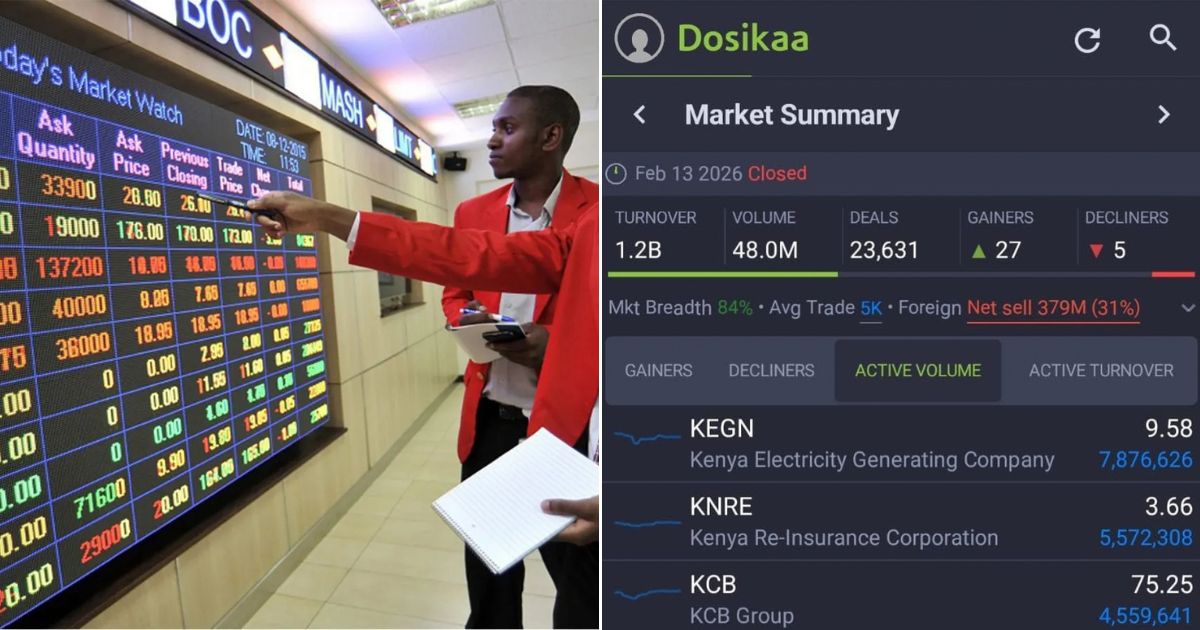
The Nairobi Securities Exchange posted its worst week since the pandemic, with Ksh231.17 billion wiped from market value over five straight losing sessions.
Market capitalisation fell 6.66% to Ksh3.24 trillion from Ksh3.47 trillion, marking the second-largest weekly decline since 2008. Year-to-date gains narrowed sharply to 4.76% from 12.24%.
As reported by the Kenyan Wall Street, all major indices dropped, led by the NSE 10 (-9.02%), while banking stocks such as KCB, Equity, and Co-operative Bank recorded steep losses. Safaricom also declined 7.27%.
The sell-off was driven by a mix of global shocks and local factors, including rising oil prices and heavy institutional selling. Foreign investors recorded net outflows of Ksh503.76 million.
Despite the decline, trading activity surged, with turnover more than doubling to Ksh4.8 billion, signalling large-scale exits by institutional investors amid growing market uncertainty.
The Kenyan shilling has begun to weaken against the US dollar following the outbreak of the US/Israel–Iran war, signalling early pressure on the local currency.
Data from the Central Bank of Kenya shows the shilling traded at Ksh129.75 per dollar on March 28, down from Ksh129.02 on February 27, representing nearly a 1% depreciation after a prolonged period of stability around Ksh129.
As reported by Eastleigh Voice, analysts warn that while the decline is modest, continued geopolitical tensions could push the shilling toward Ksh130 or lower.
The Institute of Economic Affairs projects a potential fall to between Ksh139.64 and Ksh168.09 per dollar, driven by capital flight to safe-haven assets, higher risk premiums, and interest rate differentials.
Sustained weakening could raise foreign debt servicing costs, widen the fiscal deficit, and limit monetary policy flexibility.
The share of Treasury bills in Kenya’s government securities has reached a four-year high of 17.1% amid strong demand for the one-year paper, driven by high market liquidity.
Data from the CBK shows T-bills now total Ksh1.184 trillion, while Treasury bonds stand at Ksh5.739 trillion, together accounting for 98.2% of the government’s Ksh7.12 trillion domestic debt.
Recent oversubscribed auctions saw investors offer Ksh459.2 billion between January 29 and March 12, with the 364-day T-bill accounting for Ksh355.6 billion, though Ksh152.4 billion was rejected to curb refinancing risks.
The surge reflects investors seeking higher returns from the one-year paper, despite the Treasury’s strategy to lengthen debt maturity with medium- and long-term bonds.
Interest rates on one-year T-bills have since narrowed to a 0.86-percentage-point premium over shorter papers. Read more
The High Court has issued fresh conservatory orders blocking any disposal or transfer of assets linked to the KUSCCO in an ongoing dispute with RUPSA SACCO over Ksh108.8 million in unpaid deposits.
In orders issued on March 25, 2026, Justice Freda Mugambi directed that the matter be heard urgently while preserving KUSCCO’s assets and shareholding structure.
As reported by Capital Business, the court barred the sale, transfer, or charging of company assets, as well as any dealings involving shares in subsidiaries or affiliated entities, pending the case’s determination.
The dispute dates back to fixed deposit investments made by RUPSA with KUSCCO in 2018. RUPSA is seeking to recover Ksh108.8 million, including interest and costs, after failed withdrawal attempts.
The case comes amid wider scrutiny of KUSCCO, following audit reports indicating losses exceeding Ksh13 billion linked to governance and oversight failures.
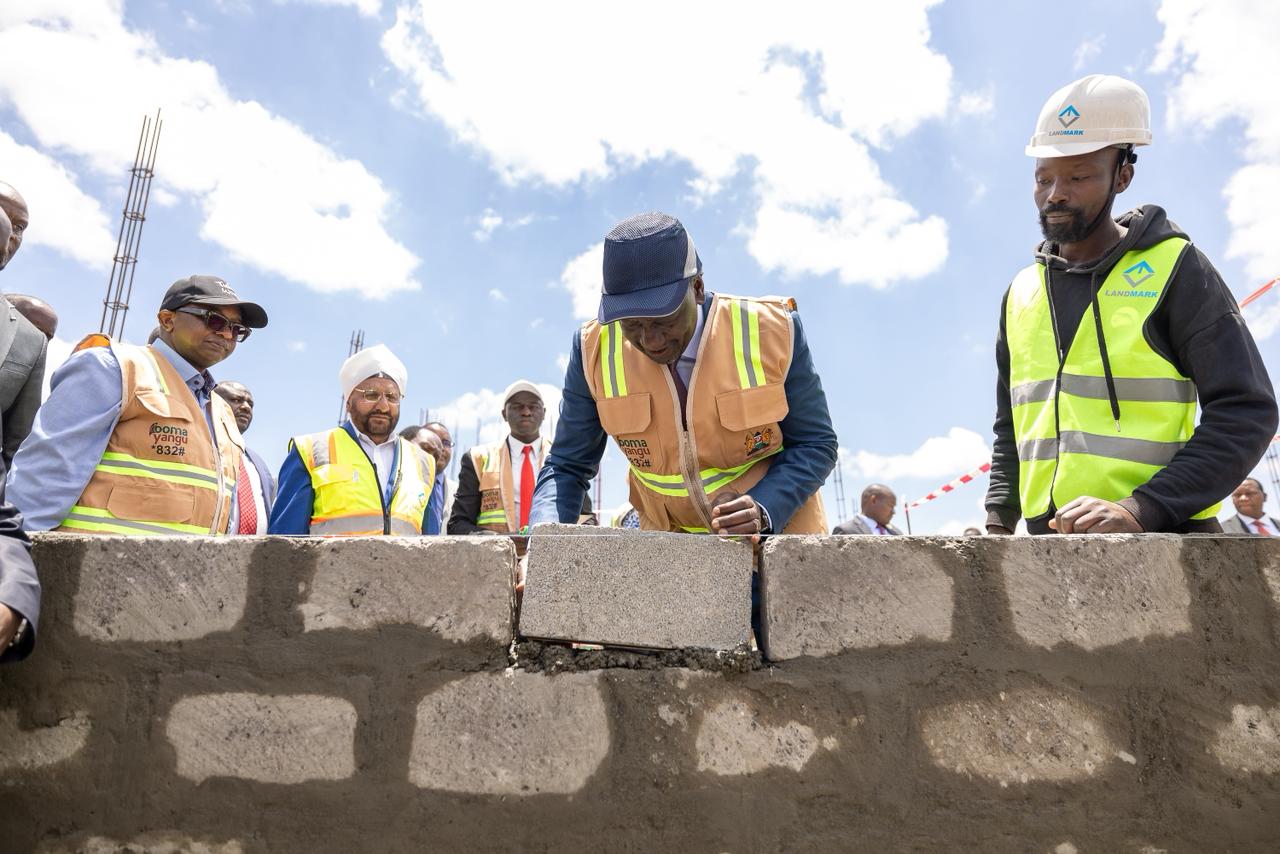
Real estate developers slowed new project rollouts in 2025, signalling caution ahead of the 2027 general elections.
Data from the Kenya National Bureau of Statistics (KNBS) shows the value of approved building plans in Nairobi fell by 9.2% to Ksh201.3 billion from Ksh221.6 billion in 2024, indicating a shrinking development pipeline.
As reported by Business Daily, the slowdown reflects a shift in strategy, with developers prioritising completion of ongoing projects over launching new ones.
Residential approvals dropped to Ksh155.8 billion from Ksh170.7 billion, while non-residential projects declined to Ksh45.5 billion from Ksh50.9 billion.
Analysts expect the cautious trend to persist into 2026, with growth limited to funded segments like affordable housing, as investors adopt a wait-and-see approach amid political and economic uncertainty.
Softcare’s revenue from Kenya rose to Ksh13.1 billion in 2025, up from Ksh11.7 billion in 2024, extending a steady growth trend over the past four years.
The diaper company’s earnings from the Kenyan market have grown from Ksh7.4 billion in 2022 to Ksh10.9 billion in 2023.
As reported by Capital Business, Kenya now contributes about 19% of the group’s total revenue, making it one of its largest markets in Eastern Africa.
Regionally, Eastern Africa accounted for 46.5% of total revenue, up from 44.2% a year earlier, with Kenya leading, followed by Tanzania and Uganda.
The growth reflects shifting regional dynamics as Western Africa’s share declined to 39.5%.
.png)


Join 1.5M Kenyans using Money254 to find better loans, savings accounts, and money tips today.


Money 254 is a new platform focused on helping you make more out of the money you have. We've created a simple, fast and secure way to find and compare financial products that best match your needs. All of the information shown is from products available at established financial institutions that our team of experts has tirelessly collected.




.jpeg)

.jpg)