News and Analysis
September 28, 2026



For many Kenyans looking for passive income opportunities, 2025 was the year the "T-Bill party" finally began to wind down.
After a period of record-high interest rates that saw Money Market Funds (MMFs) and T-bills delivering double-digit returns, the tide has turned. As we enter 2026, the Central Bank of Kenya’s (CBK) persistent rate-cutting cycle—which brought the benchmark rate down to 9.0% by December 2025—has changed the passive income landscape in Kenya.
The CBD’s sustained cuts on the Central Bank Rate (CBR) has also affected returns on savings accounts. In many ways, passive income is no longer a matter of simply parking cash; the investment vehicle is something many Kenyans are actively thinking about.
This article breaks down the performance of major asset classes in 2025 and offers an outlook of what to expect in 2026.
Also read: Best Performing MMFs and Their Returns in November 2025
Money Market Funds remain the most popular "parking bay" for Kenyan capital, but they are currently undergoing a painful repricing. In 2024, it was common to see net returns as high as 12% to 15%. By the close of 2025, the industry average has settled closer to 7.8% – 9.0%.
Also read: All You Need to Know About Safaricom’s MMF: Ziidi
SACCOs remain a popular savings and borrowing vehicle in Kenya, with total member deposits exceeding Ksh1.2 trillion. 2025 was a rough year for SACCOs, and the strength in recovery with be tested in 2026.
The Ksh13.3 billion KUSCCO scandal nearly brought the entire SACCO movement to its knees. While asset recovery is underway, many affiliate SACCOs were forced to make significant provisions for these losses in late 2025. For the member, this means lower dividend payouts in 2026 as SACCOs prioritize rebuilding their capital buffers over immediate cash distributions.
Many rogue SACCOs face a mass closure in 2026 for non-compliance. In December 2025, the government threatened to deregister 25,000 Saccos, citing non-compliance issues, including failure to hold annual general meetings (AGMs) and poor transparency of financial dealings.
As part of the corporate governance reforms, the Ministry of Cooperatives has announced that small saccos will be merged to make them more viable.
One of the most promising news in the SACCO movement is the ongoing discussion between the Cabinet Secretary for Cooperatives and the Nairobi Securities Exchange (NSE).
The proposal to list SACCO shares on the NSE could finally unlock liquidity for members who have historically been "locked in" to their shares. This would allow you to trade your SACCO equity just like company shares, providing a transparent market value for your savings.
Also Read: How Long It Takes to Double Your Investment in MMF, SACCO, Bond & Land
Special funds are increasingly popular among investors seeking higher returns and portfolio diversification. These funds pool money to invest in diverse markets such as stocks, bonds, metals, and currencies.
Some funds, like Manza X, Oak Special Funds, and Kuza, have offered returns as high as 43%, attracting risk-tolerant investors looking for better yields than traditional savings or MMFs.
Currently, the total investments in special funds stand at Ksh137 billion, with 33 licensed funds operating under the Capital Markets Authority (CMA). The key advantage of special funds is diversification, allowing investors to spread their risk across multiple assets while targeting higher returns.
Also Read: Mansa X: All You Need to Know About the Special Fund Offering 24% Returns
In 2026, the government plans to continue borrowing to fund the 2025/2026 budget, including taxable bonds and infrastructure bonds, which are tax-free and attract investors looking for long-term, stable returns.
However, there is a concern about debt sustainability for the government, as Kenya’s public debt continues to rise past the Ksh12 trillion mark. While bonds can be a reliable income source, there has been some fear about whether the government will make the repayments given the fiscal pressures facing the country.
However, in the last quarter of 2025, there were corporate bonds issued by leading companies in the country. Safaricom’s tax-free green bond (which raised Ksh41.86 billion) and EABL’s corporate bond which
The first tranche of the Safaricom bond offered investors a tax-free return of 10.4% while EABL offered 11.8% returns (which attracted a 15% withholding tax). Meanwhile, government bonds, which attract Withholding Tax, have been offered between 12-14% interest rate.
The growth in corporate bonds could present bigger opportunities for investors to diversify between government and corporate bonds.
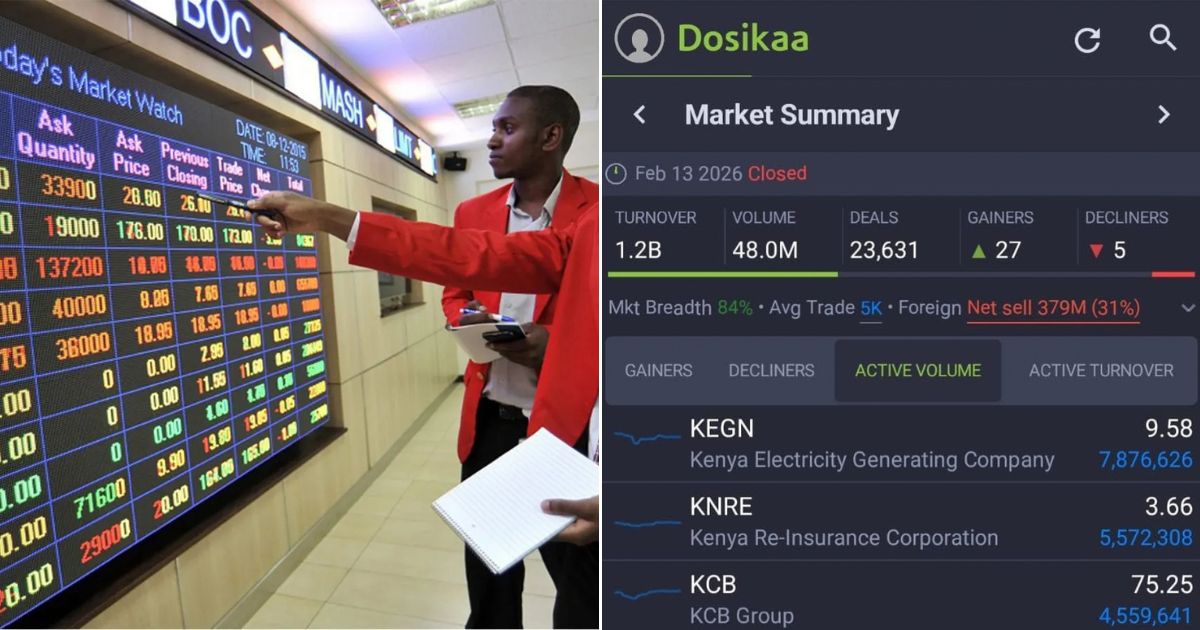
The Nairobi Securities Exchange (NSE) has had a boom in 2025. After years of being "undervalued," the bourse staged its most powerful recovery in over a decade.
According to The Kenyan Wallstreet, investor wealth on the NSE jumped by over Ksh 1.04 trillion in 2025. Total market capitalization catapulted from Ksh1.94 trillion in January to cross the Ksh3 trillion mark by November. The NSE All Share Index (NASI) recorded a staggering year-to-date return of over 53%, making it one of the top-performing indices globally in 2025.
Editor's Note: We know many of our readers are looking for opportunities that go beyond standard market returns. If you're interested in learning more about special funds from the fund managers directly, please fill your details here.
.png)


Join 1.5M Kenyans using Money254 to find better loans, savings accounts, and money tips today.


Money 254 is a new platform focused on helping you make more out of the money you have. We've created a simple, fast and secure way to find and compare financial products that best match your needs. All of the information shown is from products available at established financial institutions that our team of experts has tirelessly collected.




.jpeg)

.jpg)