


News and Analysis
October 7, 2026


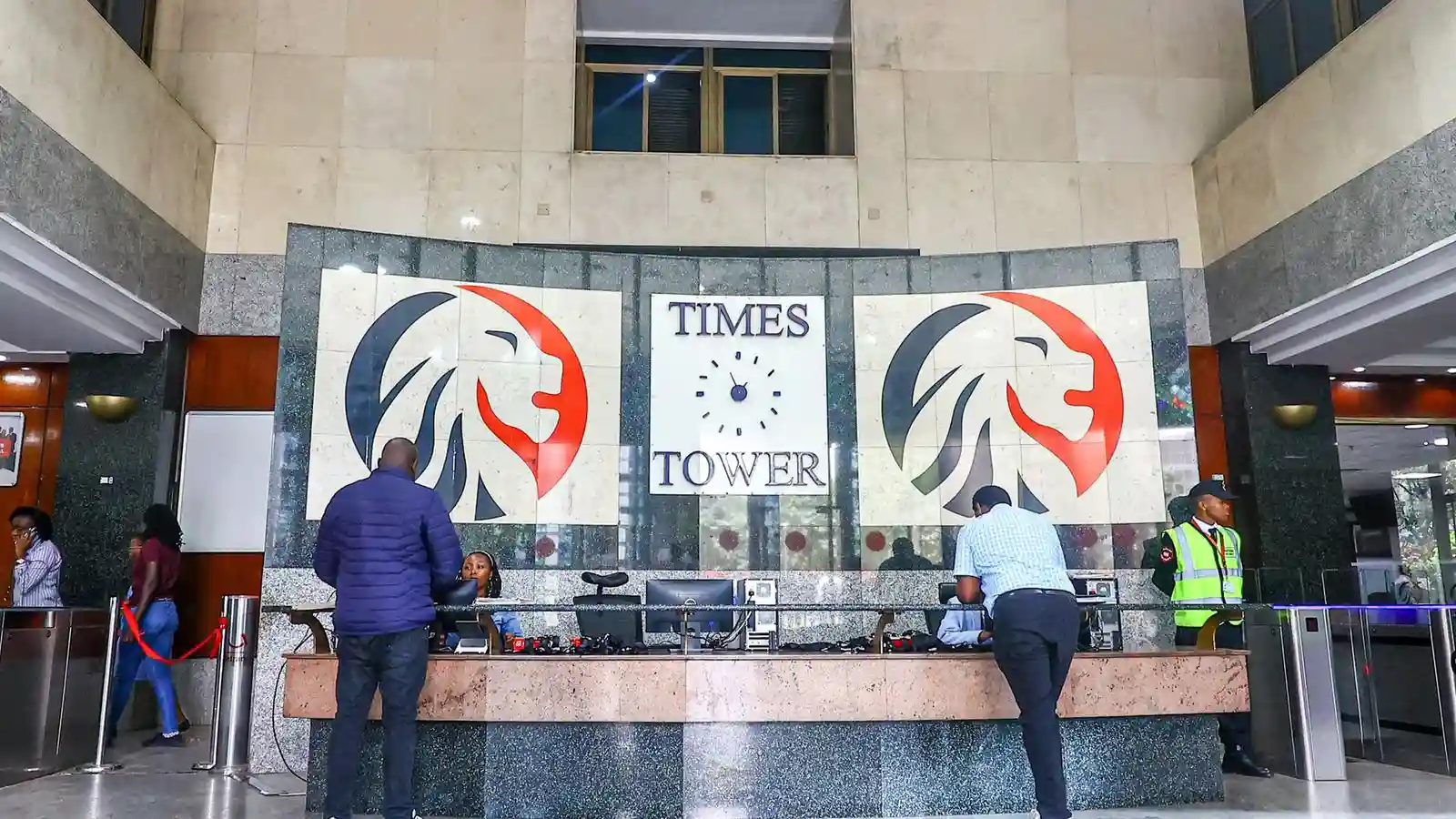
Hello and welcome to the Money News Roundup. Today, we cover KRA’s plan to introduce a dual tax assessment system. We also look at why the KRA board opted not to renew Commissioner General Humphrey Wattanga’s contract.
The Kenya Revenue Authority (KRA) is considering introducing a dual tax assessment system that will also give KRA commissioners the powers to assess the tax payable by PIN holders.
As reported by Bloomberg, the taxman is grappling with low compliance, where only two in five registered taxpayers actively pay taxes.
Currently, Kenyans undertake self-assessment by declaring their income and taxes paid.
To improve compliance, KRA is exploring a dual assessment regime that would supplement self-assessment with commissioner-led evaluations to make tax filing easier and boost revenue collection.
“We are looking at a dual assessment regime in future so that, in addition to self-assessment, we can help our taxpayers also by the commissioner making assessments so that it’s easy for taxpayers to comply,” KRA’s Commissioner for Micro and Small Taxpayers, George Obell, stated.
Out of 20.2 million registered taxpayers, less than half are settling their obligations, creating a tax collection gap of at least Ksh982 billion, according to the agency.
KRA says widespread non-compliance, especially in the informal sector, is a key challenge, with many taxpayers either failing to file returns or underreporting income.
Personal income tax records the largest gap, with collections at just 2.5% of a potential Ksh500 billion. Value Added Tax stands at about 60% of its potential, while rental income and corporate tax also show significant shortfalls.
Also Read: Jackfruit SME Loan: A Gamechanger for Small Businesses
Save Money and Earn Competitive Interest with Kenya's Largest MMF
Looking for a secure way to grow your money? Money254 has partnered with SanlamAllianz MMF — the largest MMF in Kenya with Ksh118 billion in assets under management, operating in 70 countries across 5 continents.
With SanlamAllianz MMF, you earn daily interest compounded monthly, transfer money from M-Pesa for free, and withdraw anytime without losing interest.
Ready to grow your wealth? Join SanlamAllianz MMF Now.

The KRA board decided not to renew the contract of Commissioner General Humphrey Wattanga due to technology inefficiencies and missed revenue targets.
As reported by Nation, his exit followed reports that he declined pressure from the National Treasury to resign, prompting the board to act.
The taxman said Wattanga would proceed on terminal leave immediately, signalling a fallout with both the board and Treasury officials who faulted system downtimes and poor returns from heavy tech investments.
Hours after his removal, President William Ruto nominated him as Kenya’s High Commissioner to South Africa, subject to parliamentary approval.
Wattanga’s tenure was marked by mounting pressure on KRA to boost collections and curb tax evasion.
Despite collecting Ksh2.038 trillion by March, revenues fell short of the Ksh2.122 trillion target, intensifying scrutiny.
System failures, including disruptions to the Integrated Customs Management System, further dented performance.
Lilian Nyawanda has been appointed acting Commissioner General as KRA pushes reforms, including AI-powered tax tools and eTIMS, to widen the tax base and improve compliance.
A firm linked to the family of former Prime Minister Raila Odinga has emerged among beneficiaries of Kenya’s government-to-government (G-to-G) fuel supply deal.
As reported by the Business Daily, BE Energy, in which the Odinga family holds a 35% stake, is among selected oil marketers importing fuel under the arrangement with Gulf-based suppliers.
Kenya entered the deal in 2023 with Saudi Aramco, Abu Dhabi National Oil Company and Emirates National Oil Company, replacing the open tender system. Under the structure, local firms purchase fuel on 180-day credit and distribute it locally.
Shipment records show BE Energy secured two diesel cargoes totalling 85,000 tonnes, sourced from Saudi Aramco. Gulf Energy handled the bulk of imports, while other marketers shared smaller allocations.
The firm’s inclusion followed a political cooperation pact between Raila and the current administration.
BE Energy has steadily grown its market share to over 3%, ranking among Kenya’s top oil marketers. The company also exports fuel products across East and Central Africa, strengthening its regional footprint.
Also Read: All You Need to Know About Username SACCO
A report by the Auditor-General, Nancy Gathungu, has revealed that the Office of the Deputy President spends up to Ksh8 million a day on helicopters.
The report, which was scrutinised by the National Assembly’s Public Accounts Committee, also highlighted that the office owes suppliers Ksh150 million for chopper services.
As reported by Citizen Digital, the audit revealed that a significant portion of the pending bills was linked to frequent helicopter use by the Deputy President and his entourage.
Further questions were raised over the lack of an audit committee in the office, as well as additional spending on hospitality, including catering, fresh flowers, and food supplies.
The Office of the Deputy President has been asked to provide a detailed report on its air travel budget within a week.
The High Court has allowed the sale involving EABL and Japan’s Asahi Group Holdings to proceed after dismissing a case seeking to block the transaction.
As reported by Capital Business, Justice Bahati Mwamuye lifted interim orders that had halted the deal, paving the way for completion through regulatory processes.
The case had been filed by logistics firm Bia Tosha, which is engaged in a long-standing dispute with EABL and its parent company, Diageo, over distribution rights and compensation.
EABL stated that the ruling clears the path for finalising the agreement. The Ksh296.5 billion deal will see Asahi acquire a majority stake in EABL from Diageo, including UDV (Kenya) Limited, giving it control of operations across Kenya, Uganda, and Tanzania.
Kenya’s foreign exchange reserves have declined in recent weeks, partly due to external debt servicing, the Central Bank of Kenya (CBK) said, while assuring markets that buffers remain adequate.
CBK linked the dip to slowing remittance inflows and rising geopolitical risks, warning of growing pressure on dollar liquidity. Governor Kamau Thugge noted weaker diaspora inflows, especially from the Gulf, which accounts for about 10% of remittances, projecting growth of just 1.4% this year.
As reported by Capital Business, the warning follows a reported Ksh50 billion drop in reserves, attributed to the Middle East conflict and external payments. The current account deficit is projected at 3% of GDP, driven by higher import costs and weaker exports.
Despite this, reserves stood at Ksh1.7 trillion ($13.4 billion) as of April 7, covering 5.7 months of imports, above required thresholds, helping stabilise the shilling.
Also Read: All About Tower Sacco That Paid the Highest Dividends This Year (20%)
Total bad loans in Kenya’s banking sector rose by Ksh21 billion in the first quarter, driven by increased defaults among households and businesses.
Central Bank of Kenya (CBK) data shows non-performing loans (NPLs) climbed to Ksh695.4 billion by March, up from Ksh674.4 billion in December, pushing the default rate to 15.6%. The rise came despite lower interest rates easing borrowing costs.
As reported by the Business Daily, defaults were highest in personal, trade, agriculture, and manufacturing sectors, reflecting ongoing economic strain.
Meanwhile, private sector lending grew by 8.1% to Ksh4.46 trillion, marking the fastest expansion in two years.
CBK noted banks remain stable and profitable, with adequate provisions for bad loans, while improved economic conditions and credit demand are expected to support recovery later in the year.
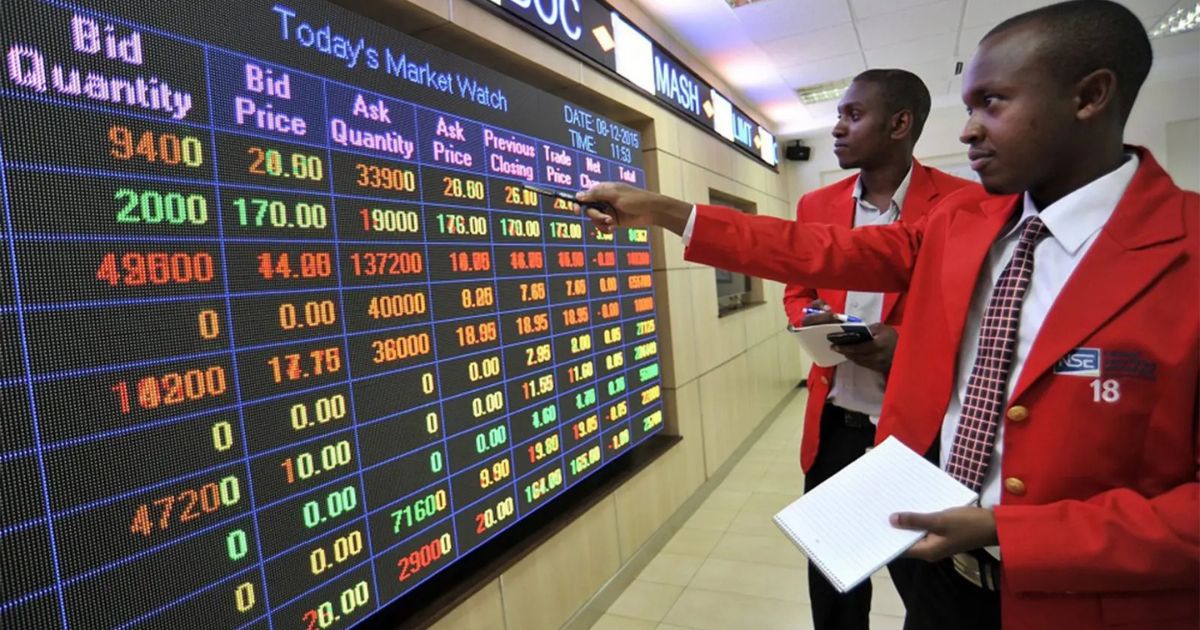
NSE added Ksh101.8 billion in investor wealth over two days after sentiment improved on hopes of a tentative Iran ceasefire linked to easing tensions around the Strait of Hormuz.
On Wednesday, the bourse gained Ksh76.1 billion, followed by Ksh25.7 billion on Thursday, reversing earlier losses triggered by the conflict.
Safaricom led gains, adding Ksh42 billion, while Equity Group, Co-operative Bank and KCB also rose sharply. Foreign investors remained net sellers of Ksh362 million on Wednesday, but local institutions drove the rebound.
The shilling strengthened from 130.06 to 129.26 against the dollar as oil prices eased below Ksh12,900 ($100) per barrel, easing inflation fears tied to fuel imports and supporting a broader recovery in Kenyan equities and currency markets overall. Read more
As reported by the Kenyan Wall Street, Sasini PLC has invited sealed tenders for the sale of its avocado processing and packing plant in Nairobi, marking a strategic shift from its vertically integrated export model.
The facility, at Sameer Industrial Park, has a four-lane Eshet Eilon line processing up to 8 tonnes per hour and cold storage for four containers. Avocado shipments fell from 71 containers in FY2024 to 22 in FY2025 after Red Sea disruptions and Suez Canal closures raised costs.
The segment posted losses despite group revenue rising 22.5% to Ksh8.44bn, while costs climbed to Ksh7.43bn. Management says logistics via the Cape of Good Hope eroded competitiveness.
MD Martin Ochieng said diversification into Asia, including China and India, is now a priority and remains an ongoing strategy focus
.png)


Join 1.5M Kenyans using Money254 to find better loans, savings accounts, and money tips today.


Money 254 is a new platform focused on helping you make more out of the money you have. We've created a simple, fast and secure way to find and compare financial products that best match your needs. All of the information shown is from products available at established financial institutions that our team of experts has tirelessly collected.








![You Have Ksh7 Million: Buy a Home in Cash or Rent and Invest? [The 10-Year Numbers]](https://cdn.prod.website-files.com/6038c1030be2580db46ccf46/6abbbdaf2080b24be31d8e0b_top%20image%20%2B%20Templates%20%20-%202026-09-29T162813.614.jpg)

