News and Analysis
October 15, 2026


Hello and welcome to the Money News Roundup Newsletter, where we are covering the extension for the revision of Grade 10 school placement. We also cover Sasini’s freeze of dividend payments.
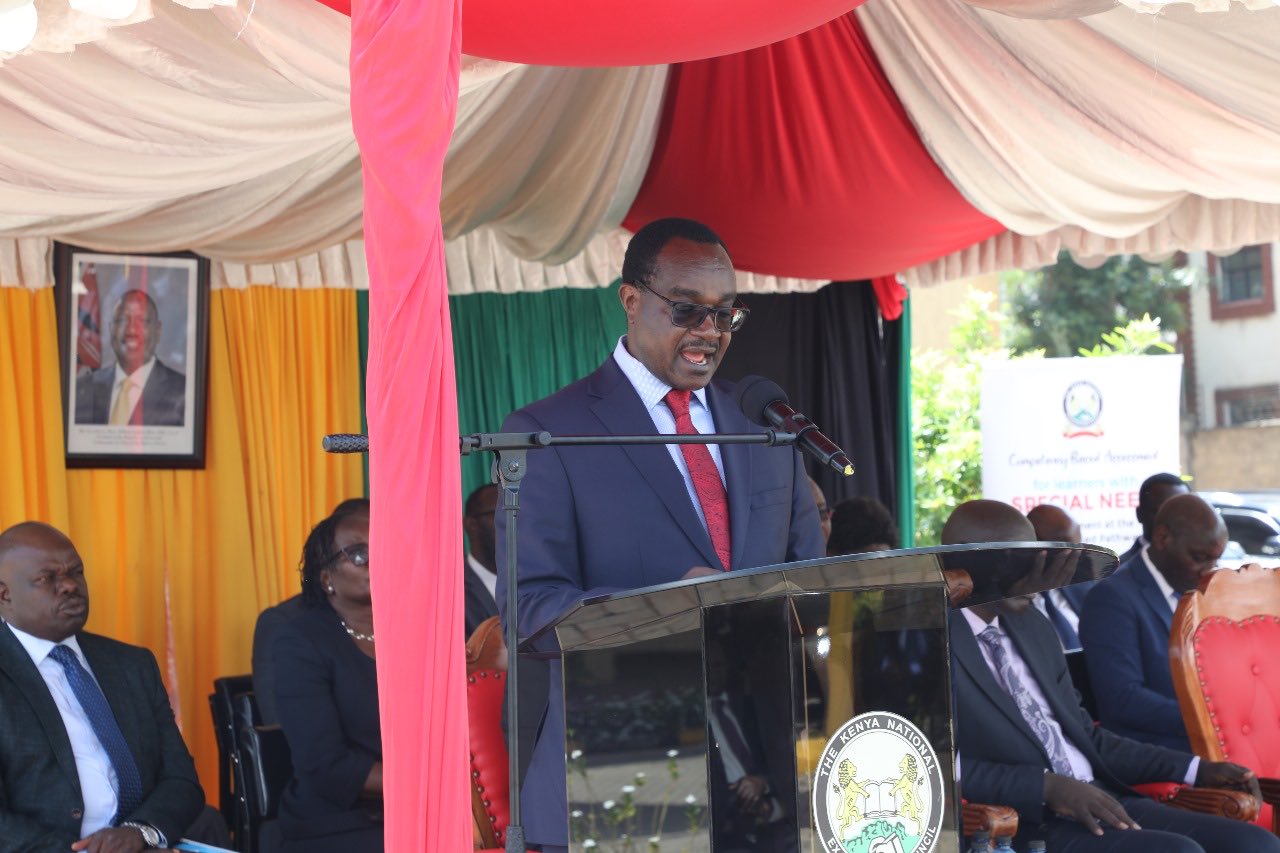
Grade 10 learners have until January 16 to transfer to their senior schools of choice, Education Cabinet Secretary Julius Ogamba has announced.
The placement process is managed through the new Kenya Education Management Information System (KEMIS), overseen by ICT officials to ensure automated approvals across the board.
According to the Star, parents had initially been given until January 9 to review placements, but many raised concerns about children being assigned to schools far from home or below their academic potential.
The extension aims to give families sufficient time to complete transfers, with the system allowing approvals at various levels to facilitate smooth movement. Ogamba said the majority of learners have experienced seamless placement so far.
The grade 10 cohort of 1,130,459 learners is the first under the Competency-Based Education (CBE) system. Kenya has 9,500 senior schools, classified by academic pathways, accommodation, gender, and special needs, to ensure equitable placements.
The government is investing in the sector, including constructing 1,600 laboratories nationwide, libraries, and classrooms.
Also Read: 28 Top Performing MMFs and Their Net Returns in December 2025
The High Court has issued interim orders barring the national government and public entities from hiring private advocates and law firms, pending the hearing of a constitutional petition filed by Benjamin Gikenyi Magare, Senator Okiya Omtatah, and others.
The Court also directed the Controller of Budget not to approve public funds for external legal services until the case is determined.
As reported by Citizen Digital, the petition challenges the constitutionality of engaging private lawyers despite the availability of State Counsel, County Attorneys, and in-house legal officers.
Petitioners cited the Kenya Airports Authority’s alleged hiring of TripleOKLaw Advocates in a Ksh243 million case as an example of wasteful spending.
They argue the practice violates constitutional principles on prudent use of public resources, equality, transparency, and fair labour practices. The interim orders remain in force pending further directions.
The Law Society of Kenya (LSK) noted that it would challenge the order as it infringes on the economic rights of its members.
Sasini posted a net profit of Ksh 177.3 million for the year ended September 2025, rebounding from a Ksh562.8 million loss the previous year, driven by higher sales and an increase in the value of its plantations.
As reported by the Business Daily, despite the return to profitability, the company maintained its dividend suspension for the second year, citing the need to retain earnings to strengthen cash reserves.
Sasini last paid a dividend of Ksh 0.5 per share, totaling Ksh 114.2 million, in the year ended September 2023.
Sales rose by Ksh 1.5 billion to Ksh 8.4 billion, led by record coffee trading profits despite lower production, while tea and avocado divisions faced volume and logistical challenges. The fair value of biological assets rose to Ksh 558.7 million, boosting margins.
Sasini also reduced operating costs, including administrative expenses to Ksh 1.1 billion and selling costs to Ksh 107.8 million. The firm holds ample cash, anticipating growth in tea, high-value coffee, and macadamia orchards in 2026.
Also Read: Treasury's Plan to Cut PAYE Gains Momentum Under New Proposal
A group of Congolese doctors working in Kenya has moved to the High Court to challenge a decision by the Ministry of Health declining to renew their practising licences and work permits for 2026.
As reported by the East African, the doctors argue the move has unlawfully locked them out of medical practice despite having worked in Kenya for years.
The applicants say they have practised in public and private hospitals for over a decade, paid all required taxes and fees, and met statutory conditions.
They claim licence renewals were abruptly made conditional on obtaining “letters of no objection” from the Health Cabinet Secretary, a requirement they say did not previously exist.
Through lawyer Danstan Omari, they argue the decision violates the Constitution, the Fair Administrative Action Act, and Kenya’s obligations under the East African Community framework. They warn that the freeze risks patient care in an overstretched health sector.
Policyholders affected by the collapse of insurance companies will now receive a maximum compensation of Ksh500,000 per claim after regulators doubled the payout cap under the Policyholders Compensation Fund (PCF).
As reported by the Kenyan Wall Street, the increase from Ksh 250,000 was approved by the PCF Board in consultation with the National Treasury and applies to insurers placed under statutory management or whose licences are cancelled.
The move follows a series of insurer failures that have shaken confidence in the sector, including Standard Assurance (Splice), Resolution Insurance, and Invesco Assurance, while Directline Assurance has faced recent regulatory intervention.
Despite the higher cap, the fund will still pay a maximum of Ksh500,000 per claim regardless of policy size, leaving holders of high-value life, medical, and commercial covers exposed to significant losses.
Also Read: How the Bare Minimum Budget Can Help You Thrive This January
Kenyan businesses and households continue to rely on cheque payments even as many African countries phase them out in favour of digital transactions.
As reported by the Business Daily, the Central Bank of Kenya (CBK) data shows cheque transaction values have remained above Ksh200 billion monthly since 2014, except in 2020 during Covid-19 disruptions.
An analysis covering 11 months to November 2025 shows an average of Ksh201.44 billion was transacted monthly, totalling Ksh 2.215 trillion.
Despite Kenya’s leadership in mobile money and electronic payments, cheques remain popular for high-value and institutional transactions due to their paper trail and cash-flow flexibility.
The CBK has opted to reform rather than abolish cheques, citing risks of digital exclusion, especially for SMEs. While volumes are declining relative to the economy, Kenya is moving cautiously as countries like Zambia, Burkina Faso, and Seychelles abandon cheques altogether.
Uchumi House, a prime commercial property at the junction of Aga Khan Walk and Nkrumah Lane in Nairobi’s Central Business District (CBD), has been listed for sale at Ksh562.5 million.
As reported by Capital FM, the five-storey building, with a basement and mezzanine floor, sits on a 0.28-acre plot and offers a total floor area of 4,491 square metres.
The property hosts established tenants, including Naivas Supermarket and Pronto Restaurant, providing immediate rental income to a buyer. Located in a vibrant commercial zone, Uchumi House is near key landmarks such as Sunken Parking, Electricity House, and Nairobi Cinema.
Nairobi’s CBD remains a highly sought-after investment hub due to high foot traffic, proximity to transport nodes, and strong demand for stable rental yields and long-term capital appreciation.
The United Arab Emirates (UAE), Spain, and Saudi Arabia are emerging as key markets for Kenya’s horticulture, helping reduce reliance on traditional European buyers.
The Food and Agriculture Authority (AFA) quarterly update for July–September 2025 shows the UAE imported Ksh2.52 billion, Spain (Ksh1.3 billion), Saudi Arabia (Ksh 1.25 billion), and Kazakhstan (Ksh1.08 billion).
While these markets remain smaller than top European destinations, they reflect successful diversification into the Middle East and Central Asia. Kenya’s horticulture also reached smaller markets like Italy, Mexico, the US, and Australia, each contributing 1–3 percent of export value.
Total horticulture exports for the quarter were valued at Ksh 31.3 billion from 94,929 tonnes, with the Netherlands alone accounting for Ksh 10.99 billion, or 35 percent of the total, followed by the UK, Germany, and France. Read more.
The Central Bank of Kenya (CBK) mopped up a cumulative Ksh9.18 trillion from the banking sector in 2025 to stabilise the shilling amid dollar purchases and slow private sector lending.
As reported by the Business Daily, liquidity ratios in banks rose to 59 percent in October from 55.8 percent in January, well above the 20 percent minimum.
The mop-up was mainly through repurchase agreements (repos), where the CBK sells government securities to banks with a promise to repurchase later, reducing cash in circulation. Meanwhile, dollar purchases boosted forex reserves to a record Ksh1.6 trillion from Ksh1.19 trillion.
Despite excess liquidity, private sector lending grew modestly at 6.3 percent by November. The CBK also used reverse repos and term auction deposits to manage market cash. Policy easing, including nine successive rate cuts from 13 to 9 percent, aimed to encourage lending and support economic growth.
.png)


Join 1.5M Kenyans using Money254 to find better loans, savings accounts, and money tips today.


Money 254 is a new platform focused on helping you make more out of the money you have. We've created a simple, fast and secure way to find and compare financial products that best match your needs. All of the information shown is from products available at established financial institutions that our team of experts has tirelessly collected.






![Kenya's Richest Counties By Contribution to GDP [2026]](https://cdn.prod.website-files.com/6038c1030be2580db46ccf46/6acf79cc000d099ee32f507a_top%20image%20%2B%20Templates%20%20-%202026-10-14T154332.222.jpg)