News and Analysis
September 8, 2026


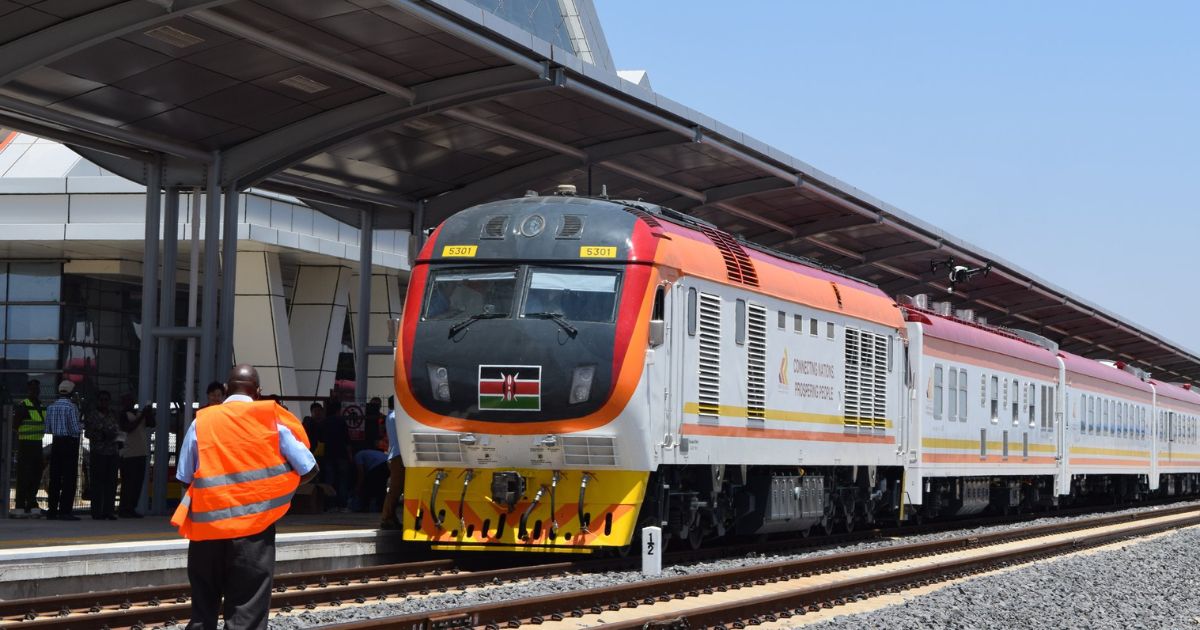
Hello and welcome to the Money News Roundup Newsletter. Today, we cover the SGR's first-ever profit as Kenya Railways takes over full operations from a Chinese firm. We also look at the Controller of Budget's report on emergency government spending.
The Standard Gauge Railway (SGR) recorded its first operating profit since launching in 2017, posting Ksh3.2 billion in the 2025/26 financial year.
The Business Daily reported that Kenya Railways attributed the turnaround to record cargo volumes, improved operational efficiency, enhanced cargo evacuation at the Port of Mombasa, and stronger customer engagement.
During the year, the SGR transported 8.2 million tonnes of freight, the highest volume recorded since operations began, up from 7.04 million tonnes in 2024/25.
The railway generated Ksh21.8 billion in revenue, accounting for 84% of KRC's operating income, while operating expenditure rose marginally to Ksh18.52 billion.
KRC Managing Director Philip Mainga attributed the performance to government interventions and increased freight train operations, which rose to 9.67 train pairs daily. He also revealed that KRC has now fully taken over SGR operations from Chinese operator Afristar.
The Ksh327 billion Mombasa-Nairobi SGR and the Ksh150 billion Nairobi-Naivasha extension had previously faced criticism over persistent losses, with operating costs exceeding revenues for several years after launch.
Mining CS Hassan Joho has established a high-level technical committee to address compliance issues that led to the suspension of Tata Chemicals Magadi Limited's operations.
As reported by Citizen Digital, the committee, led by Mining Principal Secretary Harry Kimtai and Tata CEO Swaminathan Nagarajan, will review concerns including mineral beneficiation, community benefit obligations, royalty payments, land disputes, value addition, and issues involving the Kajiado County Government.
The move follows government claims that Tata failed to comply with mining regulations and community benefit requirements under the Mining Act.
The development comes days after President William Ruto ordered Tata Chemicals to exit Kenya, arguing the firm had not delivered adequate economic and social benefits despite operating in Lake Magadi for decades.
President William Ruto's administration has spent Ksh364.24 billion through emergency withdrawals over four years, with Ksh209.37 billion spent in the year ended June 2026 alone.
As reported by the Business Daily, Data from the Controller of Budget shows emergency spending tripled from Ksh66.5 billion in 2024/25, raising concerns over the growing use of Article 223 of the Constitution, which allows spending on urgent and unforeseen needs.
Controller of Budget Margaret Nyakang'o warned that some approvals covered routine government operations that should have been budgeted for during the normal budget process.
Auditor-General Nancy Gathungu has also raised concerns, citing cases where predictable expenses were treated as emergencies. Examples include Ksh3.9 billion for 2027 AFCON hosting rights and Ksh1.68 billion for the African Nations Championship.
A new petition has been filed at the Environment and Land Court in Kisumu seeking to halt the planned Ksh500 billion nuclear power plant in Siaya County.
Petitioner Francis Owino wants the court to stop any construction, land acquisition, displacement, procurement, or financing commitments until all constitutional and legal requirements are met.
As reported by the Nation, Owino argues that the project must undergo rigorous environmental, nuclear safety, public participation, land, and financial accountability processes before irreversible decisions are made.
He is also seeking disclosure of studies on geology, hydrology, environmental impacts, radioactive waste management, and financing arrangements. The court has certified the matter as urgent.
Kenya's SACCO sector continued to expand through June 2026, with total assets rising 12.6% year-on-year to Ksh1.25 trillion. Gross loans increased 10.2% to Ksh971.6 billion, while deposits grew 11.2% to Ksh884.8 billion, reflecting sustained growth in the industry.
As reported by the Kenyan Wall Street, concerns remain over asset quality, with non-performing loans at deposit-taking SACCOs standing at 6.56% of gross loans, above the 5% regulatory ceiling and up from 6.36% in December 2025.
During the second quarter, SACCOs disbursed Ksh132.1 billion in loans, with land and housing accounting for the largest share. At the same time, non-earning assets at non-withdrawable deposit-taking SACCOs exceeded prudential limits, highlighting growing pressure on returns despite the sector maintaining strong capital and liquidity buffers.
Also in the News
.png)


Join 1.5M Kenyans using Money254 to find better loans, savings accounts, and money tips today.


Money 254 is a new platform focused on helping you make more out of the money you have. We've created a simple, fast and secure way to find and compare financial products that best match your needs. All of the information shown is from products available at established financial institutions that our team of experts has tirelessly collected.