News and Analysis
September 18, 2026


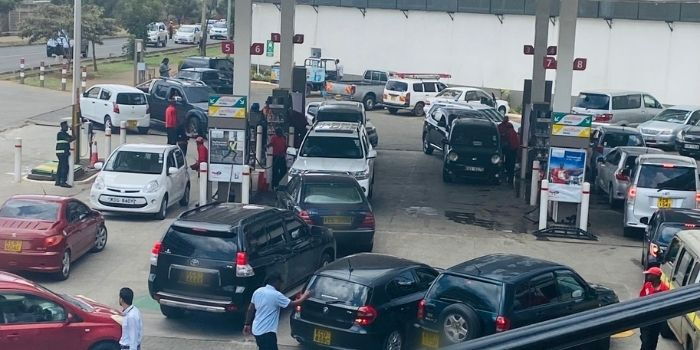
Hello and welcome to the Money News Roundup Newsletter, where we break down why fuel shortages persist despite cargo arrivals in Mombasa. We also explain why banks have closed more than 30 million accounts.
Fuel stations are facing shortages of petrol and diesel following delays in clearing fuel cargo at the port of Mombasa, leaving motorists struggling to find fuel, especially in Nairobi.
The disruption mainly affected major oil marketers, resulting in panic buying at several stations.
As reported by the Business Daily, industry officials attributed the delays to clearance issues involving the Kenya Bureau of Standards (KEBS), which reportedly flagged some vessels for lacking Certificates of Conformity (CoC), documents used to verify product safety and compliance.
The shortages come as global fuel supply chains remain under pressure following disruptions linked to the US-Israel conflict with Iran.
The conflict in the Gulf region and challenges around the Strait of Hormuz have forced suppliers under Kenya’s government-to-government fuel deal to source products from alternative markets in Europe, India and the Red Sea.
The government recently introduced a six-month waiver on sulphur limits for imported fuel to avoid shortages.
Officials say Kenya currently has enough petrol and diesel stocks to last about 19 days as additional fuel vessels arrive at the port of Mombasa.
Kenyan banks shut down 33.8 million inactive accounts in the year to June 2025, potentially freezing billions of shillings as lenders carried out a major data clean-up exercise.
Data from the Kenya Deposit Insurance Corporation (KDIC) shows the number of deposit accounts dropped from 112.5 million in June 2024 to 78.7 million in June 2025, representing a 30 per cent decline.
As reported by the Business Daily, KDIC attributed the sharp drop to the rationalisation of dormant and inactive accounts across the banking sector.
The amount held in the affected accounts could run into billions of shillings. At an estimated balance of just Ksh1,000 per account, the closed accounts would hold at least Ksh33.8 billion in idle savings.
Under banking rules, accounts become inactive after months without customer transactions and are later classified as dormant after prolonged inactivity.
If dormant accounts remain unclaimed for more than five years, the funds are transferred to the Unclaimed Financial Assets Authority (UFAA) for safekeeping until owners come forward.
The government has confirmed delays in paying interns under the Affordable Housing Programme, blaming it on a payroll mix-up involving two funding systems.
As reported by Capital Business, Housing PS Charles Hinga said no payments had been processed yet, including for senior officials, due to an administrative error by the human resources department.
According to Hinga, HR combined payrolls funded through the National Treasury exchequer and the Housing Levy, making it difficult to separate intern payments from other government salaries.
He noted that funds for the interns were already available, and they were initially expected to be paid by the 25th.
The Affordable Housing Internship Programme was launched last year and targets about 5,500 young professionals in sectors such as construction, engineering and architecture.
TNT DT Sacco has reduced dividends and share capital payouts for the year ended December 31, 2025, following new regulatory requirements issued by the Sacco Societies Regulatory Authority (SASRA).
As reported by Capital Business, the Sacco said the directive capped returns and required additional provisions on savings linked to KUSCCO and related claims.
As a result, returns on member deposits were cut from 9 per cent to 4.5 per cent, while dividends on share capital dropped from 11 per cent to 5.5 per cent.
TNT DT Sacco noted that the delayed disbursement of the remaining dividends was caused by the regulatory directive limiting returns on deposits and share capital.
The changes reflect growing scrutiny in the Sacco sector as regulators tighten controls to address liquidity risks and strengthen financial stability, despite lower short-term earnings for members.
SBM Bank Kenya has reported a sharp rise in profitability for the first quarter of 2026, with profit before tax increasing to Ksh246 million from Ksh12 million recorded during the same period last year.
The bank attributed the growth to its ongoing transformation strategy focused on customer growth, digital banking and transaction-led services.
Customer deposits rose by 23% year-on-year to Ksh89 billion, while total assets increased to Ksh109.5 billion from Ksh102.9 billion.
SBM also recorded a 55% increase in non-interest income to Ksh673 million, supported by higher transaction volumes across digital and payment channels.
The bank’s asset quality improved significantly, with gross non-performing loans declining by 41% to Ksh10 billion, lowering the NPL ratio from 33.8% to 19.8%.
SBM recently made PesaLink transfers free for customers as part of its strategy to accelerate digital payments and everyday banking transactions.
SIC Investment Co-operative plans to sell undeveloped land to raise funds and settle millions of shillings owed to investors under its Pepea Fixed Deposit product.
The co-operative told members it will prioritise payment of Ksh396 million owed to Pepea investors while also compensating shareholders whose shares were sold on the secondary market but remain unpaid.
SIC said proceeds from the land sales will help ease liquidity pressures and improve cash flow. The co-operative is also open to swapping part of the outstanding payments for land for willing investors.
In 2024, SIC held Ksh578.34 million worth of land for sale and another Ksh481.14 million classified as investment property across areas including Kitengela, Ngong, Ruaka and Athi River.
The move follows a forensic audit that exposed alleged fraud, inflated land deals and manipulation of financial records involving former officials and staff.
The Susan Thompson Buffett Foundation will give Kenya Ksh3.8 billion for the second consecutive year to support health programmes, helping fill funding gaps created by cuts in US foreign aid.
Treasury documents show the grant will be sent directly to the State Department of Medical Services in the financial year starting in July. This marks the first time the foundation associated with billionaire investor Warren Buffett will directly finance the Kenyan government.
As reported by the Business Daily, the funds will support reproductive health programmes, including access to contraception and safe abortion services.
The grant comes after US President Donald Trump ordered a review and scaling down of foreign aid programmes through USAID, affecting several health projects across Africa, including Kenya.
The Ksh3.8 billion allocation is equivalent to 15.6 per cent of the State Department of Medical Services’ Ksh24.4 billion development budget for the upcoming financial year.
China Wu Yi Company Limited has won a Ksh7.5 billion contract to realign the accident-prone Nithi Bridge.
According to disclosures by the Kenya National Highways Authority (KeNHA), construction was set to begin in April and is expected to take three years, with completion targeted for August 2029.
As reported by Nation, the project will involve the realignment of a 2.7-kilometre stretch between Marima and Mitheru shopping centres, including the construction of an 880-metre bridge over the Nithi River.
The redesigned bridge will feature an eight-metre dual carriageway, walkways on both sides and a safer gradient aimed at reducing accidents along the notorious black spot.
Nithi Bridge has recorded dozens of fatal crashes over the years, with more than 100 people reportedly losing their lives on the dangerous stretch.
Kenya’s SACCO sector recorded Ksh845.11 billion in gross loans in 2024, up from Ksh758.57 billion in 2023, even as the industry maintained a relatively stable non-performing loan (NPL) ratio of 8.39%, according to SASRA data.
As reported by the Kenya Wall Street, the regulator noted that provisions for bad loans increased to Ksh55.69 billion, reflecting efforts to cushion the sector against credit risks as lending expanded by 11.41%.
The SACCO industry’s NPL ratio remained significantly lower than Kenya’s banking sector, which ended FY2025 with an estimated bad loan ratio of 15.5%.
Agriculture-based SACCOs recorded the highest NPL ratio at 18.69%, while private-sector deposit-taking SACCOs posted a lower 5.73%.
The sector’s total asset base rose to Ksh1.076 trillion, with loans accounting for 73% of total assets.
However, delayed payroll remittances rose to Ksh3.49 billion, affecting over 55,000 SACCO members across 85 institutions.
More than 100 families have been left homeless after bulldozers demolished high-end houses built on disputed land in the Marurui area along Nairobi’s Northern Bypass.
The demolitions began on Monday under heavy police security, with multi-million-shilling homes reduced to rubble as devastated residents watched helplessly.
As reported by Citizen Digital, some of the affected houses were still under construction, with owners preparing to move into what they believed were legally acquired properties.
The demolitions followed a court ruling that declared the land had been unlawfully subdivided and sold to unsuspecting buyers by a private company.
The Environment and Land Court reaffirmed Langton Limited as the legitimate owner of the property and ordered the cancellation of irregular land titles issued through the disputed subdivision.
The disputed property has been the subject of a prolonged legal battle dating back to 2019.
.png)


Join 1.5M Kenyans using Money254 to find better loans, savings accounts, and money tips today.


Money 254 is a new platform focused on helping you make more out of the money you have. We've created a simple, fast and secure way to find and compare financial products that best match your needs. All of the information shown is from products available at established financial institutions that our team of experts has tirelessly collected.




.jpg)




%20(1).jpg)